 Indietro
Human Biology, Science, and Society: Foundations and Methods
Guida di studio - Note intelligenti
 Appunti personalizzati basati sui tuoi materiali, ampliati con definizioni chiave, esempi e contesto.
Human Biology, Science, and Society
Introduction to Biology
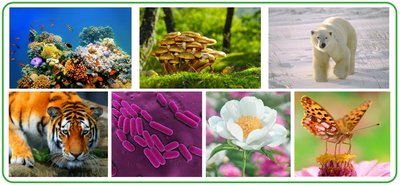
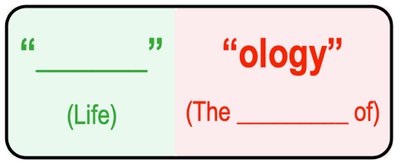
Biology is the scientific study of life, encompassing the vast diversity of living organisms from microscopic bacteria to large animals and plants. The term 'biology' is derived from the prefix 'bio-' meaning life, and the suffix '-ology' meaning the study of.
Biology: The study of living organisms and their interactions with the environment.
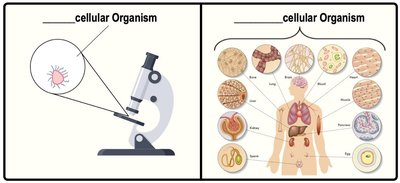
Life: Includes all forms, from unicellular to multicellular organisms.
Organism: Any individual form of life, whether microscopic or macroscopic.
Cell: The smallest, most basic unit of life.
Unicellular organisms: Consist of a single cell, often only visible with a microscope.
Multicellular organisms: Composed of multiple cells, forming complex structures.
Example: Bacteria are unicellular, while humans are multicellular.
Characteristics of Life
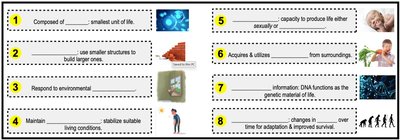
All living organisms share fundamental characteristics that distinguish them from nonliving things. These include organization, response to stimuli, reproduction, energy acquisition, and adaptation.
Cellular Organization: All life is composed of cells.
Hierarchy: Smaller structures build larger ones.
Response to Environment: Organisms react to changes in their surroundings.
Homeostasis: Maintenance of stable internal conditions.
Reproduction: Capacity to produce offspring.
Energy Acquisition: Obtaining and utilizing energy from the environment.
Genetic Information: DNA stores hereditary information.
Evolution: Changes over time for adaptation and survival.
Viruses: Not considered alive as they lack cellular structure and independent metabolism.
Life's Organizational Hierarchy
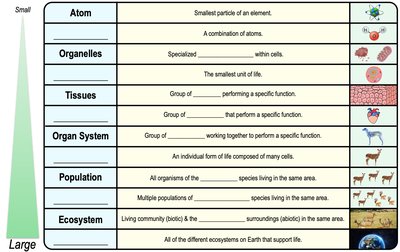
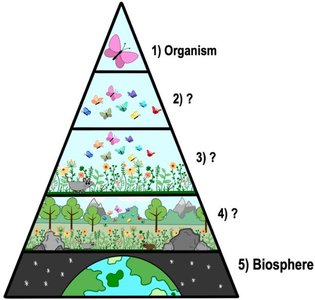
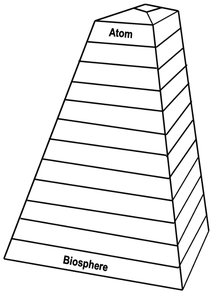
Biological organization is structured in a hierarchical manner, from the smallest atoms to the biosphere. Each level exhibits emergent properties not found in the preceding level.
Atom: Smallest particle of an element.
Molecule: Combination of atoms.
Organelle: Specialized structures within cells.
Cell: Smallest unit of life.
Tissue: Group of cells performing a specific function.
Organ: Group of tissues performing a specific function.
Organ System: Group of organs working together.
Organism: Individual living entity.
Population: All organisms of the same species in an area.
Community: Multiple populations in an area.
Ecosystem: Living community and its environment.
Biosphere: All ecosystems on Earth.
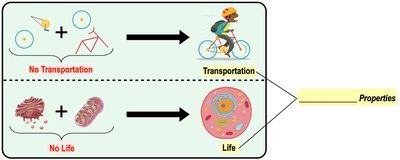
Emergent Properties: New properties arise at each level of organization, such as life emerging at the cellular level.
Introduction to Taxonomy
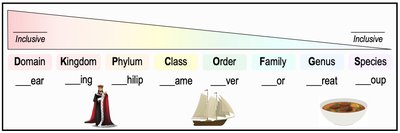
Taxonomy is the branch of science that classifies, identifies, and names organisms. It uses hierarchical categories to organize life, from the broadest domain to the most specific species.
Domain: Broadest category, includes Bacteria, Archaea, and Eukarya.
Kingdom: Subdivision within domains.
Phylum, Class, Order, Family, Genus, Species: Increasingly specific categories.
Example: Humans belong to Domain Eukarya, Kingdom Animalia, Phylum Chordata, etc.
Three Domains of Life
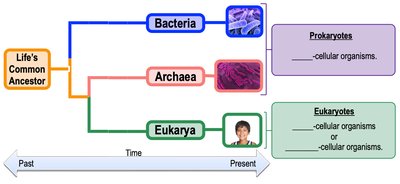
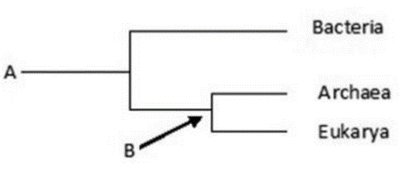
The three domains of life are Bacteria, Archaea, and Eukarya. Bacteria and Archaea are prokaryotic (lack a nucleus), while Eukarya are eukaryotic (have a nucleus).
Bacteria: Prokaryotic, unicellular organisms.
Archaea: Prokaryotic, unicellular organisms, often found in extreme environments.
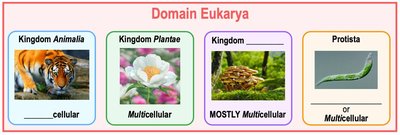
Eukarya: Eukaryotic, can be unicellular or multicellular.
Kingdoms of Eukarya: Animalia, Plantae, Fungi, Protista.
Categorizing Life Based on Energy Acquisition
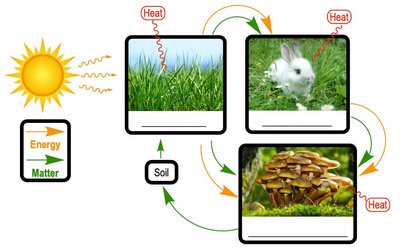
Organisms are classified by how they acquire energy: autotrophs (producers), heterotrophs (consumers), and decomposers.
Autotrophs: Make their own food, usually via photosynthesis (e.g., plants).
Heterotrophs: Obtain energy by consuming other organisms (e.g., animals).
Decomposers: Acquire energy from dead organisms and waste (e.g., fungi).
Energy Flow: Most energy originates from the sun; energy is lost as heat during transfer.
The Scientific Method
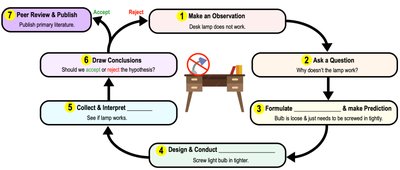
The scientific method is a systematic procedure for investigating questions, testing ideas, and building scientific knowledge. It involves observation, hypothesis formation, experimentation, data analysis, and peer review.
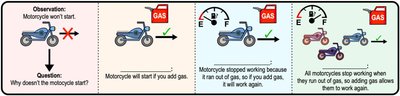
Observation: Noticing phenomena.
Question: Asking why or how something occurs.
Hypothesis: Proposed, testable explanation.
Prediction: Expected outcome based on hypothesis.
Experiment: Testing the hypothesis.
Analysis: Interpreting data.
Conclusion: Accepting or rejecting the hypothesis.
Peer Review: Publishing and validating results.
Basic Theories of Biology
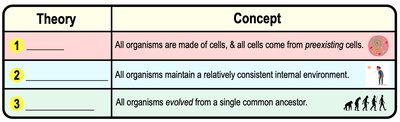
Three fundamental theories underpin biological science: cell theory, homeostasis, and evolution.
Cell Theory: All organisms are made of cells; all cells come from preexisting cells.
Homeostasis: Organisms maintain a consistent internal environment.
Evolution: All organisms evolved from a single common ancestor.
Experimental Design
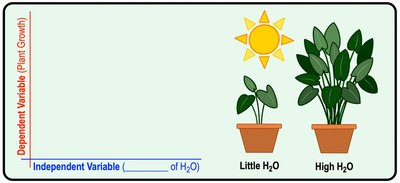
Experiments are designed to test hypotheses using variables and controls. Variables are elements that can change, and controls help prevent false positives and negatives.
Independent Variable: Changed by the researcher (e.g., amount of water).
Dependent Variable: Measured by the researcher (e.g., plant growth).
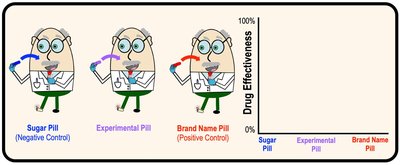
Control Groups: Used to compare results and prevent errors.
Negative Control: No response expected; prevents false positives.
Positive Control: Response expected; prevents false negatives.
Example: In drug testing, a sugar pill is a negative control, and a proven drug is a positive control.
Variable Type | Definition | Example |
|---|---|---|
Independent Variable | Variable changed by the researcher | Age, Time/Exposure, Amount |
Dependent Variable | Variable measured by the researcher | Growth of plant, Drug effectiveness |

Control Type | Definition | Purpose |
|---|---|---|
Negative Control | Control group where no response is expected (e.g., placebo) | Prevents false positives |
Positive Control | Control group where a response is expected | Prevents false negatives |

Additional info: These notes provide foundational concepts for Human Biology, including the scientific method, biological organization, taxonomy, energy acquisition, and experimental design. They are suitable for exam preparation and self-study.
