 Indietro
Body Plans and Organ Systems of Worms: Flatworms, Roundworms, and Segmented Worms
Guida di studio - Note intelligenti
 Appunti personalizzati basati sui tuoi materiali, ampliati con definizioni chiave, esempi e contesto.
Body Plans of Worms
Types of Body Cavities
Worms are classified based on their body cavity structure, which is a key evolutionary feature. The three main types are:
Acoelomate: No body cavity between the digestive tract and body wall. The space is filled with tissue from the mesoderm.
Pseudocoelomate: Body cavity (pseudocoelom) exists between the endoderm and mesoderm, but is not fully lined by mesodermal tissue.
Coelomate: True coelom, a body cavity completely lined by mesodermal tissue.
Example: Flatworms are acoelomates, roundworms are pseudocoelomates, and segmented worms (annelids) are coelomates.
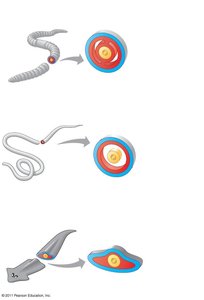
Phylum Platyhelminthes: Flatworms
General Structure and Organ Systems
Flatworms are simple, bilaterally symmetrical animals with a flattened body. They lack a body cavity and possess tissues derived from three germ layers: ectoderm, mesoderm, and endoderm.
Digestive System: Gastrovascular cavity with a single opening serving as both mouth and anus.
Nervous System: Consists of ganglia and ventral nerve cords; some have eyespots for light detection.
Excretory System: Protonephridia (flame-cell system) for osmoregulation and excretion.
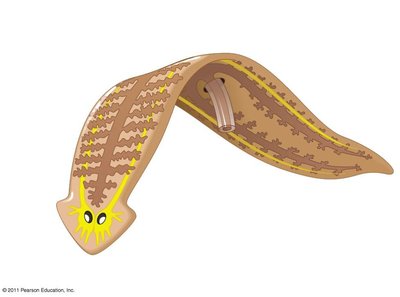
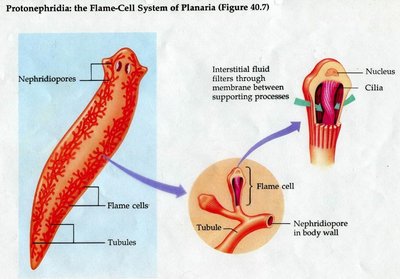
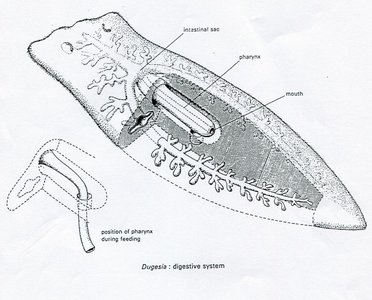
Digestive System of Planaria
Planaria, a type of free-living flatworm, has a branched gastrovascular cavity and a muscular pharynx that can extend out of the body to feed.
Intestinal sac: Highly branched for increased surface area.
Pharynx: Muscular tube for ingestion.
Mouth: Located on the ventral side.
Excretory System: Flame-Cell System
Flatworms use flame cells and tubules to filter and remove waste. The flame cells contain cilia that drive fluid through the tubules, exiting via nephridiopores.
Flame cells: Specialized cells for filtration.
Nephridiopores: Openings for waste excretion.
Parasitic Flatworms: Flukes and Tapeworms
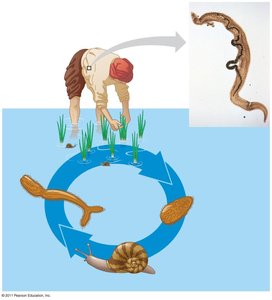
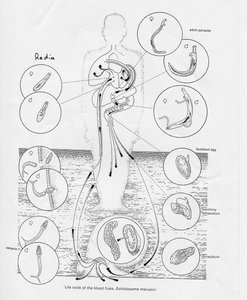
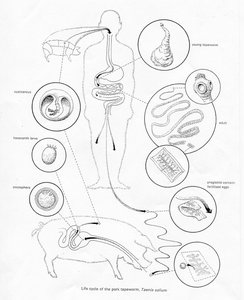
Many flatworms are parasitic, including flukes and tapeworms. They have complex life cycles often involving multiple hosts.
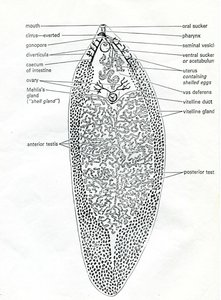
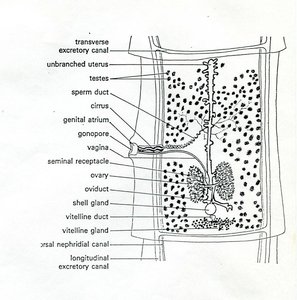
Flukes: Internal parasites with suckers for attachment; complex reproductive systems.
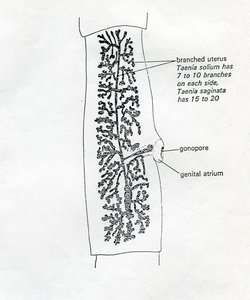
Tapeworms: Long, ribbon-like bodies with segments (proglottids) containing reproductive organs.
Phylum Nematoda: Roundworms
General Structure and Organ Systems
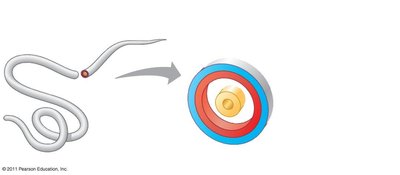
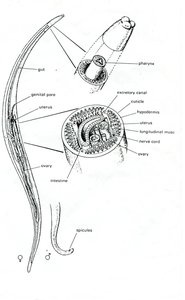
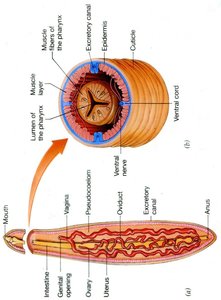
Roundworms are pseudocoelomates with a cylindrical, unsegmented body. They have a complete digestive tract with separate mouth and anus.
Body covering: Cuticle for protection.
Muscle layer: Longitudinal muscles for movement.
Digestive tract: Complete, with mouth, pharynx, intestine, and anus.
Phylum Annelida: Segmented Worms
General Structure and Segmentation
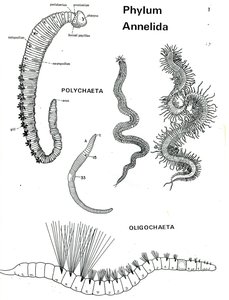
Annelids are coelomates with a segmented body. Each segment contains repeated sets of organs, allowing for specialization and efficient movement.
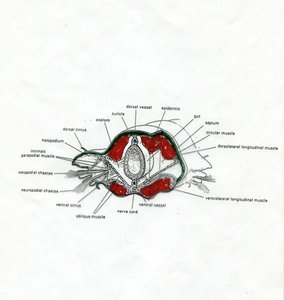
Coelom: True body cavity fully lined by mesoderm.
Segmentation: Allows for independent movement of body parts.
Body covering: Epidermis and cuticle.
Internal Anatomy of Earthworm
Earthworms are a classic example of annelids. Their internal anatomy includes:
Digestive system: Mouth, pharynx, esophagus, crop, gizzard, intestine, and anus.
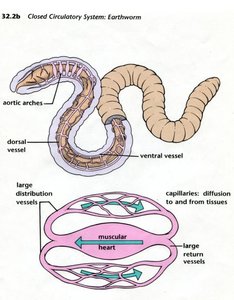
Circulatory system: Closed system with dorsal and ventral vessels, aortic arches (hearts).
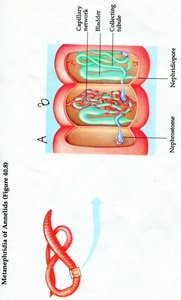
Excretory system: Metanephridia for waste removal.
Nervous system: Cerebral ganglia, ventral nerve cord with segmental ganglia.
Movement in Segmented Worms
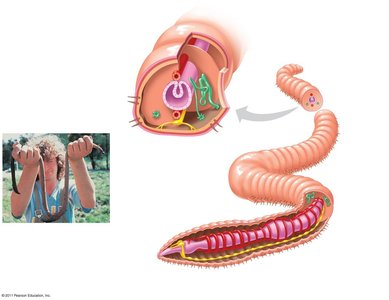
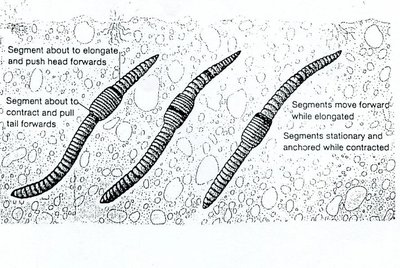
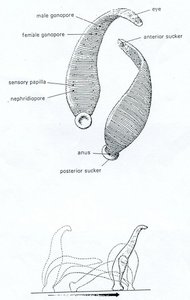
Earthworms move by contracting and elongating their segments, using circular and longitudinal muscles. This allows them to burrow efficiently.
Chaetae: Bristle-like structures for anchoring.
Muscle contraction: Alternating contraction of circular and longitudinal muscles.
Summary Table: Comparison of Worm Body Plans
Type | Body Cavity | Digestive System | Example |
|---|---|---|---|
Acoelomate | No cavity | Gastrovascular cavity | Flatworm |
Pseudocoelomate | Pseudocoelom | Complete tract | Roundworm |
Coelomate | True coelom | Complete tract | Segmented worm |
Additional info: These notes cover the evolution of animal body plans, organ systems, and adaptations in three major worm phyla, directly relevant to introductory biology topics on animal diversity and structure.
