 Indietro
Plant Simple Tissues: Structure, Types, and Functions
Guida di studio - Note intelligenti
 Appunti personalizzati basati sui tuoi materiali, ampliati con definizioni chiave, esempi e contesto.
Plant Morphology & Anatomy
Overview of Plant Tissue Systems
Plants are composed of three primary tissue systems, each derived from the shoot apical meristem (SAM) and root apical meristem (RAM). These tissue systems are essential for the structure and function of all plant organs.
Dermal Tissue System: The outer protective covering of the plant, including the epidermis and periderm.
Vascular Tissue System: Responsible for the transport of water, minerals, and nutrients (xylem and phloem).
Ground Tissue System: Functions in photosynthesis, storage, and support (includes parenchyma, collenchyma, and sclerenchyma).
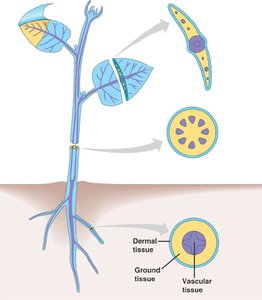
Simple Tissues
Definition and Classification
Simple tissues are composed of only one type of cell and are primarily involved in basic functions such as storage, support, and photosynthesis. They are contrasted with complex tissues, which contain multiple cell types.
Parenchyma
Collenchyma
Sclerenchyma
Parenchyma
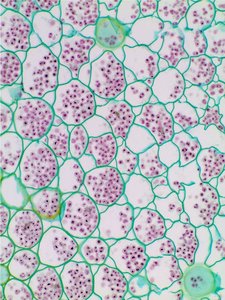
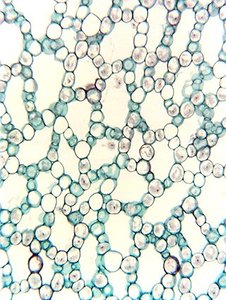
Parenchyma cells are the most common and versatile plant cells. They are living at maturity, have thin and flexible primary cell walls, and are isodiametric (roughly spherical in shape). Parenchyma cells are metabolically active and play key roles in storage, photosynthesis, and tissue repair.
Structure: Thin, pliable cell walls; large central vacuole; living at maturity.
Function: Storage of starch, water, and other substances; photosynthesis (in leaves); wound healing.
Location: Found throughout the plant in the cortex, pith, mesophyll, and fruit flesh.
Specialized Types:
Chlorenchyma: Parenchyma cells containing chloroplasts, specialized for photosynthesis. Common in leaves and green stems.
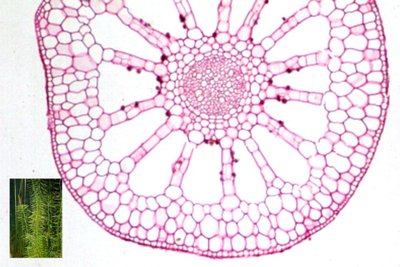
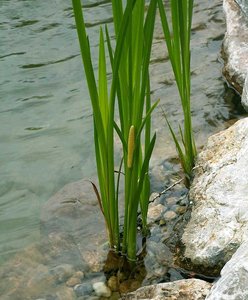
Aerenchyma: Parenchyma with extensive air spaces, facilitating gas exchange in aquatic plants.
Collenchyma
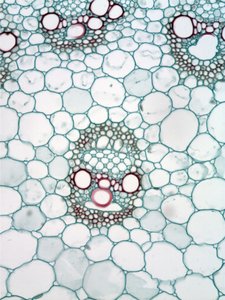
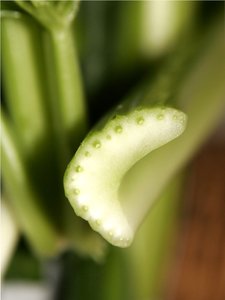
Collenchyma cells provide flexible support to growing plant organs. They are living at maturity, have unevenly thickened primary cell walls, and are usually elongated. Collenchyma is commonly found in young stems, petioles, and leaf veins.
Structure: Unevenly thickened cell walls, often with a pearl-like sheen due to non-cellulosic components.
Function: Provides mechanical support while allowing for growth and flexibility.
Location: Beneath the epidermis in stems and petioles (e.g., celery).
Types of Thickening:
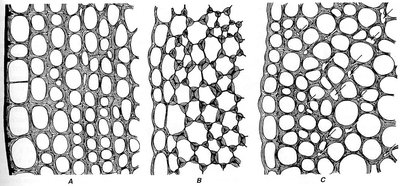
Lamellar (Annular): Thickening on the tangential walls.
Angular: Thickening at the corners of cells.
Lacunar: Thickening adjacent to intercellular spaces.
Sclerenchyma
Sclerenchyma cells are specialized for rigid support and protection. They have both primary and thick, lignified secondary cell walls and are dead at maturity. Sclerenchyma is divided into two main types: fibers and sclereids.
Structure: Thick, lignified secondary walls; dead at maturity.
Function: Provides mechanical strength and protection to plant tissues.
Types:
Fibers: Long, slender cells often grouped in bundles (e.g., flax, hemp).
Sclereids: Variable in shape; provide hardness to seed coats and nutshells.
Types of Sclereids
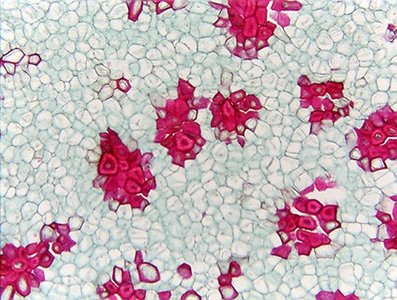
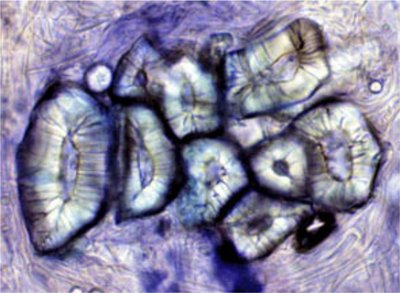
Brachysclereids (Stone cells): Isodiametric, common in pears and seed coats.
Astrosclereids: Star-shaped, often found in aquatic plants.
Macrosclereids: Columnar, common in seed coats.
Osteosclereids: Columnar with thickened ends, also in seed coats.
Fibers
Fibers are classified based on their location relative to vascular tissues:
Extraxylary fibers: Located outside the xylem (e.g., phloem fibers, cortical fibers).
Xylary fibers: Located within the xylem (e.g., fiber-tracheids, libriform fibers).
Type | Location | Example |
|---|---|---|
Phloem (bast) fibers | Phloem | Linen (flax), hemp, ramie |
Cortical fibers | Cortex | Various stems |
Bundle cap/sheath fibers | Surround vascular bundles | Many dicots |
Fiber-tracheids | Xylem | Tension wood |
Libriform fibers | Xylem | Woody plants |
Comparison of Simple Tissues
Feature | Parenchyma | Collenchyma | Sclerenchyma |
|---|---|---|---|
Cell Wall | Thin, primary | Uneven, primary | Thick, lignified secondary |
Living at Maturity? | Yes | Yes | No |
Main Function | Storage, photosynthesis | Support, flexibility | Support, protection |
Examples | Leaf mesophyll, cortex | Celery petiole | Pear stone cells, flax fibers |
Summary Table: Simple Tissue Types and Functions
Tissue Type | Cell Type | Main Function | Location |
|---|---|---|---|
Parenchyma | Parenchyma | Storage, photosynthesis, repair | Cortex, pith, mesophyll |
Collenchyma | Collenchyma | Support in growing organs | Beneath epidermis, petioles |
Sclerenchyma | Fibers, Sclereids | Rigid support, protection | Vascular bundles, seed coats |
Additional info: Simple tissues are foundational to plant structure and function, providing the basis for more complex tissue organization and specialization in higher plants.
