 Indietro
Structure and Function of Invertebrate Organ Systems: Arthropods and Mollusks
Guida di studio - Note intelligenti
 Appunti personalizzati basati sui tuoi materiali, ampliati con definizioni chiave, esempi e contesto.
Arthropod Anatomy and Physiology
Body Segmentation and Exoskeleton
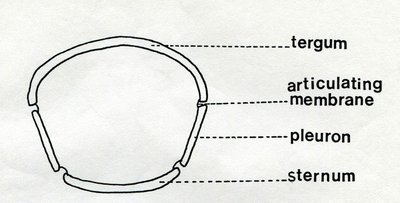
Arthropods possess a segmented body covered by a hard exoskeleton made of chitin, which provides protection and structural support. The exoskeleton is divided into regions with specialized functions.
Tergum: The dorsal (upper) part of a segment.
Sternum: The ventral (lower) part of a segment.
Pleuron: The lateral (side) part of a segment.
Articulating membrane: Flexible regions that allow movement between segments.
Open Circulatory System
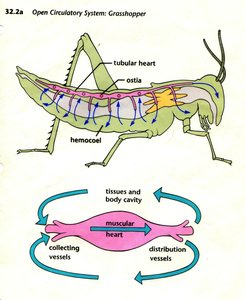
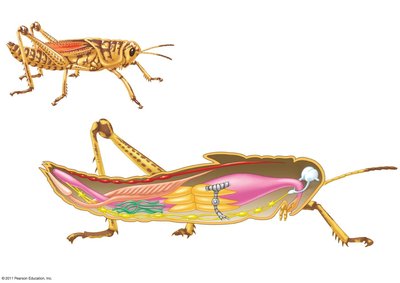
Arthropods, such as grasshoppers, have an open circulatory system in which blood (hemolymph) is not confined entirely to vessels.
Tubular heart: Pumps hemolymph through the body cavity (hemocoel).
Ostia: Openings in the heart that allow hemolymph to enter.
Distribution vessels: Carry hemolymph to tissues.
Collecting vessels: Return hemolymph to the heart.
Respiratory System: Tracheal Tubes
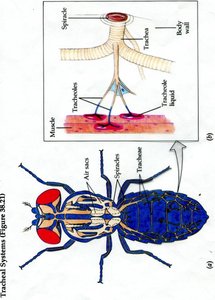
Insects breathe through a network of tracheal tubes that deliver oxygen directly to tissues.
Spiracles: Openings on the body surface for air intake.
Tracheae: Tubes that branch throughout the body.
Tracheoles: Fine branches that reach individual cells.
Digestive and Excretory Systems
Insects have specialized organs for digestion and excretion.
Crop: Storage organ for food.
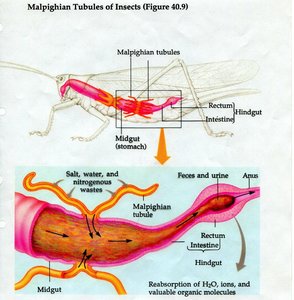
Malpighian tubules: Excretory organs that remove wastes from hemolymph and help conserve water.
Midgut: Site of digestion and absorption.
Hindgut: Reabsorbs water and forms feces.
Head and Mouthparts
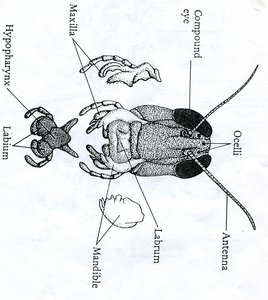
Arthropod head structures are adapted for feeding and sensory functions.
Compound eye: Provides a wide field of vision.
Antennae: Sensory organs for touch and smell.
Mandible, maxilla, labrum, labium, hypopharynx: Mouthparts specialized for biting, chewing, or sucking.
Other Arthropod Groups
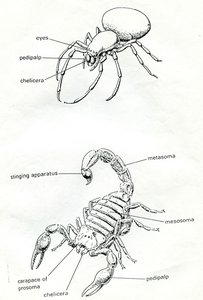
Chelicerates: Includes spiders and scorpions, characterized by chelicerae (mouthparts) and pedipalps.
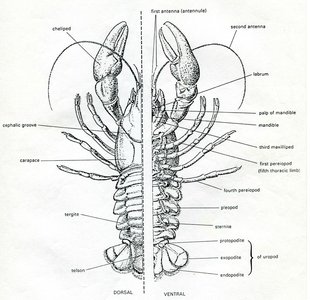
Crustaceans: Includes lobsters, with specialized appendages for feeding and movement.
Mollusk Anatomy and Physiology
General Body Plan
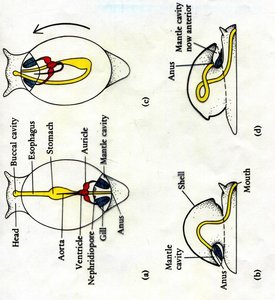
Mollusks are soft-bodied animals, often protected by a hard shell. Their body plan includes a mantle, foot, and visceral mass.
Mantle: Secretes the shell and forms a cavity for respiration and excretion.
Foot: Muscular structure for movement.
Visceral mass: Contains internal organs.
Shell: Provides protection.
Digestive System
Mollusks have a complete digestive tract with specialized organs.
Mouth: Entry point for food.
Digestive gland: Secretes enzymes for digestion.
Gut: Absorbs nutrients.
Anus: Expels waste.
Respiratory System
Mollusks use gills for gas exchange, located in the mantle cavity.
Gill: Extracts oxygen from water.
Mantle cavity: Houses the gills.
Incurrent and excurrent siphons: Direct water flow through the mantle cavity.
Reproductive System
Mollusks have gonads for producing gametes.
Gonad: Organ that produces eggs or sperm.
Comparative Anatomy of Mollusk Groups
Mollusks are classified into several groups based on their anatomy.
Bivalves: Have two shells and filter-feed using gills.
Gastropods: Have a single shell and a distinct head.
Cephalopods: Have a reduced or absent shell and highly developed nervous system.
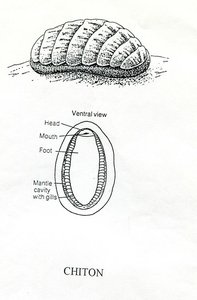
Chitons: Have multiple shell plates and a broad foot.
Radula: Feeding Structure
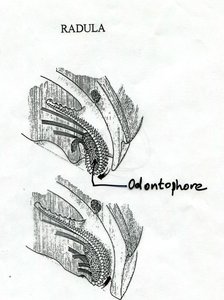
The radula is a toothed, chitinous ribbon used by mollusks to scrape or cut food.
Odontophore: Supporting structure for the radula.
Summary Table: Comparison of Arthropod and Mollusk Organ Systems
Feature | Arthropods | Mollusks |
|---|---|---|
Body Covering | Chitinous exoskeleton | Calcareous shell (in most) |
Circulatory System | Open, tubular heart | Open or closed, heart and vessels |
Respiratory System | Tracheal tubes or gills | Gills in mantle cavity |
Excretory System | Malpighian tubules | Nephridia |
Feeding Structures | Mandibles, maxillae, labrum, labium | Radula, beak (cephalopods) |
Example: Grasshoppers use tracheal tubes for respiration and Malpighian tubules for excretion, while bivalve mollusks use gills for respiration and nephridia for excretion. Additional info: These notes cover the structure and function of major organ systems in arthropods and mollusks, relevant to introductory biology topics such as animal diversity, organ systems, and comparative anatomy.
