 Indietro
Atoms and Elements: Foundations of Chemistry
Guida di studio - Note intelligenti
 Appunti personalizzati basati sui tuoi materiali, ampliati con definizioni chiave, esempi e contesto.
Atoms & Elements
What are Atoms?
An atom is the smallest identifiable unit of an element, serving as the fundamental building block of matter. There are approximately 91 naturally occurring elements, with scientists having synthesized about 20 additional elements. Each element is composed of atoms unique to that element.

History of Atomic Theory
The concept of the atom originated with the Greek philosopher Democritus, who proposed that matter was composed of small, indivisible particles called "atomos." This idea laid the foundation for later scientific developments.
Dalton's Model of the Atom
John Dalton formalized atomic theory in the early 19th century, stating:
All matter is made up of tiny particles called atoms or molecules.
Molecules can be broken down into atoms by chemical processes, but atoms cannot be broken down further.
All atoms of a given element have the same mass and properties that distinguish them from atoms of other elements.
Atoms combine in simple, whole-number ratios to form compounds.
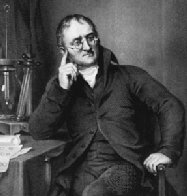
Dalton's theory relied on the law of conservation of mass and the law of definite composition. For example, carbon dioxide (CO2) always has a fixed ratio of carbon to oxygen, and water (H2O) always has two hydrogen atoms and one oxygen atom.
Thomson's Model of the Atom
J.J. Thomson discovered the electron, a negatively charged particle much smaller and lighter than atoms. He proposed the "plum pudding model," where electrons are embedded in a sphere of positive charge, maintaining overall neutrality.
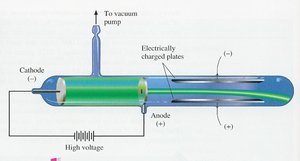
Thomson's experiments showed that electrons are present in many substances, and he calculated the mass-to-charge ratio of electrons and protons.
Rutherford's Model of the Atom
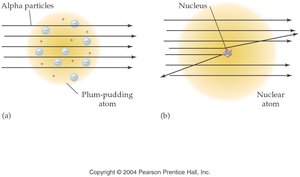
Ernest Rutherford conducted the gold foil experiment, firing alpha particles at a thin sheet of gold. Most particles passed through, but some were deflected, indicating the presence of a dense, positively charged nucleus surrounded by empty space.
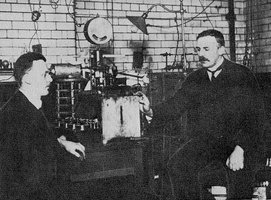
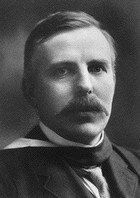
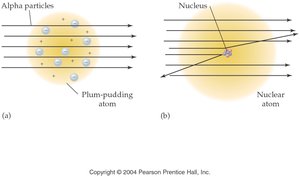
The experiment demonstrated that atoms are mostly empty space, with a tiny, dense nucleus at the center.
Discovery of Subatomic Particles
Rutherford predicted the existence of neutral particles (neutrons) in the nucleus, which were discovered about 30 years later. Neutrons are similar in mass to protons but have no charge.
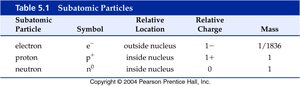
Subatomic Particle | Symbol | Relative Location | Relative Charge | Mass |
|---|---|---|---|---|
Electron | e- | Outside nucleus | 1- | 1/1836 |
Proton | p+ | Inside nucleus | 1+ | 1 |
Neutron | n0 | Inside nucleus | 0 | 1 |
Atomic Notation
Atomic number (Z) is the number of protons in the nucleus and identifies the element. Mass number (A) is the sum of protons and neutrons. Atomic notation is a shorthand for expressing the composition of an atomic nucleus:
Element symbol: e.g., Na for sodium
Atomic number (Z): number of protons
Mass number (A): protons + neutrons
For sodium (Na): Z = 11, A = 23, so neutrons = 23 - 11 = 12.
Isotopes
Atoms of the same element with different numbers of neutrons are called isotopes. Isotopes have the same atomic number but different mass numbers. Not all isotopes are stable.
Hydrogen isotopes: Protium (1 proton, 0 neutrons), Deuterium (1 proton, 1 neutron), Tritium (1 proton, 2 neutrons, radioactive)
Carbon isotopes: C-12 (6 protons, 6 neutrons), C-13 (6 protons, 7 neutrons), C-14 (6 protons, 8 neutrons, radioactive)
Atomic Mass
The atomic mass is the weighted average mass of all naturally occurring isotopes, measured in atomic mass units (amu). The formula is:
Example: Chlorine consists of 75.77% Cl-35 (34.97 amu) and 24.23% Cl-37 (36.97 amu):
The Periodic Table
Mendeleev's Periodic Table
Dmitri Mendeleev arranged elements in order of increasing atomic mass, grouping elements with similar properties. He left gaps for undiscovered elements and predicted their properties.
Modern Periodic Table
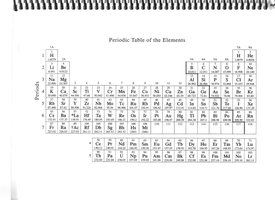
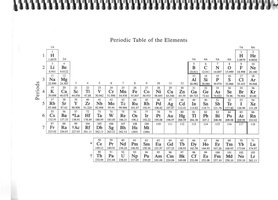
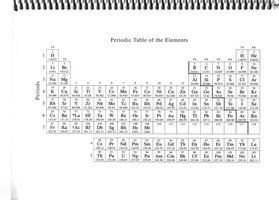
The modern periodic table arranges elements by increasing atomic number (Z), following the periodic law: properties of elements repeat in a predictable pattern. The table is organized into groups (vertical columns) and periods (horizontal rows).
Classification of Elements
Elements are classified as metals, nonmetals, and metalloids based on their properties.
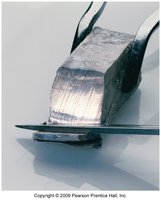
Metals
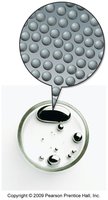
Solids at room temperature (except Hg)
Shiny, reflective surface
Conduct heat and electricity
Malleable and ductile
Lose electrons to form cations
Located on the lower left of the periodic table
Nonmetals
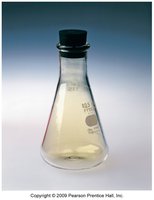
Found in all three states (solid, liquid, gas)
Poor conductors of heat and electricity
Solids are brittle
Gain electrons to form anions
Located on the upper right of the periodic table (except H)
Metalloids (Semi-metals)
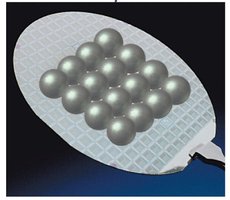
Show properties of both metals and nonmetals
Often semiconductors
Example: Silicon is shiny, conducts electricity, but is brittle and does not conduct heat well
Groups and Periods
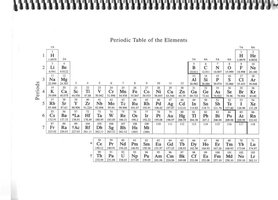
Groups are vertical columns (18 total), and elements in the same group exhibit similar properties. Periods are horizontal rows (7 total).
Group A Elements (Representative/Main Group)
IA: Alkali metals (very reactive)
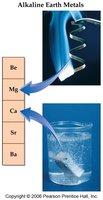
IIA: Alkaline earth metals (fairly reactive)
VA: Pnictogens
VIA: Chalcogens
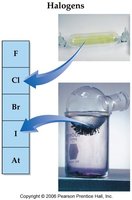
VIIA: Halogens (very reactive)
VIIIA: Noble gases (inert)
Group B Elements (Transition and Inner Transition)
Transition elements: Middle of the periodic table, unpredictable properties
Inner transition elements: Lanthanide (rare earth) and actinide (radioactive) series
Transuranium elements: Z > 93, man-made
Element Names and Symbols
Each element has a unique name and symbol, often derived from Latin, Greek, or geographic locations. Symbols are one or two letters, with the first letter capitalized and the second lowercase.
Ions and Ionic Charge
Formation of Ions
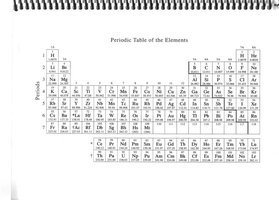
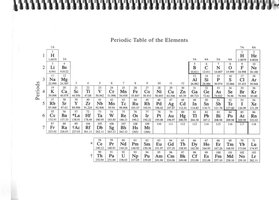
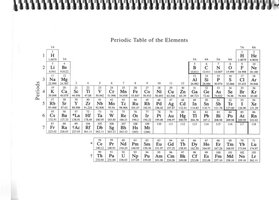
Metals tend to lose electrons to achieve a stable noble gas configuration, forming positively charged cations. Nonmetals gain electrons to form negatively charged anions. The charge of an ion is related to the number of valence electrons.
Group IA metals lose one electron to form +1 ions:
Group VIA nonmetals gain two electrons to form -2 ions:
Examples of Ionic Formulas
Chlorine: Cl-
Calcium: Ca2+
Phosphorous: P3-
Sodium: Na+
Oxygen: O2-
Aluminum: Al3+
Additional info:
This study guide covers the foundational concepts of atoms, elements, isotopes, atomic mass, the periodic table, classification of elements, and the formation of ions, all of which are essential for an Introduction to Chemistry course.
