 Indietro
Atoms and Elements: Foundations of Modern Chemistry
Guida di studio - Note intelligenti
 Appunti personalizzati basati sui tuoi materiali, ampliati con definizioni chiave, esempi e contesto.
Atoms and Elements
Introduction to Atoms and Elements
Atoms are the fundamental building blocks of matter, and elements are substances composed entirely of one type of atom. Understanding the structure and properties of atoms and elements is essential for connecting the macroscopic world we observe with the microscopic world of chemistry.
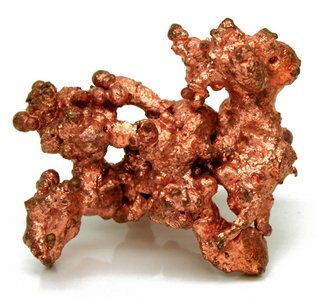
Atom: The smallest identifiable unit of an element.
Element: A pure substance consisting of only one kind of atom.
There are about 91 naturally occurring elements and over 20 synthetic elements.
Atoms cannot be divided further and still retain the properties of the element.

The Structure of the Atom
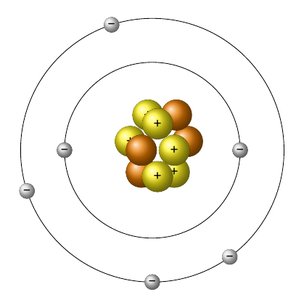
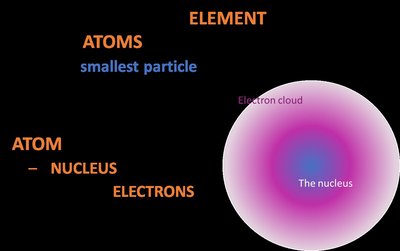
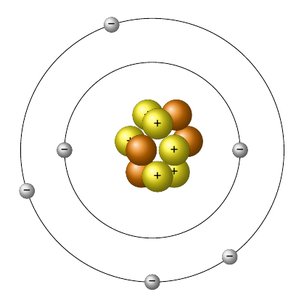
The atom consists of a central nucleus containing protons and neutrons, surrounded by electrons in an electron cloud. The nucleus contains nearly all the mass of the atom but is extremely small compared to the overall size.
Nucleus: Contains protons (positive charge) and neutrons (neutral).
Electrons: Negatively charged, almost zero mass, responsible for chemical behavior.
Protons and neutrons are about 1000 times more massive than electrons.


Modern Atomic Theory and Laws
The Law of Conservation of Mass
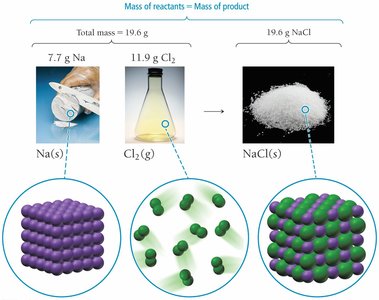
Formulated by Antoine Lavoisier, this law states that matter is neither created nor destroyed in a chemical reaction. The total mass of reactants equals the total mass of products.
Key Principle: Mass remains constant during chemical changes.
Supports the idea that matter is composed of indestructible particles (atoms).
The Law of Definite Proportions
Joseph Proust's law states that all samples of a given compound have the same proportions of their constituent elements, regardless of source or preparation.
Example: Water always decomposes into hydrogen and oxygen in a mass ratio of 2.0 g H to 16.0 g O (8:1).
Ammonia (NH3) has a nitrogen to hydrogen mass ratio of 4.7:1.
The Law of Multiple Proportions
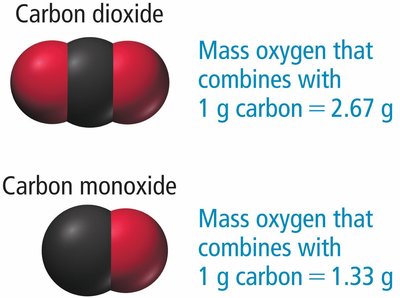
John Dalton's law states that when two elements form more than one compound, the masses of one element that combine with a fixed mass of the other are in small whole-number ratios.
Example: Carbon monoxide and carbon dioxide both contain carbon and oxygen, but the mass ratios of oxygen to carbon are 1.33:1 and 2.67:1, respectively.
Ratio of ratios: (a small whole number).
Dalton's Atomic Theory
Dalton explained these laws with his atomic theory:
Each element is composed of tiny, indestructible particles called atoms.
All atoms of a given element have the same mass and properties.
Atoms combine in simple, whole-number ratios to form compounds.
Atoms of one element cannot change into atoms of another element.
Subatomic Particles
Protons, Neutrons, and Electrons
Atoms are composed of three main subatomic particles:
Proton (p+): Positive charge, inside nucleus, defines the element.
Neutron (n0): Neutral charge, inside nucleus, contributes to mass.
Electron (e-): Negative charge, outside nucleus, responsible for chemical reactions.

Atomic Number and Element Identity
The atomic number (Z) is the number of protons in the nucleus and uniquely identifies an element. The periodic table is organized by increasing atomic number.
Atomic Number (Z): Number of protons in the nucleus.
Each element has a unique name and chemical symbol (e.g., C for carbon, H for hydrogen).
Isotopes and Atomic Mass
Isotopes
Isotopes are atoms of the same element with different numbers of neutrons. They have the same number of protons but vary in mass.
Example: Neon has three isotopes: Ne-20, Ne-21, Ne-22.
Natural abundance refers to the relative percentage of each isotope in a sample.
Symbol | Protons | Neutrons | Mass Number (A) | Natural Abundance (%) |
|---|---|---|---|---|
Ne-20 | 10 | 10 | 20 | 90.48 |
Ne-21 | 10 | 11 | 21 | 0.27 |
Ne-22 | 10 | 12 | 22 | 9.25 |
Calculating Average Atomic Mass
The atomic mass of an element is the weighted average of the masses of its isotopes, based on their natural abundance.
Formula:
Example: Chlorine has two isotopes: Cl-35 (75.77%, 34.97 amu) and Cl-37 (24.23%, 36.97 amu).
Atomic mass of Cl = amu
The Periodic Table and Element Classification
Periodic Law and Table Organization
The periodic table arranges elements in order of increasing atomic number, grouping elements with similar properties in columns. Mendeleev's periodic law states that properties recur periodically when elements are arranged by increasing mass.
Rows are called periods; columns are called groups or families.
Groups are numbered 1–18; main-group elements are in columns labeled with A, transition elements with B.
Classification of Elements
Metals: Lower-left and middle of the table; good conductors, malleable, ductile, shiny, tend to lose electrons.
Nonmetals: Upper-right; poor conductors, not malleable or ductile, tend to gain electrons.
Metalloids: Along the zigzag line; mixed properties, often semiconductors.
Special Groups
Noble Gases (Group 8A): Unreactive, stable (e.g., helium, neon).
Alkali Metals (Group 1A): Highly reactive metals (e.g., sodium, potassium).
Alkaline Earth Metals (Group 2A): Fairly reactive metals (e.g., calcium, magnesium).
Halogens (Group 7A): Very reactive nonmetals (e.g., fluorine, chlorine).
Ions and the Periodic Table
Formation of Ions
Atoms can lose or gain electrons to form ions. Main-group metals tend to lose electrons and form cations, while main-group nonmetals tend to gain electrons and form anions.
Cation: Positively charged ion (e.g., Na+).
Anion: Negatively charged ion (e.g., F-).
Alkali metals form +1 ions; alkaline earth metals form +2 ions; halogens form -1 ions; oxygen family forms -2 ions.
Charge of cations = group number; charge of anions = group number minus 8.
Transition elements may form ions with various charges.
Summary Table: Subatomic Particles
Particle | Location | Charge | Relative Mass |
|---|---|---|---|
Proton (p+) | Nucleus | +1 | 1 |
Neutron (n0) | Nucleus | 0 | 1 |
Electron (e-) | Outside nucleus | -1 | ~0.0005 |
Key Equations
Atomic Mass Calculation:
Mass Ratio Example:
Law of Multiple Proportions:
Conclusion
Understanding atoms, elements, isotopes, and the periodic table is fundamental to chemistry. These concepts explain the structure of matter, the behavior of elements, and the formation of compounds, providing a foundation for further study in chemical reactions and properties.
