Indietro
Atoms, Laws of Chemical Combination, and the Periodic Table: Foundations of Modern Chemistry
Guida di studio - Note intelligenti
 Appunti personalizzati basati sui tuoi materiali, ampliati con definizioni chiave, esempi e contesto.
Atoms and the Development of Atomic Theory
The Greek Philosophical Foundations of Matter
The earliest ideas about the nature of matter originated with ancient Greek philosophers. Their theories, though not based on experimental evidence, laid the groundwork for later scientific inquiry.
Aristotle's View: Aristotle proposed that all matter is composed of four elements—earth, air, fire, and water—and that matter is continuous and infinitely divisible, not made of discrete particles.
Leucippus and Democritus: In contrast, Leucippus and Democritus suggested that matter is composed of tiny, indivisible particles called atomos (meaning "uncuttable"). This idea is the origin of the term atom.
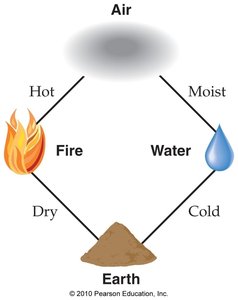
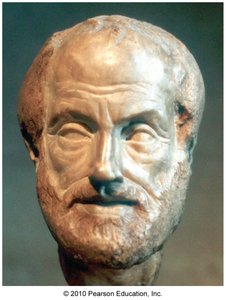

Additional info: Aristotle's view dominated Western thought for nearly 2000 years, despite being incorrect. The atomistic view was largely ignored until the rise of modern science.
Laws of Chemical Combination
The Law of Conservation of Mass (Lavoisier)
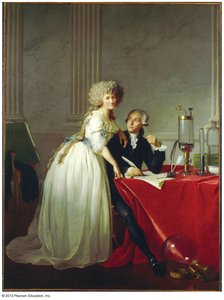
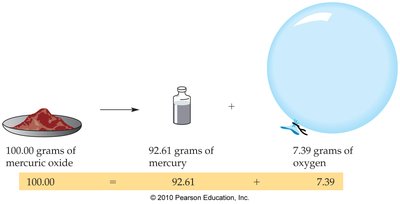
In the late 18th century, Antoine Lavoisier established chemistry as a quantitative science by demonstrating that matter is conserved in chemical reactions.
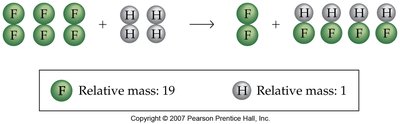
Law of Conservation of Mass: During a chemical change, matter is neither created nor destroyed. The total mass of the products equals the total mass of the reactants.
This law is fundamental for chemical calculations and underpins the principle that new materials can only be made by rearranging atoms, not by creating or destroying them.
The Law of Definite Proportions (Proust)
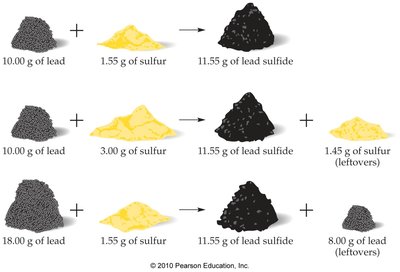
Joseph Proust discovered that a chemical compound always contains the same elements in the same proportion by mass, regardless of its source or method of preparation.
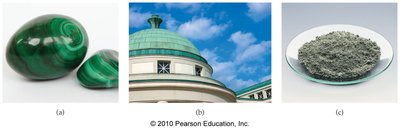
Law of Definite Proportions: A compound always contains the same elements in certain definite proportions and in no other combinations.
This law is the basis for chemical formulas, such as H2O for water.
Compounds not only have constant composition but also constant properties (e.g., pure water always freezes at 0°C and boils at 100°C at sea level).
The Law of Multiple Proportions (Dalton)
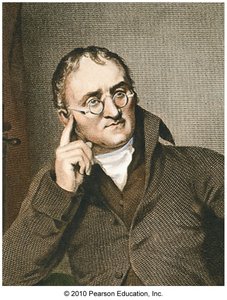
John Dalton observed that elements can combine in more than one set of proportions, with each set corresponding to a different compound.
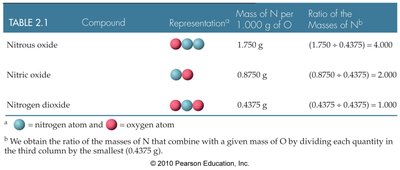
Law of Multiple Proportions: When two elements form more than one compound, the masses of one element that combine with a fixed mass of the other are in ratios of small whole numbers.
Example: Nitrogen and oxygen form three compounds—N2O, NO, and NO2—with mass ratios of nitrogen to oxygen in simple whole numbers.
Dalton’s Atomic Theory and Its Modern Modifications
Dalton’s Atomic Theory
Dalton’s atomic theory provided a scientific explanation for the laws of chemical combination and established the concept of the atom as the fundamental unit of matter.
All matter is composed of extremely small and indestructible particles called atoms.
Elements are made of just one type of atom, unique to each element.
Compounds are formed when atoms of different elements combine in fixed proportions.
Chemical reactions involve the rearrangement of atoms; atoms themselves are not changed in chemical reactions.
Modern Modifications:
Atoms are divisible into subatomic particles (protons, neutrons, electrons).
Atoms of the same element can have different masses (isotopes).
Atoms can be changed in nuclear reactions, but not in ordinary chemical reactions.
Additional info: Dalton’s theory explained the laws of definite and multiple proportions, and the law of conservation of mass, by proposing that matter is atomic in nature.
Isotopes
Isotopes are atoms of the same element that have different masses due to varying numbers of neutrons.
Example: Carbon has isotopes with relative atomic masses of 12 and 13.
The Mole and Molar Mass
Definition and Use of the Mole
The mole is a counting unit in chemistry, defined as the number of atoms in exactly 12.011 grams of carbon-12. This number is known as Avogadro’s Number ().
The molar mass is the mass, in grams, of one mole of a substance. It is numerically equal to the sum of the atomic masses of the elements in a compound (in g/mol).
Example: The molar mass of water (H2O) is 18.0 g/mol.

Calculating Mass and Moles
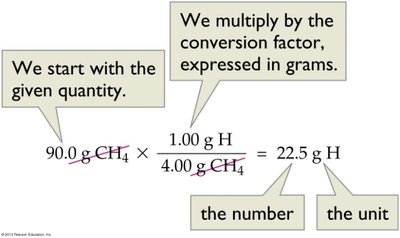
Proportions and conversion factors are used to calculate the amount of one substance needed to combine with a given quantity of another substance.
Example: Decomposing 90.0 g of methane (CH4) yields 22.5 g of hydrogen, using the mass ratio from the formula.
Additional info: These calculations are essential for stoichiometry and quantitative chemical analysis.
The Periodic Table and Atomic Masses
Development of the Periodic Table
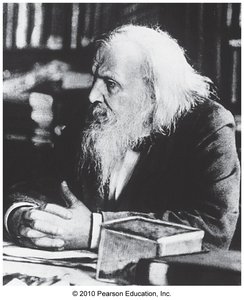
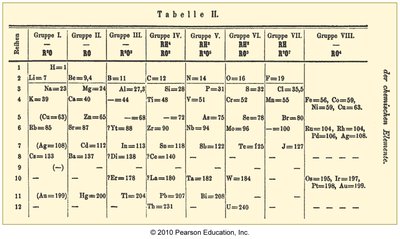
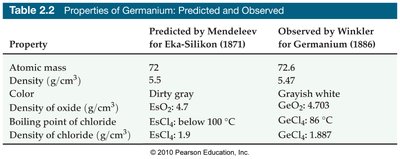
The periodic table organizes elements according to their atomic masses and properties. Dmitri Mendeleev is credited with creating the first widely recognized periodic table in 1869.
Mendeleev arranged elements in order of increasing atomic mass and left gaps for undiscovered elements, predicting their properties with remarkable accuracy.
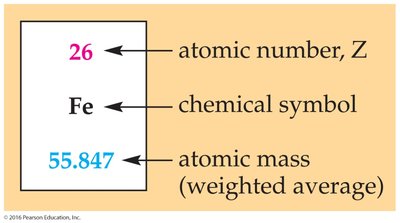
Atomic masses were originally based on hydrogen, then oxygen, and now carbon-12.
Modern atomic masses are expressed in atomic mass units (amu).
Atoms and Molecules: Real and Relevant
Observing Atoms
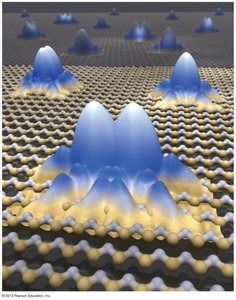
Atoms are real, tangible entities that can be observed using advanced techniques such as scanning tunneling microscopy, which produces computer-enhanced images of individual atoms.
Molecules
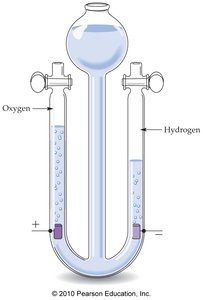
Molecules are groups of atoms chemically bonded together and are represented by chemical formulas. For example, a molecule of water (H2O) consists of two hydrogen atoms bonded to one oxygen atom.
Green Chemistry and the Use of Elements
Hazardous and Rare Elements
Some elements are hazardous or rare, which can pose challenges for technology and the environment. Green chemistry seeks to replace these substances with safer or more abundant alternatives.
Example: Replacing mercury in fluorescent light bulbs with mercury-free alternatives to reduce environmental hazards.