Indietro
Chapter 1: The Chemical World – Introduction to Chemistry Study Notes
Guida di studio - Note intelligenti
 Appunti personalizzati basati sui tuoi materiali, ampliati con definizioni chiave, esempi e contesto.
The Chemical World
Definition of Chemistry
Chemistry is the science that seeks to understand how matter behaves by studying what atoms and molecules do. It is a foundational discipline that explains the properties, composition, and changes of substances in the universe.
Matter: Anything that has mass and occupies space.
Atoms: The basic units of matter, composed of protons, neutrons, and electrons.
Molecules: Groups of atoms bonded together, representing the smallest fundamental unit of a chemical compound.
Chemicals: Substances consisting of matter, whether naturally occurring or synthetic.
Example: Water (H2O), air, toothpaste, Tylenol, and toilet paper are all composed of chemicals.
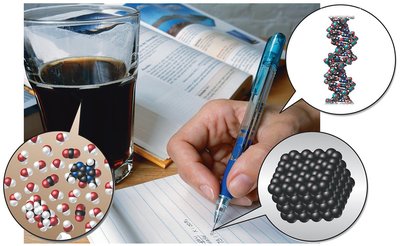
Chemicals Compose Ordinary Things
Everything you can hold or touch is made of chemicals. Chemicals are not limited to dangerous substances; they make up virtually everything around us, including everyday items and essential resources.
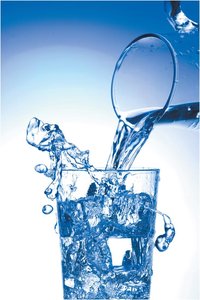
Key Point: Chemicals are present in the air we breathe, the water we drink, and common household products.
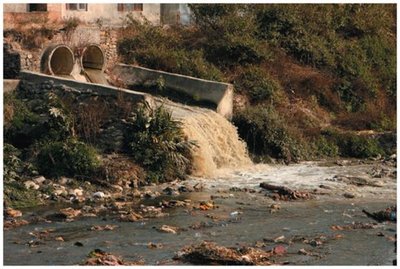
Example: Paint thinner and polluted water are also composed of chemicals, demonstrating both beneficial and harmful uses.

The Scientific Method: How Chemists Think
Overview of the Scientific Method
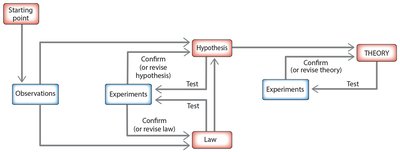
The scientific method is a systematic approach used by chemists to gain knowledge about the natural world. It involves making observations, forming hypotheses, conducting experiments, and developing laws and theories.
Observation: Measuring or observing some aspect of nature.
Hypothesis: A tentative explanation for observations, which must be testable and falsifiable.
Experiment: Highly controlled procedures designed to validate or invalidate hypotheses.
Law: A statement that summarizes the results of many observations and predicts future ones.
Theory: A model that explains the underlying causes for observations and laws, supported by extensive evidence.
Hypothesis, Law, and Theory
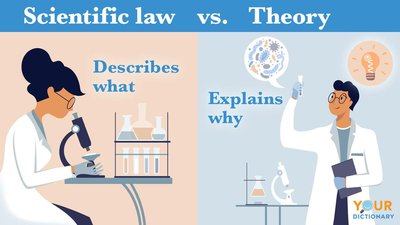
Hypotheses are tested through experiments. If results do not support the hypothesis, it must be revised or replaced. Scientific laws describe what happens, while theories explain why it happens.
Scientific Law: Describes consistent observations (e.g., Law of Gravity).
Scientific Theory: Explains the reasons behind observations (e.g., Theory of Evolution).
Falsifiability: A good hypothesis can be proven wrong by further testing.
Combustion and the Scientific Method
Antoine Lavoisier and the Law of Conservation of Mass
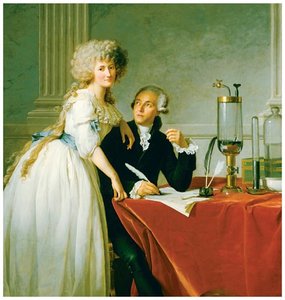
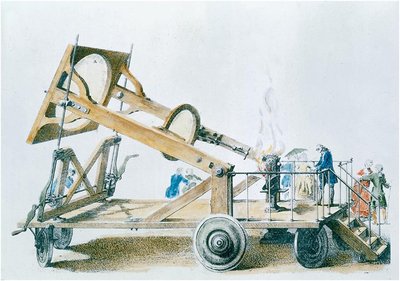
Antoine Lavoisier, a French chemist, used the scientific method to study combustion. He measured the mass of substances before and after burning them in closed containers and found that mass remained unchanged.
Law of Conservation of Mass: In a chemical reaction, matter is neither created nor destroyed.
Equation:
Application: This law predicts the outcome of chemical reactions and is fundamental to chemical calculations.
Analyzing and Interpreting Data
Scientific Data and Measurement
Scientists collect measurements as part of their observations. These measurements, known as scientific data, are analyzed to identify patterns and relationships.
Key Point: Recognizing patterns in data is essential for developing scientific understanding.
Example: Mass measurements of water, hydrogen, and oxygen formed during chemical reactions.
Sample | Mass of Water | Mass of Hydrogen Formed | Mass of Oxygen Formed |
|---|---|---|---|
A | 20.0 g | 2.2 g | 17.8 g |
B | 50.0 g | 5.6 g | 44.4 g |
C | 100.0 g | 11.1 g | 88.9 g |
Skills for Success in Chemistry
Curiosity, Imagination, and Calculation
Success in chemistry requires curiosity, imagination, and a desire to understand why things happen. Quantification and calculation are essential skills, as measurements provide objective information about chemical phenomena.
Quantification: The process of measuring and expressing information numerically.
Example: Measuring the temperature of two water samples to determine differences.
Equation: