 Indietro
Chapter 1: The Chemical World – Study Notes for Introductory Chemistry
Guida di studio - Note intelligenti
 Appunti personalizzati basati sui tuoi materiali, ampliati con definizioni chiave, esempi e contesto.
Chapter 1: The Chemical World
Definition of Chemistry
Chemistry is the science that seeks to understand how matter behaves by studying what atoms and molecules do. Virtually everything around us is composed of chemicals, and chemistry provides the framework for understanding their properties and interactions.
Atoms: The Building Blocks of Matter
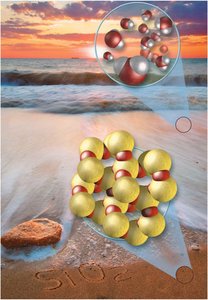
Atoms are the fundamental units of matter. They are incredibly small particles, and all matter is composed of these tiny entities. The sheer number of atoms in even a small object, such as a grain of sand, is immense.
Atom: The smallest unit of an element that retains the properties of that element.
Matter: Anything that has mass and occupies space.
Scale: A single grain of sand contains more atoms than there are grains of sand on a large beach.
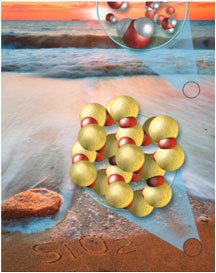
Atoms and Molecules in Matter
Atoms combine to form molecules, which are groups of atoms bonded together. The properties of a molecule depend on the types of atoms it contains and the way those atoms are arranged.
Molecule: A group of two or more atoms bonded together.
Composition and Shape: The characteristics of a molecule are determined by its constituent atoms and its shape.
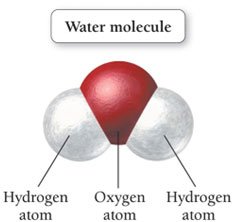
Water Molecules
Water is a common molecule composed of one oxygen atom and two hydrogen atoms. Its bent shape is crucial to its properties, such as being a liquid at room temperature and supporting life.
Chemical Formula:
Structure: Bent shape due to the arrangement of atoms.
Properties: Liquid at room temperature; remains liquid over a wide temperature range.
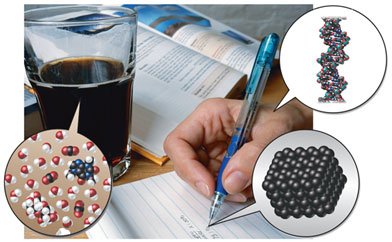
Chemicals Compose Ordinary Things
Everything you can hold or touch is made of chemicals. While people often associate chemicals with dangerous substances, they also make up ordinary things such as air, water, toothpaste, and medicines.
Examples: Air, water, toothpaste, Tylenol, toilet paper.
Misconceptions: Chemicals are not only poisons or pollutants; they are fundamental to everyday life.

Chemistry Explains Properties and Behavior
Chemistry helps us understand the properties and behavior of chemicals by studying the molecules that compose them. This understanding is essential for explaining why substances act the way they do.
The Scientific Method: How Chemists Think
Overview of the Scientific Method
The scientific method is a systematic approach to learning about the world that emphasizes observation and experimentation. It contrasts with earlier philosophies that relied solely on reason.
Observation: Measuring or observing aspects of nature.
Hypothesis: A tentative explanation for observations.
Law: Summarizes results of many observations and predicts future ones.
Theory: Provides a deeper explanation for observations and laws.
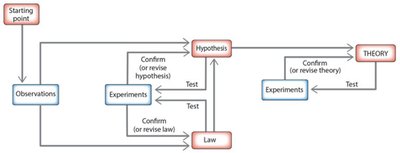
Observation
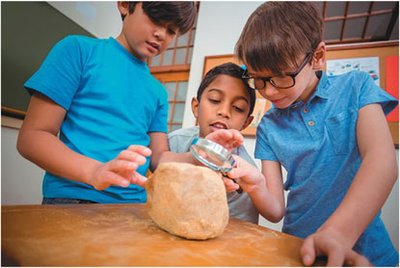
Observations are the foundation of scientific inquiry. They can be made with the naked eye or through experiments using sensitive instruments. Observations often involve measurement or description of physical phenomena.
Hypothesis
A hypothesis is a proposed explanation for an observation. It must be falsifiable, meaning it can be tested and potentially proven wrong. Experiments are designed to validate or invalidate hypotheses.
Falsifiability: Essential for scientific hypotheses.
Testing: Experiments are used to confirm or refute hypotheses.
Experiments
Experiments are controlled procedures used to test hypotheses, laws, and theories. If results do not confirm the hypothesis, it must be revised and retested.
Combustion and the Scientific Method
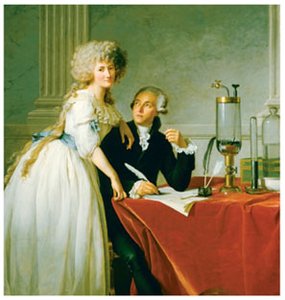
Antoine Lavoisier, a French chemist, used the scientific method to study combustion. He measured the mass of substances before and after burning them in closed containers and found that mass did not change, leading to the Law of Conservation of Mass.
Law of Conservation of Mass: In a chemical reaction, matter is neither created nor destroyed.
Equation:
The Scientific Method: Atomic Theory
The idea that all matter is made of atoms is a scientific theory supported by extensive experimental evidence. Modern technology allows us to visualize atoms directly.
Atomic Theory: All matter is composed of atoms.
Evidence: Over 200 years of experiments support this theory.
Analyzing and Interpreting Data
Scientific Data
Scientists collect measurements as part of their observations, which are known as scientific data. Analyzing and interpreting data is a key skill in chemistry.
Example Table: Mass of oxygen, hydrogen, and water samples.
Sample | Mass of Oxygen (g) | Mass of Hydrogen (g) | Mass of Water (g) |
|---|---|---|---|
A | 17.8 | 2.2 | 20.0 |
B | 44.4 | 5.6 | 50.0 |
C | 88.9 | 11.1 | 100.0 |
Visualizing Data
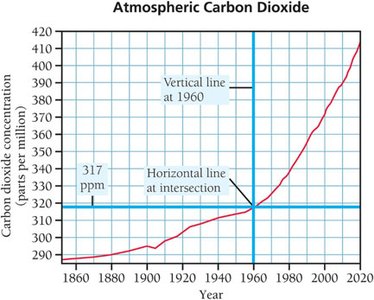
Data can be visualized using graphs, which help scientists interpret relationships and trends. Understanding the axes and the data presented is essential.
Interpreting Graphs
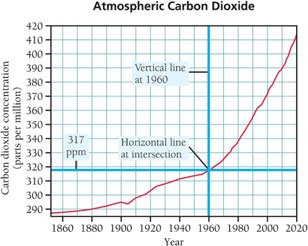
Graphs can show changes over time, such as the concentration of carbon dioxide in the atmosphere. By examining the axes and data points, scientists can quantify changes and trends.
Success in Chemistry
Curiosity and Imagination
Success in chemistry requires curiosity, imagination, and a desire to understand the 'why' of things. These qualities drive scientific inquiry and discovery.
Calculation and Quantification
Chemistry involves calculation and quantification. Measurement is a fundamental tool, allowing scientists to compare and analyze physical properties.
Example: Measuring temperature differences between samples.
Commitment and Regular Work
Regular and careful work is essential for success in chemistry. Diligence is rewarded by a deeper understanding of the molecular and atomic world.
Additional Info
Note About the Text: Answers to questions and problems are provided in the textbook's answer section. This ensures students can check their understanding and practice problem-solving skills.
