 Indietro
Introduction to Chemistry: The Chemical World and Scientific Method
Guida di studio - Note intelligenti
 Appunti personalizzati basati sui tuoi materiali, ampliati con definizioni chiave, esempi e contesto.
The Chemical World
What is Chemistry?
Chemistry is the scientific study of the properties, composition, and behavior of substances and the particles that compose them. It seeks to understand what matter does by examining the actions of atoms and molecules. All visible and invisible things are made up of matter, which consists of fundamental building blocks.
Matter: Anything that has mass and occupies space.
Atoms: The smallest identifiable unit of an element.
Molecules: Groups of atoms bonded together, representing the smallest fundamental unit of a chemical compound.
Substances: Matter with a specific composition and properties.
Example: People are made of organs, which are made of tissues, which are made of cells, which are made of molecules, which are made of atoms.
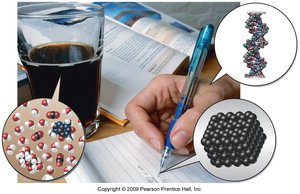
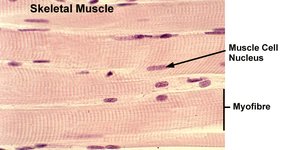
Atoms: The Building Blocks of Matter
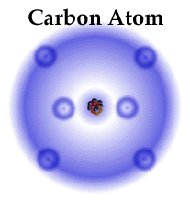
An atom is the smallest unit of an element that retains the properties of that element. Atoms combine to form molecules, which make up the substances around us.
Element: A pure substance consisting only of one type of atom.
Compound: A substance formed when two or more different atoms bond together.
What Do Chemists Do?
Chemists study the interactions and properties of molecules and atoms. Their work includes creating new materials, measuring contaminants, studying biological molecules, and developing new products.
Making rubber and semiconductors
Measuring contaminants in water
Studying proteins in bacteria
Developing prescription medications
Improving everyday products (e.g., soda, paint)
Chemistry: The Central Science
Chemistry connects materials, engineering, medicine, earth science, and physics. Everything in the universe involves chemical processes.
The Scientific Method
Overview of the Scientific Method
The scientific method is a systematic way of learning that emphasizes observation and experimentation. It is used to develop and test scientific theories and laws.
Observation: Measurement or description of some aspect of nature.
Hypothesis: A tentative explanation for an observation, which can be tested and potentially falsified.
Experiment: Tests designed to validate or invalidate hypotheses, laws, or theories.
Theory: A well-substantiated explanation of some aspect of nature, based on a body of evidence.
Law: A statement that summarizes past observations and predicts future ones, describing a measurable relationship.
Observation
Observations are ways of acquiring information about nature, often referred to as data. They can be descriptive or quantitative.
Descriptive: "The soda pop is a liquid with a brown color and a sweet taste. Bubbles are seen floating up through it."
Quantitative: "A 240-mL serving of soda pop contains 27 g of sugar."
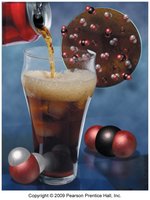
Hypothesis
A hypothesis is a tentative interpretation or explanation of observations. It must be testable and falsifiable. One experiment can invalidate a hypothesis.
Example: "The sweet taste of soda pop is due to the presence of sugar."
Experiments
Experiments are tests of hypotheses, laws, or theories. Results either validate or invalidate ideas, leading to modification or rejection of hypotheses.
Validation does not mean absolute proof.
Multiple experiments are needed to confirm a theory.
Laws
A law summarizes observations into a general statement. It predicts future observations and cannot be violated.
Law of Conservation of Mass: "In a chemical reaction, matter is neither created nor destroyed."
Theories
A theory is a general explanation for the characteristics and behavior of nature. Theories can be used to predict future observations and are tested by experiments.
Dalton’s Atomic Theory: Explains the nature of atoms and their interactions.
Difference Between Observations, Laws, and Theories
Observation: Describes what happened in a single event.
Law: Summarizes all observations, predicting what will happen.
Theory: Explains why something happens.
Example of Scientific Method in Practice
You observe that when you forget to water your plant, it dies. A law states that all living creatures need water to survive. You theorize that watering all plants a cup of water a day will allow them to live. You test your theory with experiments, revising it as new data is collected.
Branches of Modern Chemistry
Overview of Chemistry Branches
Chemistry is divided into several branches, each focusing on different aspects of matter and its interactions.
Organic Chemistry: Study of carbon-based compounds.
Inorganic Chemistry: Study of substances not containing carbon.
Biochemistry: Analysis of plant or animal-derived materials.
Analytical Chemistry: Investigation of the type (qualitative) and amount (quantitative) of substances.
Physical Chemistry: Provides theoretical and mathematical explanations for chemical behavior.
How to Succeed in Chemistry
Tips for Success
Success in chemistry requires curiosity, imagination, regular practice, and commitment. Understanding vocabulary, memorizing key information, and practicing processes are essential.
Learn definitions and applications of terms.
Memorize important information (e.g., polyatomic ions, solubility rules).
Practice systematic naming, formulas, and dimensional analysis.
Work regularly and ask questions.
Best Approach to Learning Chemistry
Mastering chemistry involves learning vocabulary, memorizing key facts, and practicing problem-solving. Doing exercises and questions helps reinforce understanding and recognize patterns.
Learn and apply scientific vocabulary.
Practice naming compounds and formulas.
Use dimensional analysis for calculations.
Test understanding with exercises and questions.
