 Indietro
Economic Issues and Concepts: Foundations of Macroeconomics
Guida di studio - Note intelligenti
 Appunti personalizzati basati sui tuoi materiali, ampliati con definizioni chiave, esempi e contesto.
Economic Issues and Concepts
Introduction to Economics
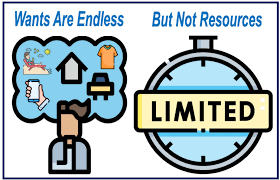
Economics is the science that studies how societies manage scarce resources. It examines how individuals, firms, and governments allocate limited resources among competing uses to satisfy unlimited human wants. The fundamental economic problem arises from scarcity, which forces choices and trade-offs.
Scarcity: The limited nature of society’s resources compared to unlimited wants.
Choices: Decisions must be made about which wants to satisfy given resource constraints.
Opportunity Cost: The value of the next best alternative forgone when making a choice.
Alternatives: Every choice involves selecting among alternatives, each with its own opportunity cost.
Example: Choosing between studying for an exam or spending time with friends.
Basic Economic Problems
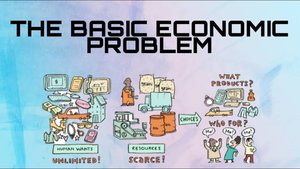
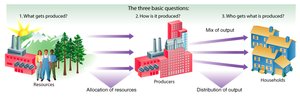
Every society faces three basic economic questions due to scarcity:
What to produce: Deciding the types and quantities of goods and services.
How to produce: Choosing production methods for efficiency.
For whom to produce: Determining the distribution of goods and services among the population.
Why Study Economics?
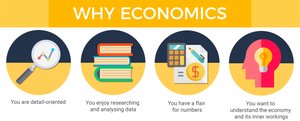
Studying economics provides a framework for decision-making, understanding societal issues, and becoming an informed citizen. It helps analyze the impact of economic decisions on society and equips individuals with tools to interpret economic events.
Way of Thinking: Economics teaches logical decision-making.
Understanding Society: Economic decisions shape societal outcomes.
Informed Citizenship: Basic economic knowledge is essential for participating in public discourse.
The Scope of Economics
Microeconomics vs. Macroeconomics
Economics is divided into two main branches:
Microeconomics: Studies individual economic units such as households, firms, and government agencies.
Macroeconomics: Examines the aggregate behavior of the entire economy, including national output, employment, inflation, and growth.
Descriptive, Positive, and Normative Economics
Economics can be approached in different ways:
Descriptive Economics: Collects and presents factual data about economic conditions.
Positive Economics: Explains and predicts economic behavior without value judgments (e.g., "A rise in gasoline prices leads to a decrease in quantity demanded").
Normative Economics: Evaluates economic outcomes and prescribes policies (e.g., "The government should lower gasoline prices").
Economic Systems
Types of Economic Systems
An economic system is the structure for production, distribution, and consumption in a society. The main types are:
Capitalism (Market Economy): Economic decisions are made by individuals; prices are determined by market forces. Examples: Singapore, Switzerland.
Socialism (Planned Economy): The government makes all economic decisions; resources are owned collectively. Examples: China, North Korea.
Mixed Economy: Combines elements of both capitalism and socialism; both private and public sectors play roles. Examples: Malaysia, US, Germany.
Decision-Making in Economic Systems
Each system answers the basic economic questions differently:
Capitalism: What to produce is determined by consumer demand; how to produce is based on efficiency and cost; for whom to produce is decided by purchasing power.
Socialism: Central planning authority decides what, how, and for whom to produce, aiming to reduce inequality.
Mixed Economy: Both market forces and government intervention influence decisions.
Economic Resources
Factors of Production
Resources used in production are called factors of production:
Land: All natural resources (e.g., water, forests).
Labour: Human effort, both mental and physical.
Capital: Human-made resources (e.g., machinery, buildings).
Entrepreneur: The ability to organize land, labor, and capital to produce goods and services.
Production Possibilities Frontier (PPF)
Definition and Purpose
The Production Possibilities Frontier (PPF) is a graphical representation of the maximum possible combinations of two goods that an economy can produce given its resources and technology. It illustrates the concepts of scarcity, choice, and opportunity cost.
Scarcity: The PPF shows the limits of production.
Choices: Points on the PPF represent different combinations of goods.
Opportunity Cost: Moving along the PPF involves trading off one good for another.
PPF Analysis
Points on the PPF:
Attainable and Efficient: Points on the curve (e.g., A, B).
Unattainable: Points outside the curve (e.g., C).
Attainable but Inefficient: Points inside the curve (e.g., D).
Opportunity Cost Formula
The opportunity cost of producing one good is the amount of the other good that must be forgone. The formula is:
Factors Influencing the PPF
The PPF can shift due to changes in resource availability, technological advances, and population growth:
Increase in Resources/Quality: Rightward shift of the PPF.
Decrease in Resources/Quality: Leftward shift of the PPF.
Technological Change: More efficient use of resources shifts the PPF outward.
Population Growth: Can increase labor supply and shift the PPF.
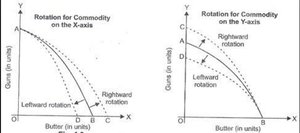
Graphical Representation of PPF Shifts
Shifts in the PPF can be illustrated by changes in the curve, showing increased or decreased production possibilities for different goods.
Summary Table: Economic Systems Comparison
System | Who Decides? | Resource Ownership | Examples |
|---|---|---|---|
Capitalism | Individuals/Market | Private | Singapore, Switzerland |
Socialism | Government | Public | China, North Korea |
Mixed Economy | Both | Private & Public | Malaysia, US, Germany |
