 Indietro
The Monetary Sector: Money, Financial Intermediaries, and Monetary Policy in South Africa
Guida di studio - Note intelligenti
 Appunti personalizzati basati sui tuoi materiali, ampliati con definizioni chiave, esempi e contesto.
Chapter 14: The Monetary Sector
14.1 The Functions of Money
Money is a fundamental concept in macroeconomics, serving as the backbone of modern economies. It is defined as anything that is generally accepted as payment for goods and services or in settlement of debt. The functions of money are essential for understanding its role in economic activity.
Medium of Exchange: Money facilitates transactions by acting as an intermediary, making exchanges more efficient compared to barter systems.
Unit of Account: Money provides a common measure for valuing goods and services, enabling price comparisons and rational spending decisions.
Store of Value: Money can be held and used in the future, preserving value over time and serving as a standard for deferred payments.
What Money is Not: Money is not income (reward from production), wealth (accumulated assets), or a factor of production.
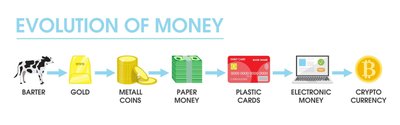
14.2 Different Kinds of Money
Money exists in various forms, each with different characteristics and uses. Economists classify money into monetary aggregates based on liquidity and accessibility.
M1: Includes coins, notes, and demand deposits (cheque and transmission deposits) held by the domestic private sector with monetary institutions. Formula: Where = quantity of money, = cash (coins and notes), = demand deposits.
M2: M1 plus all other short- and medium-term deposits of the domestic private sector with monetary institutions (quasi money).
M3: M2 plus all long-term deposits, considered the most comprehensive measure of money.
Additional info: Electronic money and plastic cards are increasingly important, but their classification as 'money' depends on their acceptability and liquidity.
14.3 Money in South Africa
The South African Reserve Bank (SARB) uses three main methods to measure the quantity of money: M1, M2, and M3. These aggregates help monitor monetary developments and inform policy decisions.
14.4 Financial Intermediaries
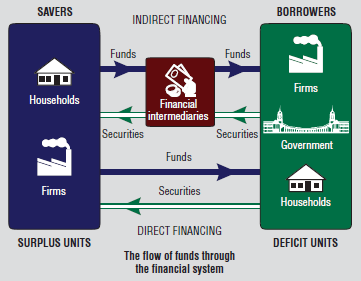
Financial intermediaries are institutions that facilitate financial transactions, acting as go-betweens for surplus and deficit units in the economy. Their main function is to channel funds from savers to borrowers, promoting efficient allocation of resources.
Securities: Tradable financial assets such as stocks and bonds, representing ownership or debt obligations.
14.5 The Demand for Money
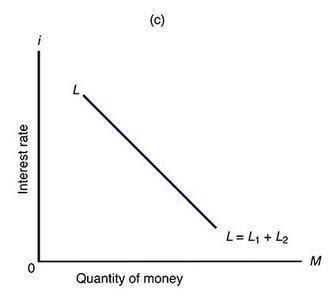
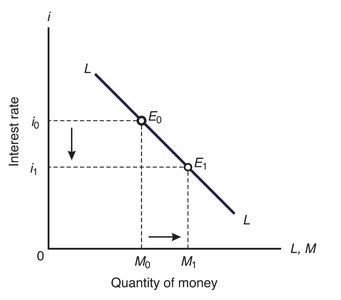
The demand for money refers to the amount of money that economic participants wish to hold as balances. It is influenced by income, interest rates, and inflation. The demand for money is not simply a desire for more money, but a choice based on opportunity costs and motives.
Opportunity Cost: Holding money incurs the cost of forgone interest and is affected by inflation.
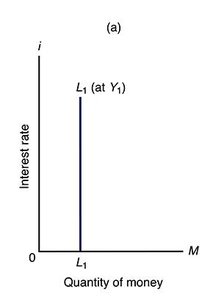
Transactions Demand: Money held for day-to-day purchases and payments.
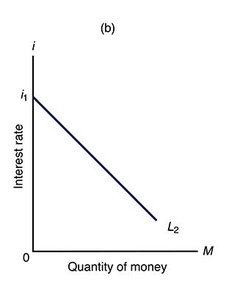
Speculative Demand: Money held as an asset, often for future investment opportunities.
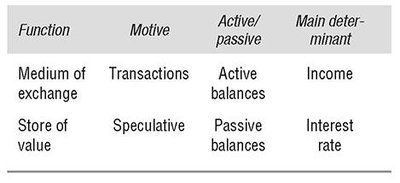
Motives: Transactions motive (medium of exchange) and speculative motive (store of value).
Summary Table: The Demand for Money
Function | Motive | Active/passive | Main determinant |
|---|---|---|---|
Medium of exchange | Transactions | Active balances | Income |
Store of value | Speculative | Passive balances | Interest rate |
14.6 The Stock of Money: How is Money Created?
Money is primarily created by banks through the process of granting loans, not by the mint or printing press. When banks issue loans, they create deposits, which constitute money. The creation of money is limited by the demand for loans and the actions of the central bank, such as adjusting the repo rate.

14.7 The Role of the South African Reserve Bank (SARB)
The SARB is the monetary authority in South Africa, responsible for formulating and implementing monetary policy, serving the government, providing economic and statistical services, and maintaining financial stability. Its main objectives include price stability, bank supervision, and administration of exchange control.
Services: Banker and advisor to government, custodian of gold and foreign exchange reserves, administration of exchange control.
Financial Stability: Ensures stability through supervision, payment systems, and issuing banknotes and coins.
14.8 Monetary Policy
Monetary policy refers to the actions taken by the SARB to influence the quantity of money and interest rates, aiming for stable prices, full employment, and economic growth. The Monetary Policy Committee (MPC) is responsible for these measures, which should complement fiscal policy.
Framework: Includes inflation targeting, repo rate as the operational variable, and classical reserve system.
Key Instruments:
Accommodation Policy: Banks tender for SARB funds via repurchase agreements (repos).
Open-Market Policy: Central bank buys or sells government securities to influence interest rates and money supply.
Other Instruments: Credit ceilings, deposit rate control, exchange control regulations, foreign exchange market intervention, public debt management, and moral suasion.

14.9 Bank Supervision
Bank supervision ensures the stability and soundness of the financial system. It involves monitoring capital asset holdings and liquid asset holdings of banks to prevent systemic risks.
14.10 Concluding Remarks
The monetary sector is central to macroeconomic stability, influencing economic growth, employment, and price levels. Understanding the functions of money, the role of financial intermediaries, and the instruments of monetary policy is essential for analyzing the broader economy.
Important Concepts
Stock (quantity) of money
Repo rate
Liquidity preference
Transactions demand
Speculative demand
Commodity money
Credit money
Monetary aggregates
Financial intermediaries
Monetary authority
Monetary policy framework
Inflation targeting
Open-market policy
Bank supervision
