 Indietro
Unemployment and Inflation: Measuring and Understanding Price Changes
Guida di studio - Note intelligenti
 Appunti personalizzati basati sui tuoi materiali, ampliati con definizioni chiave, esempi e contesto.
Unemployment and Inflation
Introduction to Inflation
Inflation is a central concept in macroeconomics, referring to the sustained increase in the general price level of goods and services in an economy over time. Understanding inflation is crucial for analyzing economic stability, purchasing power, and policy decisions.
Inflation Rate: The percentage increase in the overall level of prices from one year to the next.
Example: If the inflation rate is 3%, average prices are 3% higher than the previous year.
Major Measures of Inflation
Consumer Price Index (CPI): An index comparing consumer prices over time, measuring the cost of living by tracking the cost of a fixed market basket of goods and services purchased by a typical urban family of four.
Formula:
Interpretation: A CPI of 125 means the cost of the market basket has increased 25% since the base period.
Inflation Rate Calculation:
Other Price Indices:
GDP Deflator: Measures the price level by dividing nominal GDP by real GDP; includes all final goods and services.
Producer Price Index (PPI): Measures average prices received by producers at all stages of production.
Personal Consumption Expenditures Price Index (PCE): Similar to the GDP deflator but includes only goods and services in the consumption category.
Trends in Inflation
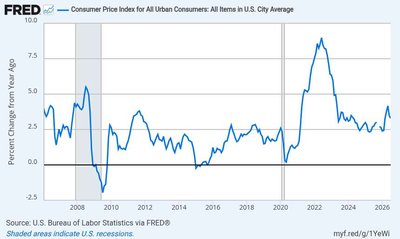
Inflation rates can vary significantly over time due to economic cycles, policy changes, and external shocks. The CPI and PCE are commonly used to track these trends in the U.S.
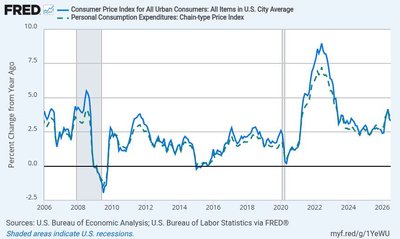
Observation: PCE inflation is typically lower than CPI inflation due to differences in calculation methods and coverage.
Historical Example: Hyperinflation
Hyperinflation is an extremely high and typically accelerating inflation rate, often exceeding 50% per month. A famous example is the German hyperinflation of the early 1920s, where prices soared and currency lost its value rapidly.
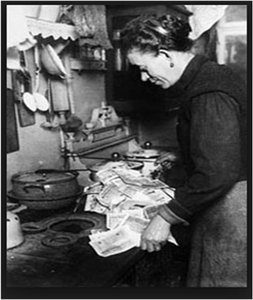

Example: In Germany, the price index rose from 100 in 1914 to over 1,440 by 1921, and much higher in subsequent years.
Limitations of the CPI
Substitution Bias: The CPI uses a fixed market basket, assuming consumers buy the same goods regardless of price changes. In reality, consumers substitute away from goods that become relatively more expensive, causing the CPI to overstate the cost of living and inflation rate.
Example: If the price of beef rises, consumers may buy more chicken instead, but the CPI does not account for this substitution.

Nominal vs. Real Variables
To accurately compare economic variables over time, it is essential to distinguish between nominal and real values:
Nominal Variables: Measured in current-year prices, not adjusted for inflation.
Real Variables: Adjusted for inflation, measured in base-year (constant) dollars.
Conversion Formula:
Interest Rates and Inflation
Nominal Interest Rate: The stated interest rate on a loan, not adjusted for inflation.
Real Interest Rate: The nominal interest rate minus the inflation rate; measures the true cost of borrowing and the true return to lending.
Formulas:
Example: If you borrow $1,000 at a 10% nominal interest rate and inflation is 7%, the real interest rate is 3%.

Problems Caused by Inflation
Redistribution of Income: Unanticipated inflation redistributes income between lenders and borrowers, and between workers and employers.
Menu Costs: Firms must update prices more frequently, increasing costs.
Fixed Incomes: People on fixed incomes experience a decline in real purchasing power.
Deflation: Causes consumers to delay spending and increases the burden on borrowers by raising the real interest rate.

Unanticipated Inflation and Deflation
When Actual Inflation < Expected Inflation: Lenders gain, borrowers lose, as the real interest rate is higher than expected.
When Actual Inflation > Expected Inflation: Borrowers gain, lenders lose, as the real interest rate is lower than expected.
Deflation: Unexpected deflation increases the real burden of debt and can hurt economic activity.


Summary and Study Tips
Review the major points of Chapter 9 on inflation and unemployment.
Understand how to calculate and interpret the CPI, inflation rate, and real vs. nominal variables.
Be able to explain the effects of inflation and deflation on different economic agents.
