 Indietro
Chapter 2: Body Structure and Health Care Foundations – Medical Terminology Study Notes
Guida di studio - Note intelligenti
 Appunti personalizzati basati sui tuoi materiali, ampliati con definizioni chiave, esempi e contesto.
Body Structure and Health Care Foundations
Introduction to Health and Disease
This section introduces foundational concepts for understanding the human body in health and disease, including definitions, organizational approaches, and the roles of healthcare professionals and settings.
Health and the Organization of the Body
Definition of Health
Health is defined by the World Health Organization as a state of complete physical, mental, and social well-being, not merely the absence of disease or infirmity.
The healthy human body can be studied from various perspectives, each providing unique organizational frameworks for understanding structure and function.
Anatomy and Physiology
Anatomy and physiology are the two primary sciences for studying the human body:
Anatomy: The study of the structures of the human body.
Physiology: The study of the functions of those structures.
Levels of organization: Cells → Tissues → Organs → Body Systems.
Body Planes, Directions, and Positions
Anatomical Position
The anatomical position is the standard reference for describing locations and directions on the human body.
Body stands erect, head up, eyes forward.
Arms at sides, palms facing forward.
Legs straight, toes pointing forward.

Body Planes
Body planes are imaginary flat surfaces used to divide the body for anatomical study:
Sagittal Plane: Divides the body into right and left sides.
Coronal (Frontal) Plane: Divides the body into anterior (front) and posterior (back) sections.
Transverse Plane: Divides the body into superior (upper) and inferior (lower) sections.
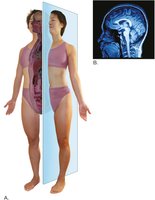
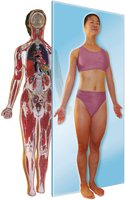
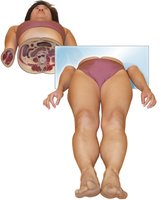
Body Directions and Locations
Medial: Toward the midline of the body.
Lateral: Away from the midline.
Anterior (Ventral): Toward the front of the body.
Posterior (Dorsal): Toward the back of the body.
Superior: Toward the head or upper part of a structure.
Inferior: Toward the feet or lower part of a structure.
Cephalad: Toward the head.
Caudad: Toward the tailbone.
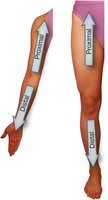
Proximal: Toward the trunk or point of origin.
Distal: Away from the trunk or point of origin.
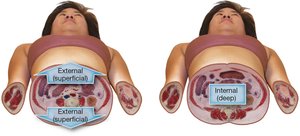
External (Superficial): Toward the surface of the body or organ.
Internal (Deep): Away from the surface, deeper within the body or organ.
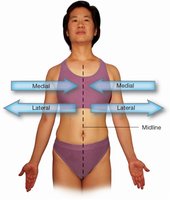
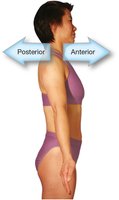
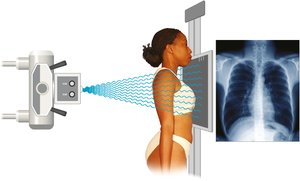
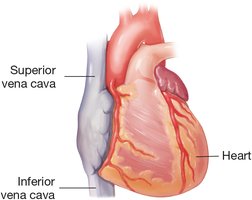
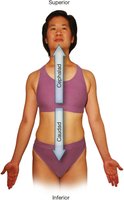
Body Cavities
Main Body Cavities
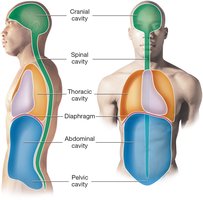
Body cavities are hollow spaces that house and protect internal organs:
Cranial cavity: Contains the brain.
Spinal cavity: Contains the spinal cord.
Thoracic cavity: Contains the heart and lungs.
Abdominal cavity: Contains digestive organs.
Pelvic cavity: Contains urinary and reproductive organs.
Abdominopelvic Quadrants and Regions
Quadrants
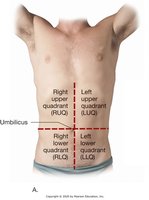
The anterior surface of the abdominopelvic cavity is divided into four quadrants for clinical reference:
Right Upper Quadrant (RUQ)
Left Upper Quadrant (LUQ)
Right Lower Quadrant (RLQ)
Left Lower Quadrant (LLQ)
Regions
Nine regions provide more precise localization:
Right/Left Hypochondriac
Epigastric
Right/Left Lumbar
Umbilical
Right/Left Inguinal
Hypogastric
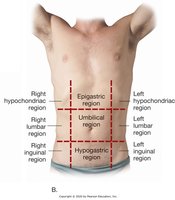
Disease: Concepts and Categories
Definition and Etiology
Disease: Any change in the normal structure or function of the body.
Etiology: The cause or origin of a disease or disorder.
Disorder: A disturbance of action or function.
Preventive medicine: Focuses on maintaining health and preventing disease.
Onset, Course, and Outcome of Disease
Onset: Marked by the appearance of symptoms (experienced by the patient) or signs (observable by others).
Categories of symptoms/signs:
Acute: Sudden and severe.
Subacute: Less severe.
Chronic: Lasts three months or longer.
Exacerbation: Sudden worsening of symptoms/signs.
Remission: Period with no symptoms/signs after treatment.
Relapse: Return of original symptoms/signs.
Sequela: Complication remaining after disease resolution.
Symptomatology: The clinical picture of all symptoms and signs.
Asymptomatic: Disease present without symptoms/signs.
Syndrome: Set of symptoms/signs characteristic of a disease.
Treatment and Outcomes
Treatment: Physician prescribes drugs or therapy.
Therapeutic: Symptoms/signs disappear with treatment.
Refractory: Disease does not respond to treatment.
Surgical intervention: Required if drugs/therapy are ineffective.
Possible outcomes:
Recuperation: Full recovery.
Residual chronic disease/disability: Incomplete recovery.
Terminal illness: Disease leads to death.
Medical Specialties and Healthcare Professionals
Medical Specialties and Specialists
Body systems are studied within the context of medical specialties.
Physicians (MD or DO) lead healthcare teams, diagnose, and treat diseases.
Specialists focus on specific areas of medicine (e.g., cardiology, neurology).
Healthcare Professionals
Physician Extenders: Perform some physician duties under supervision (e.g., physician assistants, nurse practitioners).
Nurses: Provide patient care, perform exams, administer treatments, and educate patients/families.
Allied Health Professionals: Support care through specialized services (e.g., therapists, technologists, technicians, dietitians, dental hygienists, nursing assistants).
Healthcare Settings
Types of Healthcare Facilities
Hospitals: Care for acutely ill patients; divided into units and departments.
Physician’s Office: Outpatient diagnosis, treatment, and counseling.
Clinics: Focus on specific patient types or diseases; include walk-in and urgent care clinics.
Ambulatory Surgery Centers (ASC): Minor surgeries performed without overnight stay.
Long-term Care Facilities: Residential care for those unable to care for themselves.
Home Health Agencies: Provide care in patients’ homes.
Hospice: Palliative care for terminally ill patients.
History and Physical Examination
Patient History
Includes history of present illness, medical/surgical history, family and social history, and allergies.
Physical Examination Techniques
Inspection: Visual examination.
Palpation: Feeling with fingers for masses or tenderness.
Auscultation: Listening to body sounds with a stethoscope.
Percussion: Tapping to assess underlying structures.
Vital Signs
Temperature, pulse rate, respiratory rate (TPR), and blood pressure (BP) are measured before the exam.
Electronic Health Records (EHR)
Transition from Paper to Electronic Records
Electronic Health Records improve documentation, accessibility, and quality of care.
Include checklists, narrative notes, and standard headings for comprehensive patient information.
Standard Headings in Healthcare Documents
Chief Complaint (CC)
History of Present Illness (HPI)
Past Medical (and Surgical) History (PMH)
Social History (SH) and Family History (FH)
Review of Systems (ROS)
Physical Examination (PE)
Laboratory and X-ray Data
Diagnosis (Dx)
Disposition
Additional info: Disease categories table was referenced but not included in the provided content. For a complete study guide, refer to the textbook for Table 2-1 Disease Categories.
