 Indietro
Foundations of Professional Nursing Practice: Concepts, Roles, and Critical Thinking
Guida di studio - Note intelligenti
 Appunti personalizzati basati sui tuoi materiali, ampliati con definizioni chiave, esempi e contesto.
Chapter 01: Professional Nursing Practice
Definition and Evolution of Nursing
Nursing is both an art and a science, with a primary goal of optimizing patient health and well-being. Florence Nightingale emphasized creating the best conditions for nature to act in healing. The American Nurses Association (ANA) Scope and Standards of Practice (2021) defines nursing as focusing on protection, promotion, and optimization of health, prevention of illness and injury, and facilitation of healing and alleviation of suffering.
Core Focus Areas: Health protection, promotion, and optimization; illness and injury prevention; healing facilitation; suffering alleviation.
Roles and Responsibilities: Diagnosis and treatment of human response, advocacy, research, education, health systems management, and policy shaping.
Domains of Nursing Practice
Nursing practice is organized into ten domains, each representing a critical aspect of the profession:
Knowledge for Nursing Practice: Integration of nursing, liberal arts, and sciences knowledge.
Person-Centered Care: Holistic, individualized, and evidence-based care focused on the individual within their context.
Population Health: Collaborative activities to improve health outcomes for populations.
Scholarship for the Nursing Discipline: Generation, synthesis, translation, and dissemination of nursing knowledge.
Quality and Safety: Application of safety principles to minimize risk and enhance care quality.
Interprofessional Partnerships: Collaboration with other professionals and stakeholders to optimize care.
Systems-Based Practice: Leadership and coordination within complex health care systems.
Informatics and Health Care Technologies: Use of technology to manage and improve care delivery.
Professionalism: Development of a professional identity and accountability.
Personal, Professional, and Leadership Development: Lifelong learning, resilience, and leadership in nursing.
The Patient: Consumer of Nursing and Health Care
Definitions and Preferences
The term patient traditionally refers to a recipient of care, but client and person are increasingly used to emphasize partnership and person-centered care. The ANA defines health care consumers broadly, including individuals, families, groups, and populations.
Needs and Expectations: Vary based on individual circumstances and experiences; collaborative decision-making is expected.
Maslow's Hierarchy of Needs
Maslow's hierarchy provides a framework for prioritizing patient needs, from basic physiological requirements to self-actualization. This model is widely used in nursing to guide assessment and interventions.
Levels of Needs: Physiologic needs, safety and security, belongingness and affection, esteem and self-respect, self-actualization.
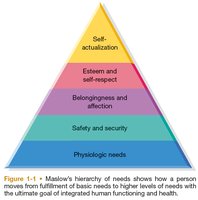
Example: A patient recovering from surgery must have pain managed (physiologic need) before addressing emotional support (belongingness and affection).
Health, Wellness, and Health Promotion
Definitions of Health and Wellness
The World Health Organization (WHO) defines health as complete physical, mental, and social well-being. Wellness is an active process of self-care and adaptation, encompassing physical, psychological, social, and spiritual dimensions.
Components of Wellness: Performing to one's best ability, adapting to situations, feeling well, and experiencing harmony.
Health Promotion
Health promotion involves lifestyle choices and activities that reduce risks and enhance well-being. Nurses play a key role in educating and empowering individuals to manage their health.
Examples: Wellness education programs, use of health apps, dietary management, and medication adherence.
Primary Health Care
Primary health care encompasses comprehensive services from health promotion to palliative care, emphasizing lifelong commitment and individual empowerment.
Health Care Delivery and Influences
Health Care Settings and Professionals
Health care is delivered in inpatient, outpatient, and community settings by a team of professionals, including nurses, physicians, pharmacists, dieticians, social workers, and therapists.
Influences on Health Care Delivery
Population Demographics: Aging population, urbanization, migration, and poverty impact health outcomes and access.
Changing Disease Patterns: Chronic diseases are now leading causes of death, shifting focus to health promotion and chronic condition management.
Technological and Genetic Advances: Innovations such as robot-assisted surgery, precision medicine, and telehealth are transforming care.
Quality and Safety Initiatives: Emphasis on evidence-based practice, reducing disparities, and improving outcomes.
Health Informatics
Advances in Health Information Technology (HIT)
Technologies such as artificial intelligence, electronic health records, and telehealth are increasingly used to manage health information and improve care delivery. The International Classification of Diseases (ICD-11) provides a global standard for disease classification.
Quality, Safety, and Evidence-Based Practice
Evidence-Based Practice (EBP)
EBP integrates the best available research, clinical expertise, and patient preferences to ensure high-quality care. Nurses are involved in identifying, evaluating, and applying evidence to practice.
EBP Tools: Bundles (sets of practices), clinical pathways, and clinical decision support systems (CDSSs).
Quality and Safety Education for Nurses (QSEN)
The QSEN project develops competencies in patient-centered care, teamwork, evidence-based practice, quality improvement, safety, and informatics.
Interprofessional Collaborative Practice
Definition and Importance
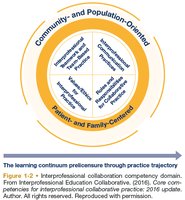
Interprofessional collaboration involves multiple health professionals working together to achieve optimal patient outcomes. Core competencies include communication, teamwork, and shared decision-making.
Critical Thinking and Clinical Judgment
Critical Thinking in Nursing
Critical thinking is a purposeful, reflective, and goal-directed process essential for clinical decision-making. It involves metacognition (thinking about one's thinking) and intellectual integrity.
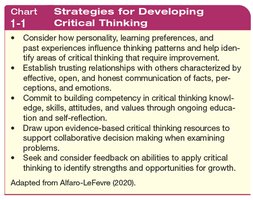
Strategies for Developing Critical Thinking:
Consider how personality, learning preferences, and experiences influence thinking patterns.
Establish trusting relationships with open communication.
Commit to ongoing education and self-reflection.
Use evidence-based resources for decision making.
Seek feedback to identify strengths and growth opportunities.
The Nursing Process
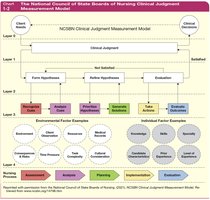
The nursing process is a systematic approach to patient care, consisting of five steps:
Assessment: Collecting and analyzing patient data.
Diagnosis: Identifying patient problems.
Planning: Setting goals and selecting interventions.
Implementation: Carrying out interventions.
Evaluation: Assessing outcomes and revising care as needed.
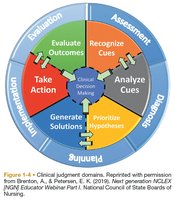
Clinical Judgment Measurement Model (CJMM)
The CJMM provides a framework for measuring clinical decision-making, consisting of six steps: recognizing cues, analyzing cues, prioritizing hypotheses, generating solutions, taking action, and evaluating outcomes.
Ethics in Nursing Practice
Ethical Principles
Autonomy: Self-determination and informed choice.
Beneficence: Duty to do good and prevent harm.
Nonmaleficence: Duty to avoid causing harm.
Justice and Fairness: Equitable distribution of resources and treatment.
Principle of Double Effect
Actions with both good and harmful effects may be justified if four criteria are met: the action is good or neutral, the intention is good, the good effect is not achieved by means of the evil effect, and there is a favorable balance of good over evil.
Ethical Decision-Making Process
Assessment: Identify ethical issues, involved parties, and relevant policies.
Planning: Gather information, distinguish facts from values, and identify ethical issues.
Implementation: List and compare alternatives using ethical frameworks (utilitarian or deontologic).
Evaluation: Decide on the best action, justify ethically, and address counterarguments.
Resources for Nursing Ethics
ANA Code of Ethics (nursingworld.org)
The Hastings Center (thehastingscenter.org)
National Center for Ethics in Health Care (ethics.va.gov)
Sample Questions and Answers
Question 1
Which of the following is NOT a core focus area of nursing according to the ANA Scope and Standards of Practice (2021)?
A. Protection, promotion, and optimization of health and human functioning
B. Prevention of illness and injury
C. Facilitation of healing and alleviation of suffering
D. Diagnosis and treatment of human response
E. Advocacy in the care of individuals, families, groups, communities, and populations
Answer: D. Diagnosis and treatment of human response
Question 2
Is the following statement true or false? Evidence-based practice (EBP) considers only the health care setting and clinical judgment, excluding patient preferences.
Answer: False
Question 3
Which of the following is NOT a primary use of information and communication technologies (ICT) in health care?
A. Provide care.
B. Gather data.
C. Form information to drive decision making.
D. Expand knowledge and wisdom for practice.
E. Delivery of safe, high-quality, and efficient health care services
Answer: D. Expand knowledge and wisdom for practice.
