 Indietro
HLTH 110 Medical Terminology – Course Syllabus and Study Guide
Guida di studio - Note intelligenti
 Appunti personalizzati basati sui tuoi materiali, ampliati con definizioni chiave, esempi e contesto.
Course Overview
This syllabus outlines the structure, objectives, and requirements for HLTH 110: Medical Terminology at Heartland Community College. The course is designed to introduce students to the foundational language of medicine, focusing on the analysis, construction, spelling, and pronunciation of medical terms as they relate to body systems, medical procedures, and disease processes.
Course Structure and Content
Course Description
Credit Hours: 3.0
Prerequisites: Placement at college-level English or concurrent enrollment in ENGL 099/101 or ENGL 105.
Delivery: Online via Canvas and Pearson MyLab.
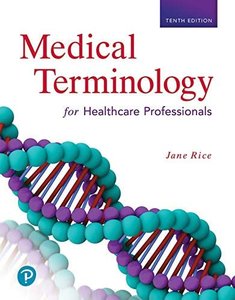
Textbook: Medical Terminology for Healthcare Professionals by Jane Rice, 10th Edition, Pearson.

Course Objectives
Upon successful completion, students will be able to:
Define complex medical terms by analyzing word parts (prefixes, roots, suffixes).
Construct and use medical terms in context.
Spell and pronounce medical terms accurately.
Interpret common medical abbreviations.
Define structural, physiological, directional, and movement terms not typically analyzed into word parts.
Match medical conditions, procedures, and terms with the correct body systems.
Classify terms as parts of speech, diagnostic procedures, medical conditions, anatomical structures, physiological processes, or therapeutic terms.
Essential Competencies
Communication (C): Effective communication of medical information.
Problem Solving/Critical Thinking (PS/CT): Critical analysis and classification of medical terms and concepts.
Course Outline
The course is organized into modules that correspond to major topics in medical terminology, including:
Structure and Pronunciation of Medical Terms
Terms Relating to Body Structure, Movement, and Directions
Radiography
Musculoskeletal System
Nervous System
Cardiovascular System
Lymphatic and Blood Systems
Respiratory System
Digestive System
Urinary System
Reproductive Systems
Each module includes guided lectures, dynamic study modules, practice games, and assessments.
Assessment Methods
Discussion Board Posts
Assignments and Written Exercises
Quizzes and Spelling Tests
Oral, Poster, or Media Presentations
Cumulative Tests and Final Exam
Grading is based on a point system, with a standard scale (A: 90-100%, B: 80-89%, etc.). All tests and the final exam are cumulative.
Course Policies
Academic Integrity
Cheating, plagiarism, and unauthorized use of AI tools are strictly prohibited and may result in course failure or further disciplinary action.
All work must be completed individually unless otherwise specified.
Attendance and Participation
Regular online participation is expected, though attendance is not formally tracked.
Students are responsible for keeping up with announcements, assignments, and deadlines.
Late Work and Extensions
Late assignments are penalized 10% per day and are not accepted more than three days after the due date unless prior arrangements are made for extenuating circumstances.
Student Support and Accessibility
Student Access and Accommodation Services (SAAS) are available for students requiring academic accommodations.
Additional support services include academic advisement, tutoring, financial aid, and wellness resources.
Course Schedule (Sample Weeks)
Week | Module/Chapter | Assignments |
|---|---|---|
1 | Orientation | Canvas Orientation, Autobiographic Sketch |
2 | Ch. 1: Introduction to Medical Terminology | Guided Lecture, Study Module, Practice Games |
3 | Ch. 2: Suffixes and Prefixes | Guided Lecture, Study Module, Practice Games |
4 | Ch. 3: Organization of the Body | Guided Lecture, Study Module, Practice Games |
5 | Ch. 5: Skeletal System | Assignments as posted |
6 | Ch. 6: Muscular System | Assignments as posted |
7 | Test 1 | Cumulative Test |
Key Study Strategies
Regularly review and practice medical word parts (prefixes, roots, suffixes).
Engage with interactive study modules and games to reinforce learning.
Practice spelling and pronunciation using provided resources.
Familiarize yourself with common medical abbreviations and their meanings.
Apply terms in context through assignments and case studies.
Conclusion
This course provides a comprehensive foundation in medical terminology, essential for success in health sciences and related fields. Students are encouraged to utilize all available resources, adhere to academic integrity, and actively participate in all course activities for optimal learning outcomes.
