 Indietro
HLTH 110 Medical Terminology Syllabus and Course Overview
Guida di studio - Note intelligenti
 Appunti personalizzati basati sui tuoi materiali, ampliati con definizioni chiave, esempi e contesto.
Course Overview
Introduction
This syllabus outlines the structure, objectives, and policies for HLTH 110 - Medical Terminology at Heartland Community College. The course is designed for students pursuing certificates or associate degrees in health sciences, focusing on the foundational language used in medical settings. Students will learn to define, spell, pronounce, and use medical terms related to body structure, function, procedures, and disease processes.

Course Details
Credit Hours: 3.0
Lecture Hours: 3.0
Prerequisite: Placement at college-level English or concurrent enrollment in ENGL 099/101/105
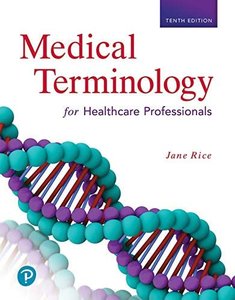
Textbook: Medical Terminology for Healthcare Professionals by Jane Rice, Pearson, 10th Edition
Catalog Description
Students will study medical prefixes, roots, and suffixes to define and use medical terms. Emphasis is placed on spelling, pronunciation, and abbreviations, as well as terms related to body structure, function, procedures, and diseases.
Learning Outcomes/Objectives
Define complex medical terms through analysis of word parts
Build medical terms using word parts and place them in context
Spell medical terms with a high degree of accuracy
Pronounce medical terms correctly, recognizing multiple acceptable pronunciations
State the meaning of common medical abbreviations
Define structural, physiological, directional, and movement terms not usually analyzed into word parts
Match medical conditions, diagnostic procedures, word parts, abbreviations, and other terms with the correct body systems
Classify terms, word parts, and abbreviations as parts of speech, diagnostic procedures, medical conditions, anatomical structures/physiological processes, or radiographic, surgical, or therapeutic terms
Course Outline
Structure and Pronunciation of Medical Terms
Terms Relating to Body Structure, Movement, and Directions
Radiography
Musculoskeletal System
Nervous System
Cardiovascular System
Lymphatic and Blood Systems
Respiratory System
Digestive System
Urinary System
Reproductive Systems
Assessment Methods
Tests
Quizzes
Translating health/medical information
Written assignments
Drill and practice
Papers/reports
Projects
Oral, poster, or media presentations
Spelling quizzes
Pronunciation of journal health/reading case studies
Online discussion questions and postings
Worksheets and workbook assignments
Internet assignments
Grading Scale
Grade | Percentage |
|---|---|
A | 90-100% |
B | 80-89% |
C | 70-79% |
D | 60-69% |
F | 59% and below |
Course Schedule (Sample Weeks)
Week 1: Orientation
Week 2: Introduction to Medical Terminology
Week 3: Suffixes and Prefixes
Week 4: Organization of the Body
Week 5: Skeletal System
Week 6: Muscular System
Week 7: Test 1
Week 8: Digestive System
Week 9: Urinary System
Week 10: Female Reproductive System
Week 11: Male Reproductive System
Week 12: Test 2
Week 13: Cardiovascular System
Week 14: Respiratory System
Week 15: Nervous System
Week 16: Blood and Lymphatic System
Final Exam: Cumulative
Policies and Expectations
Assignments, discussions, and quizzes are due as scheduled; late submissions incur penalties.
Tests are timed and must be completed individually; cheating results in severe academic penalties.
Attendance is tracked online; regular participation is expected.
Academic integrity and plagiarism policies are strictly enforced.
AI tools are not permitted unless explicitly authorized by the instructor.
Extra credit is available once during the semester.
Student Support and Accessibility
Academic assistance, financial support, student life, safety, health, and wellness resources are available.
Student Access and Accommodation Services (SAAS) provide disability accommodations such as extra time for tests, note-taking assistance, and sign language interpreters.
Conclusion
This course provides a comprehensive foundation in medical terminology, preparing students for further study and professional practice in healthcare fields. Students are expected to adhere to academic policies, participate actively, and utilize available support services to ensure success.
