 Indietro
Characterizing and Classifying Eukaryotes: Microbiology Study Notes
Guida di studio - Note intelligenti
 Appunti personalizzati basati sui tuoi materiali, ampliati con definizioni chiave, esempi e contesto.
General Characteristics of Eukaryotic Organisms
Overview of Eukaryotic Microorganisms
Eukaryotic microorganisms include protozoa, fungi, algae, water molds, slime molds, and parasitic helminths. These organisms are diverse, encompassing both human pathogens and species vital for human life, such as those involved in nutrient cycling and symbiosis.
Protozoa: Unicellular, lack cell walls, often motile.
Fungi: Includes molds, mushrooms, and yeasts; cell walls typically composed of chitin.
Algae: Simple, eukaryotic phototrophs; carry out oxygenic photosynthesis.
Water molds and slime molds: Not true fungi; important in decomposition.
Parasitic helminths and arthropod vectors: Multicellular parasites and disease vectors.
Reproduction in Eukaryotes
Eukaryotic reproduction is more complex than in prokaryotes, involving both asexual and sexual methods. DNA is packaged as chromosomes in the nucleus, associated with histone proteins.
Asexual reproduction: Methods include mitosis, budding, and spore formation.
Sexual reproduction: Formation of gametes and zygotes; many eukaryotes alternate between sexual and asexual cycles.
Types of Cell Division
Eukaryotic cell division involves nuclear division (mitosis or meiosis) and cytoplasmic division (cytokinesis).
Mitosis: Produces two genetically identical diploid daughter cells.
Meiosis: Produces four genetically unique haploid daughter cells; involves crossing over and two consecutive divisions.
Cytokinesis: Division of cytoplasm; may result in multinucleated cells if postponed.
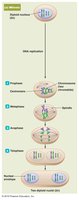
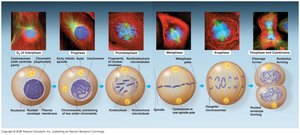
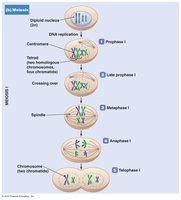
Comparison of Mitosis and Meiosis
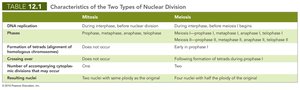
The following table summarizes the main differences between mitosis and meiosis:
Feature | Mitosis | Meiosis |
|---|---|---|
DNA replication | Occurs once, before nuclear division | Occurs once, before meiosis I begins |
Phases | Prophase, metaphase, anaphase, telophase | Meiosis I: prophase I, metaphase I, anaphase I, telophase I; Meiosis II: prophase II, metaphase II, anaphase II, telophase II |
Formation of tetrads | Does not occur | Occurs in prophase I |
Crossing over | Does not occur | Occurs during formation of tetrads in prophase I |
Number of accompanying cytoplasmic divisions | One | Two |
Resulting nuclei | Two nuclei with same ploidy as the original | Four nuclei with half the ploidy of the original |
Cytokinesis in Eukaryotes
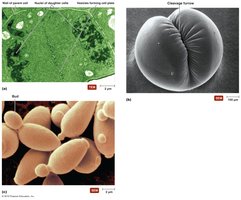
Cytokinesis is the process of cytoplasmic division following nuclear division.
Animal cells: Contractile ring forms a cleavage furrow.
Plant cells: Vesicles form a cell plate that becomes the new cell wall.
Yeast: Bud forms and pinches off.
Multinucleated cells: Result if cytokinesis is delayed or absent (coenocytes).
Schizogony
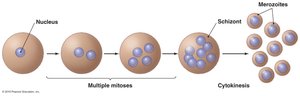
Schizogony is a special type of cell division found in some protozoa, such as Plasmodium (malaria parasite).
Nucleus divides multiple times before cytokinesis.
Results in a multinucleate schizont.
Cytokinesis releases numerous merozoites.
Classification of Eukaryotic Organisms
Historical and Modern Classification
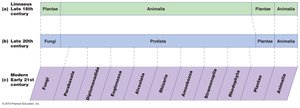
Classification of eukaryotic microbes has evolved from Linnaeus's plant/animal dichotomy to modern schemes based on nucleotide sequences and cellular ultrastructure.
Protozoa: Now divided into several kingdoms.
Fungi: Kingdom Fungi.
Algae: Stramenopila, Rhodophyta, Plantae.
Water molds: Stramenopila.
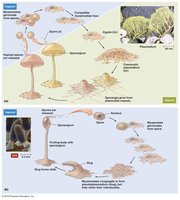
Slime molds: Amoebozoa.
Protozoa
General Characteristics
Protozoa are a diverse group of unicellular, eukaryotic microbes lacking cell walls. Most are motile via cilia, flagella, or pseudopods, except apicomplexans.
Protozoology: Study of protozoa.
Distribution: Moist environments; aquatic habitats, soil, decaying matter.
Pathogenicity: Few are pathogens.
Morphology and Life Cycle
Protozoa exhibit great morphological diversity.
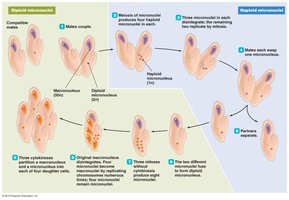
Some have two nuclei: macronucleus (genome copies) and micronucleus (genetic recombination).
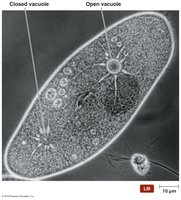
Contractile vacuoles pump water out.
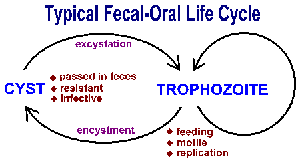
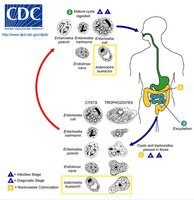
Life cycle stages: trophozoite (motile, feeding) and cyst (resting, resistant).
Nutrition and Reproduction
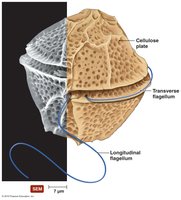
Nutrition: Most are chemoheterotrophic; some are photoautotrophic (dinoflagellates, euglenoids).
Reproduction: Mostly asexual (binary fission, schizogony); some sexual (gametocytes, conjugation).
Classification of Protozoa
Modern classification is based on 18S rRNA sequences and ultrastructural features.
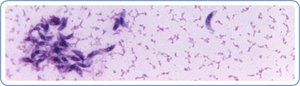
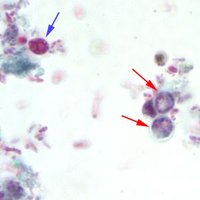
Parabasala: Lack mitochondria, single nucleus, parabasal body. Trichonympha, Trichomonas.
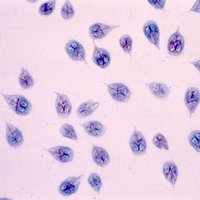
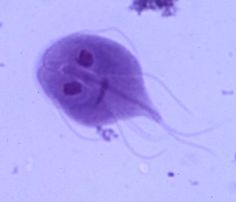
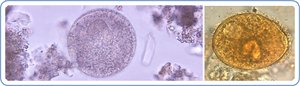
Diplomonadida: Lack mitochondria, Golgi bodies, peroxisomes; two nuclei, multiple flagella. Giardia intestinalis.
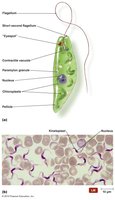
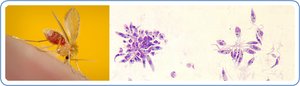
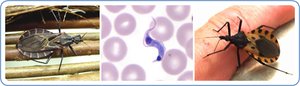
Euglenozoa: Euglenids (photoautotrophic, flexible pellicle, red eyespot), Kinetoplastids (single large mitochondrion, kinetoplast, pathogenic species like Trypanosoma and Leishmania).
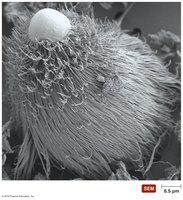
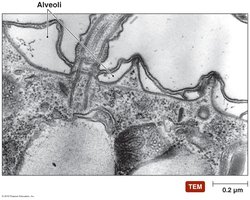
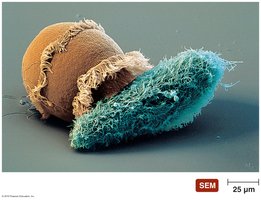
Alveolates: Membrane-bound alveoli, tubular mitochondrial cristae. Subgroups: ciliates, apicomplexans, dinoflagellates.
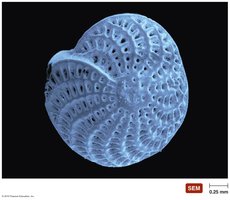
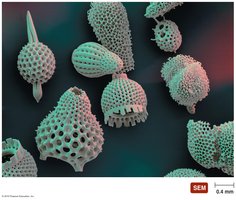
Rhizaria: Amoebae with threadlike pseudopods; foraminifera (calcium carbonate shells), radiolaria (silica shells).
Amoebozoa: Lobe-shaped pseudopods, no shells; includes slime molds.
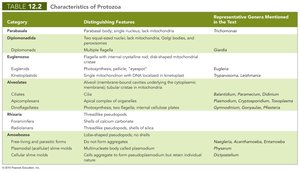
Characteristics of Protozoa Table
Category | Distinguishing Features | Representative Genera |
|---|---|---|
Parabasala | Parabasal body, single nucleus, lack mitochondria | Trichomonas |
Diplomonadida | Two equal-sized nuclei, lack mitochondria, Golgi bodies, peroxisomes | Giardia |
Euglenozoa | Flagella with internal crystalline rod, disk-shaped mitochondrial cristae | Euglena, Trypanosoma, Leishmania |
Alveolates | Membrane-bound alveoli, tubular mitochondrial cristae | Balantidium, Paramecium, Plasmodium, Cryptosporidium, Toxoplasma |
Rhizaria | Threadlike pseudopods, shells of calcium carbonate or silica | Foraminifera, Radiolaria |
Amoebozoa | Lobe-shaped pseudopods, no shells | Naegleria, Acanthamoeba, Entamoeba, Dictyostelium |
Fungi
General Characteristics
Fungi are chemoheterotrophic eukaryotes with cell walls composed of chitin. They differ from plants (lack chlorophyll, do not photosynthesize) and animals (have cell walls).
Significance: Decompose dead organisms, recycle nutrients, form mycorrhizae, source of food, drugs, and research tools.
Pathogenicity: 30% cause mycoses in plants, animals, and humans.
Morphology
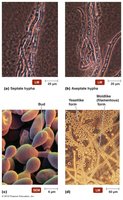
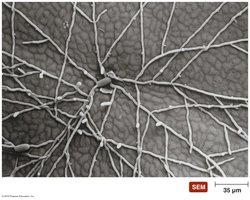
Hyphae: Long, branched filaments; septate (divided) or aseptate (coenocytic).
Mycelium: Tangled mass of hyphae.
Yeast: Small, globular, single cells; some form pseudohyphae.
Dimorphic fungi: Can switch between yeast and filamentous forms.
Nutrition
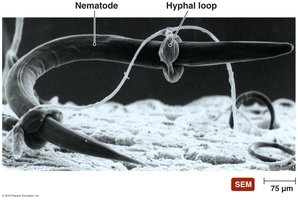
Absorption: Most are saprobes, absorbing nutrients from dead organisms.
Haustoria: Specialized structures for extracting nutrients from living hosts.
Respiration: Most fungi are aerobic; many yeasts are facultative anaerobes.
Reproduction
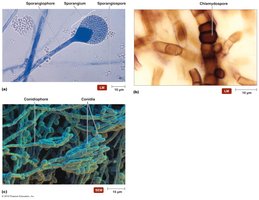
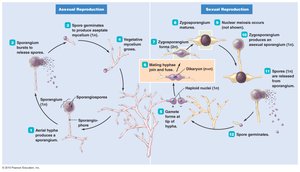
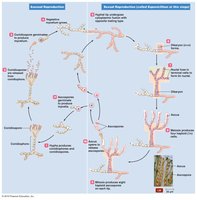
Asexual: Budding, asexual spore formation (sporangiospores, conidiospores).
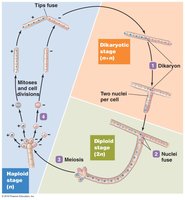
Sexual: Fusion of haploid cells, formation of dikaryon, meiosis restores haploid state.
Classification of Fungi
Zygomycota: Coenocytic molds; reproduce via sporangiospores and zygosporangia. Rhizopus.
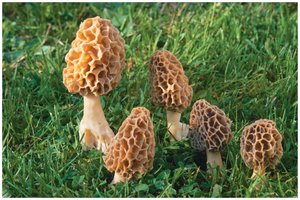
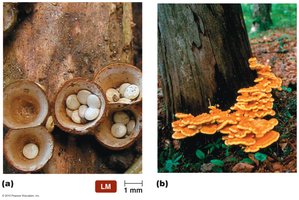
Ascomycota: Molds and yeasts; sexual reproduction via ascospores in asci, asexual via conidiospores. Aspergillus, Penicillium, Saccharomyces.
Basidiomycota: Mushrooms; basidiocarps, basidia, decomposers, some are toxic. Cryptococcus.
Deuteromycetes: Fungi with unknown sexual stages; most belong to Ascomycota.
Lichens
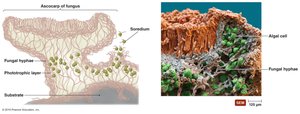
Lichens are symbiotic partnerships between fungi and photosynthetic microbes (cyanobacteria or green algae).
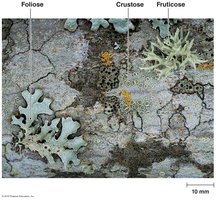
Shapes: Foliose (leaflike), crustose (crustlike), fruticose (shrublike).
Ecological roles: Soil formation, nitrogen fixation, air pollution monitoring.
Characteristics of Fungi Table
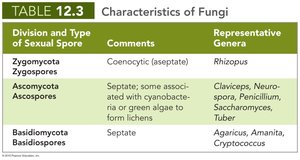
Division and Type of Sexual Spore | Comments | Representative Genera |
|---|---|---|
Zygomycota (Zygospores) | Coenocytic (aseptate) | Rhizopus |
Ascomycota (Ascospores) | Septate; some associated with cyanobacteria or green algae to form lichens | Claviceps, Neurospora, Penicillium, Saccharomyces, Tuber |
Basidiomycota (Basidiospores) | Septate | Agaricus, Amanita, Cryptococcus |
Algae
General Characteristics
Algae are simple, eukaryotic phototrophs that carry out oxygenic photosynthesis using chlorophyll a.
Phycology: Study of algae.
Distribution: Mostly aquatic, living in the photic zone.
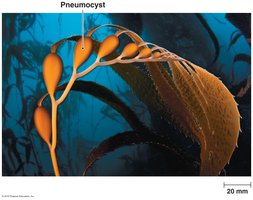
Morphology: Unicellular, colonial, or multicellular thalli; marine algae may have pneumocysts for buoyancy.
Reproduction
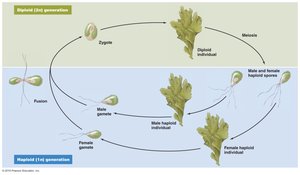
Unicellular algae: Asexual (mitosis, cytokinesis); sexual (gametes form zygotes, undergo meiosis).
Multicellular algae: Asexual (fragmentation); sexual (alternation of generations).
Classification of Algae
Classification is based on photosynthetic pigments, storage products, and cell wall composition.
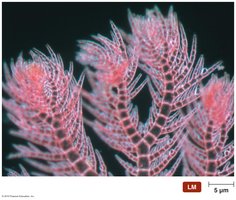
Division Chlorophyta (green algae): Chlorophylls a and b, sugar and starch reserves, cell walls of cellulose or glycoprotein.
Kingdom Rhodophyta (red algae): Phycoerythrin pigment, glycogen storage, cell walls of agar or carrageenan.
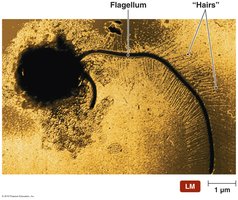
Phaeophyta (brown algae): Chlorophylls a and c, carotene, xanthophylls, motile gametes with two flagella, cell walls of cellulose and alginic acid.
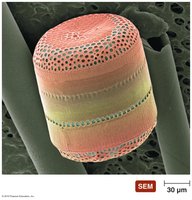
Chrysophyta (golden algae, diatoms): Chrysolaminarin and oils as storage, ornate coverings, major source of oxygen.
Water Molds
General Characteristics
Water molds are not true molds or fungi.
Differences from fungi: Tubular cristae in mitochondria, cell walls of cellulose, spores with two flagella, true diploid bodies.
Ecological role: Decompose dead animals, recycle nutrients; some are crop pathogens (e.g., Phytophthora infestans).
Parasitic Helminths and Arthropod Vectors
Helminths and Vectors
Helminths: Parasitic worms; eggs or larvae are diagnostic in samples.
Arthropod vectors: Animals that carry pathogens; segmented bodies, hard exoskeletons, jointed legs.
Mechanical vectors: Carry pathogens without being infected.
Biological vectors: Serve as hosts for pathogens.
Arachnids and Insects
Arachnids: Four pairs of legs; ticks and mites are important vectors.
Insects: Three pairs of legs, three body regions; include fleas, lice, flies, mosquitoes, and kissing bugs.
----------------------------------------
