 Indietro
Characterizing and Classifying Prokaryotes: Structure, Diversity, and Taxonomy
Guida di studio - Note intelligenti
 Appunti personalizzati basati sui tuoi materiali, ampliati con definizioni chiave, esempi e contesto.
General Characteristics of Prokaryotic Organisms
Prokaryotic Diversity and Abundance
Prokaryotes are the most numerous and diverse group of cellular microbes, thriving in a wide range of habitats. Despite their abundance, only a small fraction are capable of colonizing humans and causing disease.
Prokaryotic Morphology
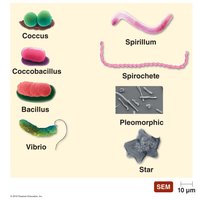
Prokaryotes exhibit a variety of shapes, which are important for identification and classification:
Coccus: Spherical
Bacillus: Rod-shaped
Vibrio: Curved rods
Spirillum: Thick, stiff spiral
Spirochete: Thin, flexible spiral
Coccobacillus: Intermediate between cocci and bacilli
Pleomorphic: Variable shapes and sizes
Other forms: Star-shaped, triangular, rectangular
Endospore Formation
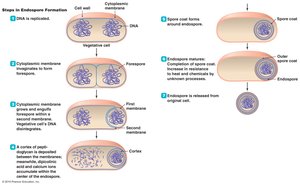
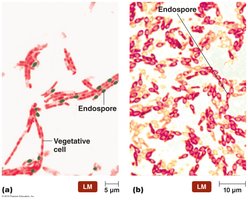
Endospores are highly resistant, dormant structures formed primarily by Gram-positive genera such as Bacillus and Clostridium. They serve as a defensive strategy against unfavorable conditions and are a significant concern in food safety and healthcare due to their resistance to destruction.
Sporulation: The process of endospore formation, typically taking 8–10 hours.
Endospore location: Can be central, subterminal, or terminal within the cell.
Prokaryotic Reproduction
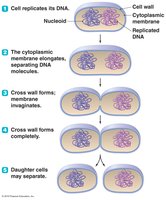
Prokaryotes reproduce asexually through several mechanisms:
Binary fission: Most common; cell replicates DNA, elongates, and divides into two daughter cells.
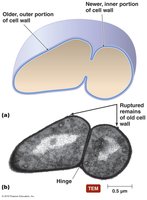
Snapping division: A variation of binary fission seen in some Gram-positive bacilli, where tension in the cell wall causes it to snap, leaving daughter cells attached.
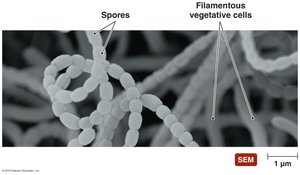
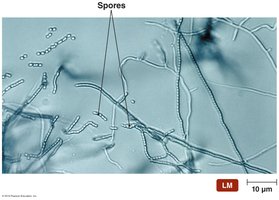
Reproductive spores: Daughter cells with tough outer coatings, common in actinomycetes.
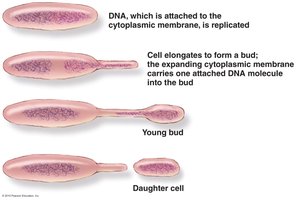
Budding: Outgrowth from parent cell receives a copy of DNA and separates.
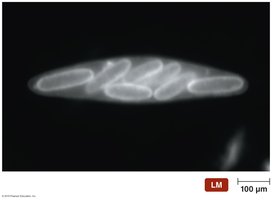
Viviparity: Rare; live offspring are produced within a parent cell (e.g., Epulopiscium).
Cellular Arrangements
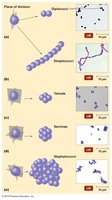
The arrangement of prokaryotic cells is determined by the planes of division and whether daughter cells remain attached:
Cocci:
Diplococci: Pairs
Streptococci: Chains
Tetrads: Groups of four (two planes)
Sarcinae: Cubes of eight (three planes)
Staphylococci: Grape-like clusters (random planes)
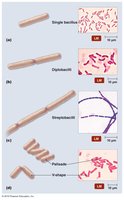
Bacilli:
Single bacilli
Diplobacilli: Pairs
Streptobacilli: Chains
V-shaped and coccobacilli: Variations
Modern Prokaryotic Classification
Three-Domain System
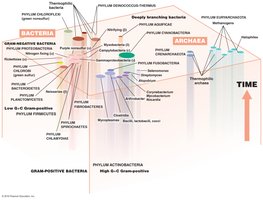
Modern classification of living organisms is based on genetic relatedness, particularly rRNA sequences. All life is divided into three domains:
Archaea
Bacteria
Eukarya
Approximately 99.5% of prokaryotes have not been cultured and are known only by their rRNA fingerprints.
Bergey's Manual of Systematic Bacteriology
This manual provides a consensus-based classification scheme for prokaryotes, organizing them into 26 phyla (2 Archaea, 24 Bacteria) based on evolutionary relationships reflected in rRNA sequences.
Survey of Archaea
General Features
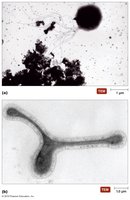
Archaea are prokaryotes distinct from bacteria, with unique characteristics:
Lack true peptidoglycan in cell walls
Branched hydrocarbon chains in membrane lipids
Initiator amino acid is methionine (AUG codon)
Two main phyla: Crenarchaeota and Euryarchaeota
Reproduce by binary fission, budding, or fragmentation
Not known to cause disease
Extremophiles
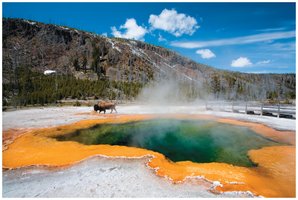
Many archaea are extremophiles, thriving in extreme temperature, pH, or salinity. Major groups include:
Thermophiles: Require temperatures above 45°C; important genera include Geogemma and Pyrodictium. Their enzymes are used in biotechnology and industry.
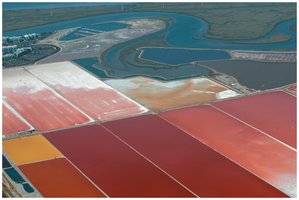
Halophiles: Inhabit highly saline environments (e.g., Dead Sea, Great Salt Lake), requiring >9% salt for cell wall integrity. Many produce red or orange pigments for sunlight protection.
Methanogens
Methanogens are obligate anaerobes that produce methane from CO2, H2, and organic acids. They are the largest group of archaea and play a key role in carbon cycling and sewage treatment.
Survey of Bacteria
Deeply Branching Bacteria
These bacteria have rRNA sequences and growth characteristics similar to the earliest bacteria. They are autotrophic and inhabit environments resembling early Earth. Examples include:
Aquifex: Gram-negative, earliest branch
Deinococcus: Gram-positive, highly radiation-resistant
Phototrophic Bacteria
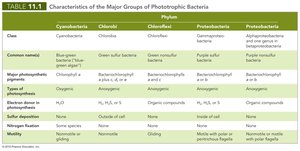
Phototrophic bacteria use light energy for metabolism and are divided into five groups based on pigments and electron donors:
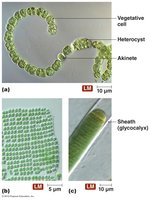
Cyanobacteria (blue-green bacteria): Gram-negative, produce O2, some fix nitrogen using heterocysts.
Green sulfur bacteria: Use H2S as electron donor, deposit sulfur outside cells.
Green nonsulfur bacteria: Use organic compounds as electron donors.
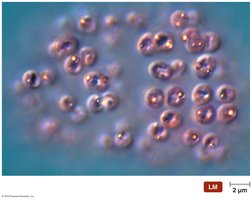
Purple sulfur bacteria: Deposit sulfur inside cells.
Purple nonsulfur bacteria: Use organic compounds as electron donors.
Class | Common Name(s) | Major Photosynthetic Pigments | Types of Photosynthesis | Electron Donor in Photosynthesis | Oxygen Production | Nitrogen Fixation | Motility |
|---|---|---|---|---|---|---|---|
Cyanobacteria | Blue-green bacteria | Chlorophyll a | Oxygenic | H2O | Yes | Some species | Gliding |
Chlorobi | Green sulfur bacteria | Bacteriochlorophylls | Anoxygenic | H2S, S, H2 | No | None | Nonmotile |
Chloroflexi | Green nonsulfur bacteria | Bacteriochlorophylls | Anoxygenic | Organic compounds | No | None | Gliding |
Proteobacteria | Purple sulfur/nonsulfur bacteria | Bacteriochlorophylls | Anoxygenic | H2S or organic compounds | No | None | Motile with polar flagella |
Low G+C Gram-Positive Bacteria (Phylum Firmicutes)
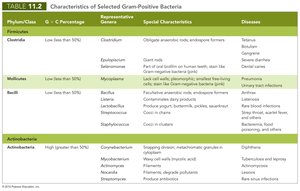
These bacteria have less than 50% guanine-cytosine content in their DNA and include:
Clostridia: Obligate anaerobes, endospore-forming, produce toxins (e.g., C. tetani, C. botulinum).
Mycoplasmas: Lack cell walls, smallest free-living cells, cause respiratory and urogenital infections.
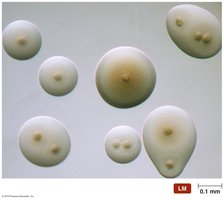
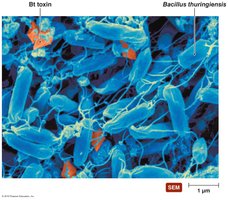
Bacillus: Endospore-forming aerobes/facultative anaerobes, includes B. anthracis (anthrax) and B. thuringiensis (insecticide toxin).
Listeria: Survives refrigeration, can cause meningitis and fetal death.
Lactobacillus: Non-spore-forming, beneficial in human microbiota and food production.
Streptococcus and Enterococcus: Cocci in chains, cause various diseases.
Staphylococcus: Cocci in clusters, includes S. aureus, a common human inhabitant and pathogen.
High G+C Gram-Positive Bacteria (Phylum Actinobacteria)
These bacteria have more than 50% guanine-cytosine content and include:
Corynebacterium: Pleomorphic rods, cause diphtheria.
Mycobacterium: Acid-fast, slow-growing, cause tuberculosis and leprosy.
Actinomycetes: Filamentous, produce antibiotics (e.g., Streptomyces), cause disease in immunocompromised patients.
Gram-Negative Proteobacteria
This is the largest and most diverse group of bacteria, divided into five classes:
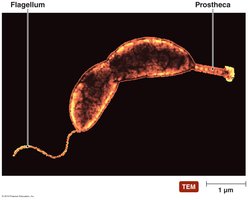
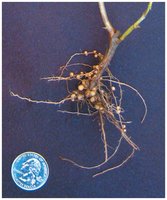
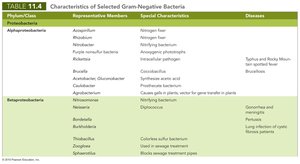
Alphaproteobacteria: Capable of growth at low nutrient levels, includes nitrogen-fixers (Azospirillum, Rhizobium), nitrifying bacteria, purple nonsulfur phototrophs, and pathogens (Rickettsia, Brucella).
Betaproteobacteria: Includes Neisseria (gonorrhea, meningitis), Bordetella (whooping cough), and environmental recyclers.
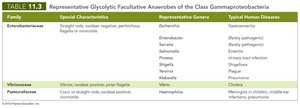
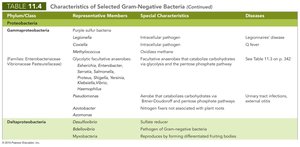
Gammaproteobacteria: Includes purple sulfur bacteria, intracellular pathogens (Legionella, Coxiella), methane oxidizers, glycolytic facultative anaerobes (e.g., Escherichia, Salmonella), and pseudomonads (Pseudomonas).
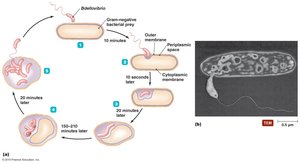
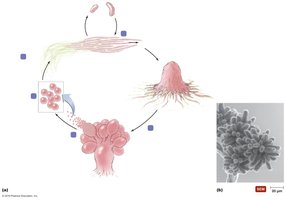
Deltaproteobacteria: Includes Desulfovibrio (sulfur recycling), Bdellovibrio (predator of other bacteria), and myxobacteria (fruiting body formation).
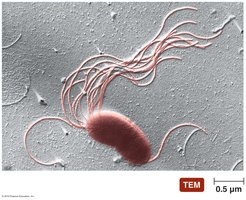
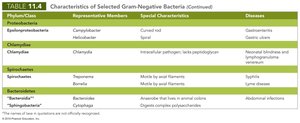
Epsilonproteobacteria: Includes Campylobacter (intestinal inflammation) and Helicobacter (ulcers).
Other Gram-Negative Bacteria
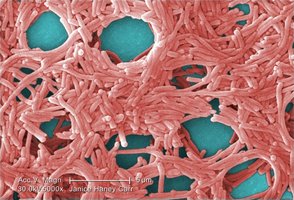
Chlamydias: Intracellular pathogens, lack peptidoglycan, cause sexually transmitted infections.
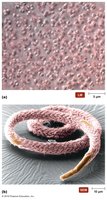
Spirochetes: Helical, motile, cause syphilis (Treponema) and Lyme disease (Borrelia).
Bacteroids: Inhabit digestive tracts, some cause infections; Cytophaga degrades sewage.
Additional info: This guide summarizes the major features, classification, and diversity of prokaryotes, including both Archaea and Bacteria, as well as their ecological and medical significance. Tables and images are included to reinforce key concepts and aid in visual identification.
