Indietro
Chemical Principles for Microbiology: Atomic Structure, Bonds, and Biomolecules
Guida di studio - Note intelligenti
 Appunti personalizzati basati sui tuoi materiali, ampliati con definizioni chiave, esempi e contesto.
Chemical Principles in Microbiology
Atomic Structure
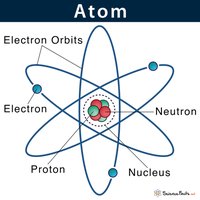
Atoms are the fundamental units of matter and are essential to understanding chemical reactions in microbiology. Each atom consists of a nucleus containing protons and neutrons, surrounded by electrons in orbitals.
Atom: Smallest unit of matter; interacts to form molecules.
Nucleus: Contains positively charged protons and neutral neutrons.
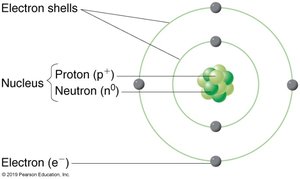
Electrons: Negatively charged particles arranged in shells around the nucleus.
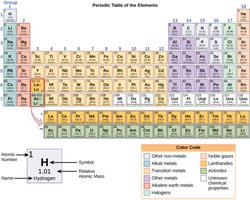
Atomic Number: Number of protons in the nucleus; determines the element.
Atomic Mass: Sum of protons and neutrons.
Chemical Element: Substance composed of atoms with the same number of protons.
Electron Configuration and Valence
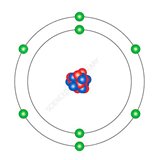
Electrons occupy shells around the nucleus, and the arrangement determines chemical reactivity. Atoms strive for a full outer shell, leading to the formation of molecules through electron transfer or sharing.
Electron Shells: 1st shell holds 2 electrons, 2nd and 3rd hold up to 8 each.
Valence: Number of extra or missing electrons in the outer shell.
Molecule Formation: Atoms give up, accept, or share electrons to achieve full outer shells.
Ions and Chemical Bonds
Ions
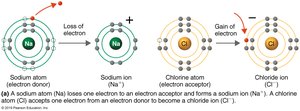
An ion is an atom that has gained or lost electrons, resulting in a net charge. Ions are crucial in biological systems for maintaining electrical gradients and participating in chemical reactions.
Anion: Negatively charged ion (more electrons than protons).
Cation: Positively charged ion (more protons than electrons).
Example: Sodium ion (Na+), Chloride ion (Cl-).
Ionic Bonds
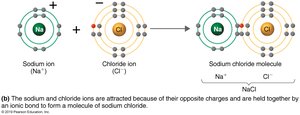
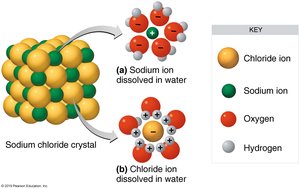
Ionic bonds are formed by the attraction between oppositely charged ions, resulting in stable molecules such as salts.
Ionic Bond: Attraction between cations and anions.
Example: Sodium chloride (NaCl) is formed by Na+ and Cl-.
Covalent Bonds
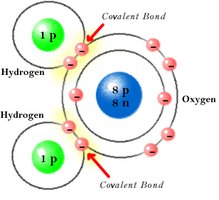
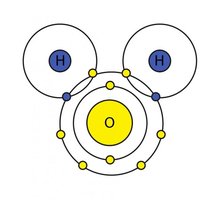
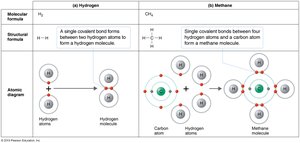
Covalent bonds involve the sharing of electron pairs between atoms. These bonds are common in organic molecules and are the strongest type of chemical bond.
Covalent Bond: Two atoms share one or more pairs of electrons.
Biomolecules: Most biological molecules are formed by covalent bonds.
Example: Water (H2O), methane (CH4).
Hydrogen Bonds
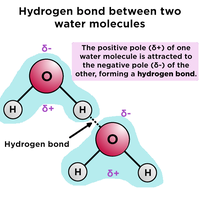
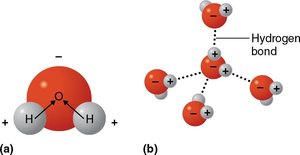
Hydrogen bonds are weak attractions between a hydrogen atom covalently bonded to oxygen or nitrogen and another oxygen or nitrogen atom. They are important for the structure of water and biological macromolecules.
Hydrogen Bond: Weak bond serving as a bridge between molecules or within a molecule.
Example: Hydrogen bonds stabilize DNA and protein structures.
Chemical Reactions
Types of Chemical Reactions
Chemical reactions involve the making or breaking of bonds, leading to changes in energy and the formation of new substances.
Endergonic Reaction: Absorbs more energy than it releases.
Exergonic Reaction: Releases more energy than it absorbs.
Synthesis: Formation of molecules (A + B → AB).
Decomposition: Breakdown of molecules (AB → A + B).
Exchange: Molecules are decomposed and new ones formed (AB + CD → AD + BC).
Inorganic and Organic Compounds
Inorganic Compounds
Inorganic compounds are usually small, simple molecules that lack carbon and hydrogen. Water is the most abundant inorganic compound in cells.
Water: Polar molecule, excellent solvent.
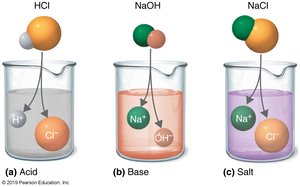
Acid: Dissociates into H+ ions (e.g., HCl).
Base: Dissociates into OH- ions (e.g., NaOH).
Salt: Dissociates into ions, none of which is H+ or OH- (e.g., NaCl).
pH and Its Measurement
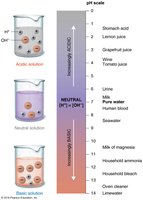
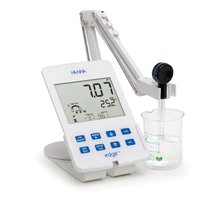
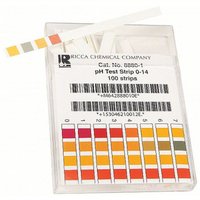
pH is a measure of the concentration of H+ ions in a solution. It is a logarithmic scale ranging from 0 (most acidic) to 14 (most basic), with 7 being neutral.
Acidic: More H+ than OH-, lower pH.
Basic: More OH- than H+, higher pH.
Neutral: Equal H+ and OH- (pH = 7).
Equation:
Organic Compounds and Biomolecules
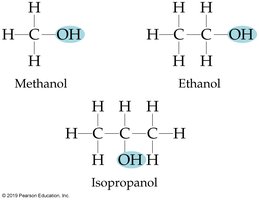
Organic compounds contain carbon and hydrogen and are the basis of life. Functional groups attached to carbon skeletons determine chemical properties.
Functional Groups: Specific groups of atoms involved in chemical reactions (e.g., alcohol, carboxyl).
Major Classes: Carbohydrates, lipids, proteins, nucleic acids.
Carbohydrates
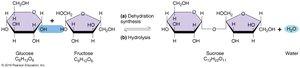
Carbohydrates are sugars and starches that provide energy to cells. They have a characteristic C:H:O ratio of 1:2:1.
Monosaccharides: Simple sugars (3-7 carbons).
Disaccharides: Two monosaccharides bonded together.
Polysaccharides: Several monosaccharides bonded together.
Lipids
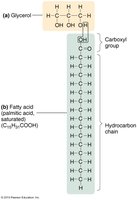
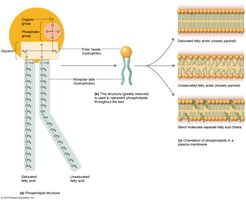
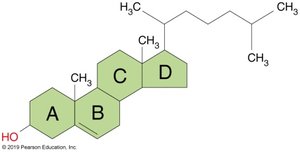
Lipids are used for energy storage and form the structure of cell membranes. They are composed of C, H, and O, but lack the 1:2:1 ratio of carbohydrates.
Simple Lipids: Glycerol + fatty acids (mono-, di-, triglycerides).
Complex Lipids: Also contain P, N, or S (e.g., phospholipids).
Phospholipids: Major component of cell membranes, with polar and nonpolar regions.
Proteins
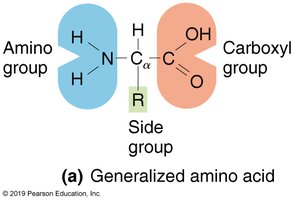
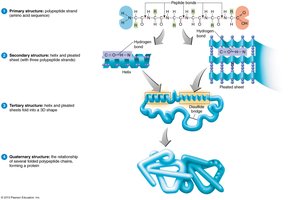
Proteins are polymers of amino acids, which have an amino group, carboxyl group, and a variable R group. Proteins are essential for structure, function, and regulation in cells.
Amino Acids: 20 types, each with a unique R group.
Peptide Bonds: Link amino acids to form proteins.
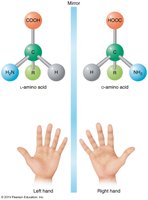
Stereoisomers: Amino acids exist as L- and D- forms.
Protein Structure: Primary, secondary, tertiary, and quaternary levels.
Nucleic Acids
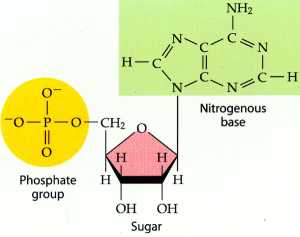
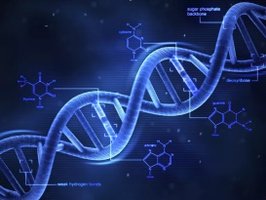
Nucleic acids carry genetic information. DNA is double-stranded, while RNA is usually single-stranded. Nucleotides are the building blocks, consisting of a nitrogenous base, pentose sugar, and phosphate group.
DNA: Deoxyribonucleic acid, double helix.
RNA: Ribonucleic acid, single strand.
Nucleotides: Composed of purines (adenine, guanine) and pyrimidines (cytosine, thymine, uracil).
Adenosine Triphosphate (ATP)
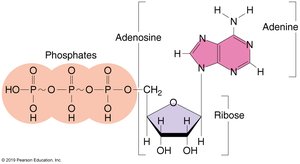
ATP is the principal energy-carrying molecule in cells. It consists of adenine, ribose, and three phosphate groups. Hydrolysis of ATP releases energy for cellular processes.
ATP Hydrolysis:
Function: Provides energy for metabolic reactions.