 Indietro
Classification of Microorganisms: Taxonomy, Phylogeny, and Identification
Guida di studio - Note intelligenti
 Appunti personalizzati basati sui tuoi materiali, ampliati con definizioni chiave, esempi e contesto.
Classification of Microorganisms
Introduction to Taxonomy and Phylogeny
Taxonomy is the science of classifying organisms to reflect their evolutionary relationships and similarities. Systematics, or phylogeny, is the study of the evolutionary history of organisms. These disciplines provide the framework for organizing the vast diversity of microbial life.
Taxonomy: The science of classification, arranging organisms into groups (taxa) based on similarities.
Taxon (plural: taxa): A category used in classification, such as species, genus, family, etc.
Phylogeny: The evolutionary history and relationships among organisms.
Example: The classification of bacteria into genera and species based on genetic and phenotypic similarities.
Historical Perspectives in Classification
The classification of living organisms has evolved over time, reflecting advances in scientific understanding.
Linnaeus (1735): Introduced the two-kingdom system (Plantae and Animalia).
Von Nägeli & Haeckel (1800s): Proposed inclusion of bacteria and fungi in Plantae; Haeckel added Protista for microorganisms.
Murray (1968): Proposed the kingdom Prokaryotae for organisms without a nucleus.
Whittaker (1969): Developed the five-kingdom system (Monera, Protista, Fungi, Plantae, Animalia).
Woese (1978): Introduced the three-domain system based on rRNA sequencing: Bacteria, Archaea, and Eukarya.
Limitation of Two-Kingdom System: It could not accommodate the diversity of microorganisms, especially prokaryotes and unicellular eukaryotes.
The Three-Domain System
The three-domain system, developed by Carl Woese, is based on differences in ribosomal RNA (rRNA) sequences and divides all life into three domains: Bacteria, Archaea, and Eukarya.
Bacteria: Prokaryotic, cell walls contain peptidoglycan, diverse metabolic pathways.
Archaea: Prokaryotic, cell walls lack peptidoglycan, often live in extreme environments (e.g., methanogens, extreme halophiles, hyperthermophiles).
Eukarya: Eukaryotic, includes kingdoms Fungi, Plantae, Animalia, and Protists.
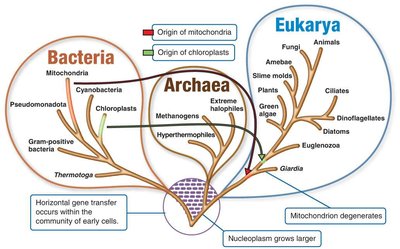
Table: Characteristics of the Three Domains
Archaea | Bacteria | Eukarya | |
|---|---|---|---|
Cell Type | Prokaryotic | Prokaryotic | Eukaryotic |
Cell Wall | Varies; no peptidoglycan | Contains peptidoglycan | Varies; contains carbohydrates |
Membrane Lipids | Branched carbon chains attached to glycerol by ether linkage | Straight carbon chains attached to glycerol by ester linkage | Straight carbon chains attached to glycerol by ester linkage |
First Amino Acid in Protein Synthesis | Methionine | Formylmethionine | Methionine |
Antibiotic Sensitivity | No | Yes | No |
rRNA Loop | Lacking | Present | Lacking |
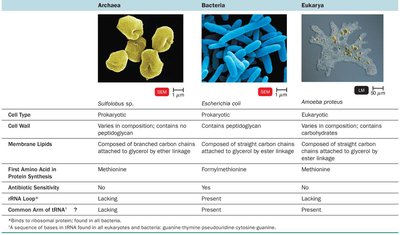
Endosymbiont Theory
The endosymbiont theory explains the origin of eukaryotic cells from prokaryotic ancestors. It proposes that organelles such as mitochondria and chloroplasts originated as free-living bacteria that were engulfed by ancestral eukaryotic cells.
Infoldings of the plasma membrane formed the nuclear envelope.
Endosymbiotic bacteria evolved into mitochondria and chloroplasts.
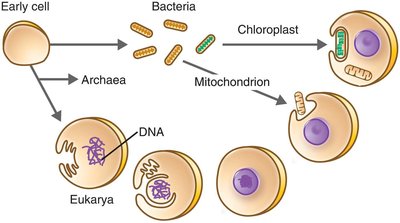
Table: Prokaryotic Cells and Eukaryotic Organelles Compared
Prokaryotic Cell | Eukaryotic Cell | Eukaryotic Organelles (Mitochondria & Chloroplasts) | |
|---|---|---|---|
DNA | One circular; some two circular; some linear | Linear | Circular |
Histones | In archaea | Yes | No |
First Amino Acid in Protein Synthesis | Formylmethionine (bacteria), Methionine (archaea) | Methionine | Formylmethionine |
Ribosomes | 70S | 80S | 70S |
Growth | Binary fission | Mitosis | Binary fission |
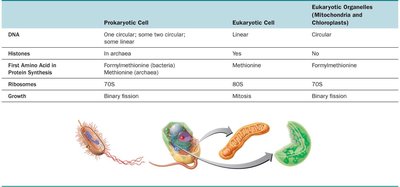
Phylogenetic Trees and Molecular Clocks
Phylogenetic trees group organisms based on common properties and evolutionary ancestry. Molecular clocks, such as rRNA and genome sequencing, are used to estimate evolutionary relationships by measuring the accumulation of mutations over time.
Evidence for groupings includes fossils and genomic data.
Each species retains some characteristics of its ancestor.
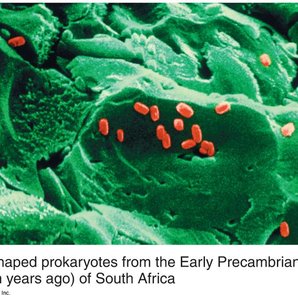
Classification and Nomenclature
Scientific Nomenclature
Scientific names are used to avoid confusion caused by regional and linguistic differences. Binomial nomenclature assigns each organism a two-part name: genus and species (e.g., Homo sapiens).
Genus: Capitalized and italicized (or underlined).
Species (specific epithet): Lowercase and italicized (or underlined).
Example: Salmonella enterica (named for Daniel Salmon and found in the intestines).
Major Taxa in Classification
Domain
Kingdom
Phylum
Class
Order
Family
Genus
Species
Definitions: Culture, Clone, and Strain
Culture: Microorganisms grown in laboratory media.
Clone: Population of cells derived from a single parent cell.
Strain: Genetically different cells within a clone.
Classification of Eukaryotes
Protista: Mostly unicellular, nutritionally diverse, grouped into clades based on rRNA.
Fungi: Chemoheterotrophic, cell walls of chitin, develop from spores or hyphal fragments.
Plantae: Multicellular, cellulose cell walls, photosynthetic.
Animalia: Multicellular, no cell walls, ingest organic matter.
Classification of Viruses
Viruses are not classified within the three domains because they are not composed of cells and require a host cell for replication. Viral species are populations of viruses with similar characteristics, distinguished by morphology, genome, enzymes, and ecological niche.
Methods of Classifying and Identifying Microorganisms
Bergey’s Manual
Bergey’s Manual of Systematics of Archaea and Bacteria provides the classification scheme for prokaryotes, while Bergey’s Manual of Determinative Bacteriology is used for identification based on morphology, cell wall composition, staining, oxygen requirements, and biochemical tests.
Conventional Identification Methods
Morphology: Useful for identifying eukaryotes; limited for prokaryotes.
Differential Staining: Gram staining, acid-fast staining; not useful for all bacteria or archaea.
Biochemical Tests: Detect presence of specific enzymes; rapid identification systems can test multiple enzymes simultaneously.
Serological Methods
Serology involves the study of serum and immune responses. Microorganisms are antigenic and stimulate antibody production. Serological tests use known antibodies to identify unknown bacteria.
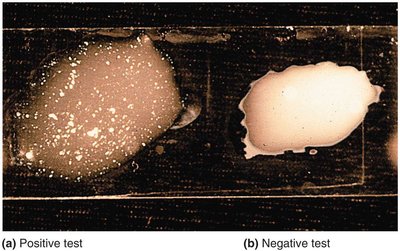
Slide Agglutination Test: Bacteria clump when mixed with specific antibodies.
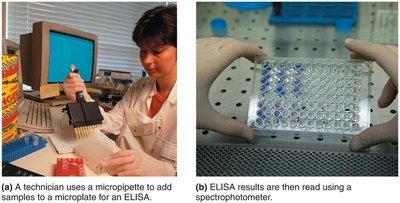
ELISA (Enzyme-Linked Immunosorbent Assay): Detects antigens (direct ELISA) or antibodies (indirect ELISA) using enzyme-linked antibodies and color change.
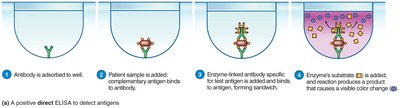
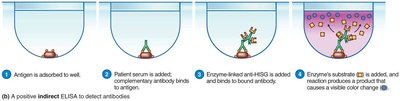
Phage Typing
Phage typing determines which bacteriophages a bacterium is susceptible to. Clearings (plaques) on a bacterial lawn indicate lysis by specific phages, useful for tracing infection sources.
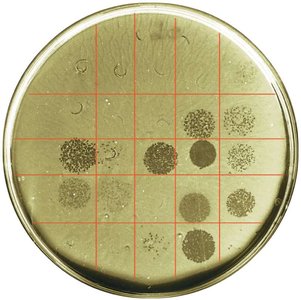
Flow Cytometry
Flow cytometry separates and analyzes cells based on size and markers using laser technology. It can distinguish species by differences in electrical conductivity or fluorescence without culturing.
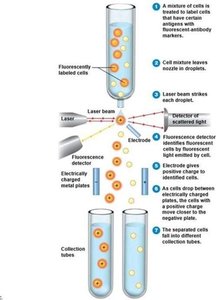
Molecular Methods for Classification and Identification
Whole Genome Sequencing: Compares DNA base composition (G+C content) to determine relatedness.
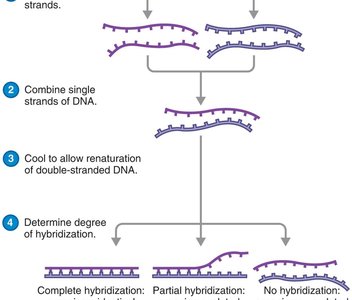
Nucleic Acid Hybridization: Measures the ability of DNA from different organisms to hybridize; >70% hybridization indicates same species.
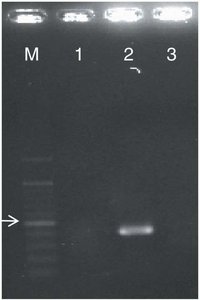
PCR (Polymerase Chain Reaction): Amplifies DNA for identification, including unculturable microbes.
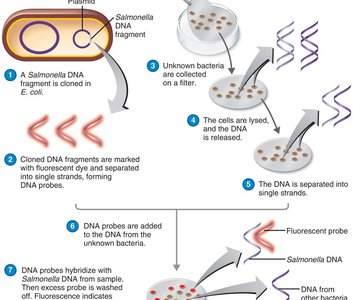
Southern Blotting: Uses DNA probes to identify microorganisms.
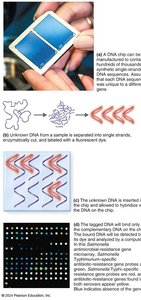
DNA Chips (Microarrays): Detect pathogens by hybridization with probe DNA, visualized by fluorescence.
Ribotyping and FISH (Fluorescent In Situ Hybridization): Use rRNA sequencing and fluorescent probes to identify and quantify microorganisms in samples.
Dichotomous Keys and Cladograms
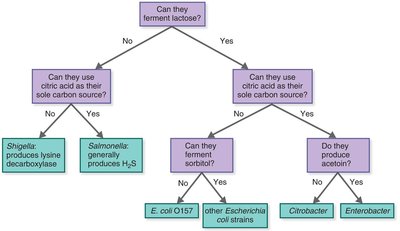
Dichotomous keys are tools for identification based on a series of choices that lead to the correct name of an organism. Cladograms are branching diagrams showing evolutionary relationships and are used for classification rather than identification.
Summary Table: Key Methods for Microbial Classification and Identification
Method | Main Purpose | Example/Application |
|---|---|---|
Morphology | Initial identification | Shape, arrangement, presence of flagella |
Differential Staining | Cell wall composition | Gram stain, acid-fast stain |
Biochemical Tests | Metabolic capabilities | Fermentation, enzyme activity |
Serology | Antigen-antibody reactions | ELISA, agglutination |
Phage Typing | Susceptibility to phages | Tracing outbreaks |
Flow Cytometry | Cell sorting/identification | FACS analysis |
PCR | DNA amplification | Pathogen detection |
Nucleic Acid Hybridization | Genetic relatedness | Southern blot, DNA chips |
Ribotyping/FISH | rRNA-based identification | Environmental samples |
