 Indietro
Controlling Microbial Growth in the Body: Antimicrobial Drugs
Guida di studio - Note intelligenti
 Appunti personalizzati basati sui tuoi materiali, ampliati con definizioni chiave, esempi e contesto.
Controlling Microbial Growth in the Body: Antimicrobial Drugs
The History of Antimicrobial Agents
Antimicrobial drugs have revolutionized medicine by enabling the treatment of infectious diseases. The discovery and development of these agents involved several key figures and milestones:
Paul Ehrlich: Introduced the concept of "magic bullets"—chemicals that selectively target pathogens. Developed arsenic compounds effective against microbes.
Alexander Fleming: Discovered Penicillin, the first antibiotic, released from the mold Penicillium.
Gerhard Domagk: Discovered sulfanilamide, the first widely used antimicrobial agent.
Selman Waksman: Coined the term "antibiotics" for antimicrobial agents produced naturally by organisms.
Sources of Common Antibiotics and Semisynthetics
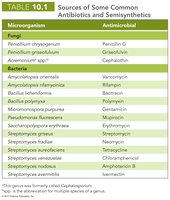
Antibiotics are derived from various microorganisms, primarily fungi and bacteria. The following table summarizes key sources:
Microorganism | Antimicrobial |
|---|---|
Penicillium chrysogenum | Penicillin G |
Penicillium griseofulvum | Griseofulvin |
Acremonium spp. | Cephalosporins |
Streptomyces spp. | Streptomycin, Neomycin, Chloramphenicol, Amphotericin B |
Bacillus polymyxa | Polymyxin |
Bacillus licheniformis | Bacitracin |
Amycolatopsis orientalis | Vancomycin |
Micromonospora purpurea | Gentamicin |
Mechanisms of Antimicrobial Action
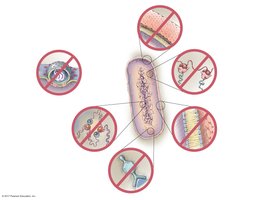
Antimicrobial drugs act by targeting specific structures or processes in pathogens. The main mechanisms include:
Inhibition of pathogen’s attachment or entry: Prevents viruses from entering host cells (e.g., Arildone, Pleconaril, Enfuvirtide).
Inhibition of cell wall synthesis: Disrupts peptidoglycan formation in bacteria (e.g., Penicillins, Cephalosporins, Vancomycin).
Inhibition of protein synthesis: Targets ribosomes, blocking translation (e.g., Aminoglycosides, Tetracyclines, Macrolides).
Disruption of cytoplasmic membrane: Damages membrane integrity (e.g., Polymyxins, Polyenes).
Inhibition of metabolic pathways: Blocks essential metabolic reactions (e.g., Sulfonamides, Trimethoprim).
Inhibition of DNA or RNA synthesis: Interferes with nucleic acid replication and transcription (e.g., Quinolones, Rifampin).
Inhibition of Cell Wall Synthesis
Cell wall synthesis inhibitors are most effective against actively growing bacteria. They prevent the formation of peptidoglycan, a key component of bacterial cell walls:
Beta-lactams: Prevent cross-linkage of NAM subunits. Examples include Penicillin, Cephalosporin, Carbapenems.
Vancomycin and Cycloserine: Interfere with bridges linking NAM subunits in Gram-positive bacteria.
Bacitracin: Blocks transport of NAG and NAM from cytoplasm.
Isoniazid and Ethambutol: Disrupt mycolic acid formation in mycobacteria.
Echinocandins: Inhibit fungal cell wall synthesis by blocking glucan formation.
Inhibition of Protein Synthesis
Protein synthesis inhibitors exploit differences between prokaryotic (70S) and eukaryotic (80S) ribosomes. However, mitochondria in eukaryotes contain 70S ribosomes, which can lead to toxicity:
Aminoglycosides, Tetracyclines, Chloramphenicol, Macrolides: Block various steps in translation.
Mupirocin: Inhibits aminoacyl-tRNA synthetase, preventing tRNA charging in Gram-positive bacteria.
Disruption of Cytoplasmic Membranes
Some drugs form channels in the cytoplasmic membrane, compromising its integrity:
Amphotericin B: Binds ergosterol in fungal membranes, causing leakage.
Polymyxins: Disrupt bacterial membranes (effective against Gram-negative bacteria).
Inhibition of Metabolic Pathways
Antimetabolic agents target pathways unique to pathogens:
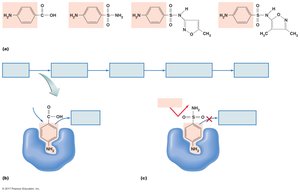
Sulfonamides: Inhibit folic acid synthesis by mimicking PABA, blocking the production of tetrahydrofolic acid (THF).
Trimethoprim: Inhibits a subsequent step in folic acid synthesis.
Atovaquone: Interferes with electron transport in protozoa and fungi.
Antiviral agents: Block viral uncoating or protease activity (e.g., Amantadine, protease inhibitors).
Inhibition of Nucleic Acid Synthesis
Drugs targeting nucleic acid synthesis are often used against viruses and rapidly dividing cells:
Nucleotide/nucleoside analogs: Distort nucleic acid structure, preventing replication and transcription.
Quinolones and fluoroquinolones: Inhibit prokaryotic DNA gyrase.
Rifampin: Inhibits RNA polymerase.
Reverse transcriptase inhibitors: Target HIV replication.
Clinical Considerations in Prescribing Antimicrobial Drugs
Ideal Antimicrobial Agent
The ideal drug is readily available, inexpensive, chemically stable, easily administered, nontoxic, nonallergenic, and selectively toxic against a wide range of pathogens.
Spectrum of Action
Narrow-spectrum: Effective against a limited group of organisms.
Broad-spectrum: Effective against many organisms, but may disrupt normal flora and lead to superinfections.
Effectiveness
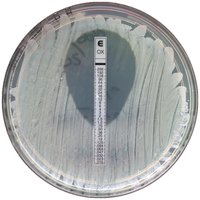
Drug effectiveness is determined by laboratory tests:
Diffusion susceptibility test
Minimum inhibitory concentration (MIC) test
Minimum bactericidal concentration (MBC) test
Routes of Administration
Topical: For external infections.
Oral: Self-administered, no needles.
Intramuscular: Injection into muscle.
Intravenous: Direct delivery to bloodstream.
Safety and Side Effects
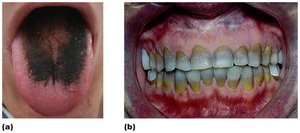
Toxicity: May affect kidneys, liver, or nerves. Therapeutic index measures safety.
Allergies: Rare but potentially life-threatening (e.g., anaphylactic shock).
Disruption of normal microbiota: Can lead to secondary infections or superinfections, especially in hospitalized patients.
Resistance to Antimicrobial Drugs
The Development of Resistance in Populations
Resistance arises through mutations or acquisition of resistance genes (R plasmids) via transformation, transduction, or conjugation. Constant drug use selects for resistant strains.
Mechanisms of Resistance
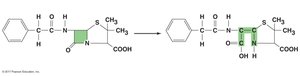
Production of enzymes that destroy or deactivate drugs (e.g., beta-lactamase).
Prevention of drug entry into the cell.
Alteration of drug targets.
Modification of metabolic pathways.
Pumping drugs out of the cell (efflux pumps).
Biofilm formation.
Special proteins (e.g., MfpA in Mycobacterium tuberculosis) that protect targets.
Multiple Resistance and Cross Resistance
Pathogens may become resistant to multiple drugs, especially in healthcare settings.
Cross resistance occurs when resistance to one drug confers resistance to similar drugs.
Retarding Resistance
Maintain high drug concentrations in patients.
Use drug combinations (synergism vs. antagonism).
Limit antimicrobial use to necessary cases.
Develop new drugs and variations (second- and third-generation drugs).
Search for novel antibiotics and design drugs targeting microbial proteins.
Additional info: The notes expand on mechanisms, clinical considerations, and resistance strategies for antimicrobial drugs, providing context for exam preparation.
