 Indietro
Gene Transfer, Mutations, and Genome Evolution in Microbiology
Guida di studio - Note intelligenti
 Appunti personalizzati basati sui tuoi materiali, ampliati con definizioni chiave, esempi e contesto.
Gene Transfer, Mutations, and Genome Evolution
The Mosaic Nature of Genomes
Microbial genomes are dynamic and constantly evolving. DNA sequences can change through various mechanisms, including mutations, deletions, insertions, and horizontal gene transfer (HGT). These changes allow microbes to adapt to their environments by acquiring new functions and maintaining genes that are beneficial for survival.
Mutations: Heritable changes in DNA sequence.
Large-scale changes: Deletions, insertions, and inversions of DNA segments.
Horizontal gene transfer: Acquisition of DNA from other species.
Environmental interaction: Genes are maintained if they confer survival advantages.
Types of Mutations
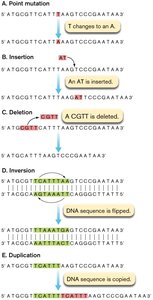
Mutations are classified based on their nature and effect on the DNA sequence. They can range from single base changes to large-scale rearrangements.
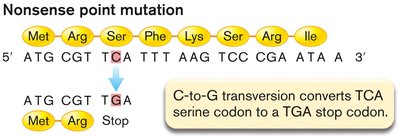
Point mutations: Change in a single base pair.
Transition: Purine to purine or pyrimidine to pyrimidine.
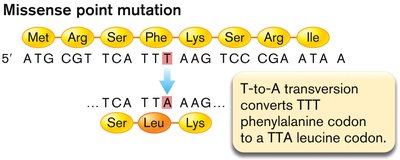
Transversion: Purine to pyrimidine or vice versa.
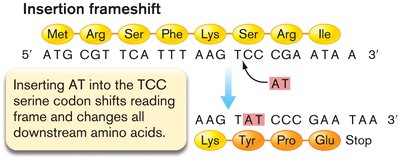
Insertion: Addition of DNA segment.
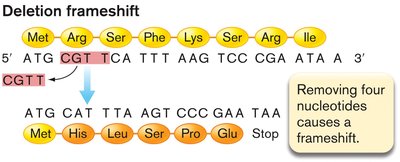
Deletion: Removal of DNA segment.
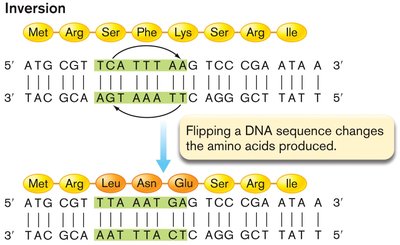
Inversion: Flipping a DNA segment.
Duplication: Copying a DNA segment.
Mutation Effects on Phenotype
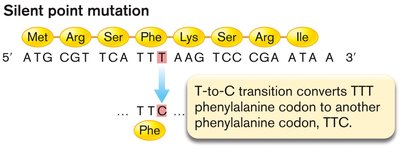
Most mutations do not affect the organism's phenotype. Mutations in non-coding regions, synonymous codon changes, or conservative amino acid substitutions often have no observable effect. Only mutations that alter essential proteins or regulatory elements may result in noticeable phenotypic changes.
Silent mutations: Change in DNA that does not alter the protein sequence.
Missense mutations: Change in DNA that results in a different amino acid.
Nonsense mutations: Change in DNA that introduces a stop codon.
Frameshift mutations: Insertions or deletions that shift the reading frame.
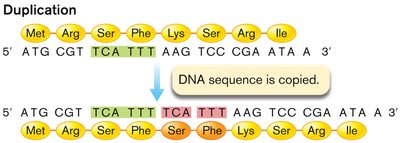
Causes of Mutations
Mutations can arise spontaneously or be induced by external factors. Spontaneous mutations occur due to errors in DNA replication or chemical changes in bases. Induced mutations are caused by mutagens such as radiation or chemicals.
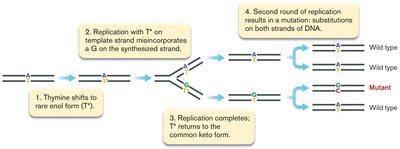
Spontaneous mutations: Replication errors, tautomeric shifts, deamination, depurination.
Mutagens: Electromagnetic radiation (X-rays, UV), chemicals (base analogs, intercalators).
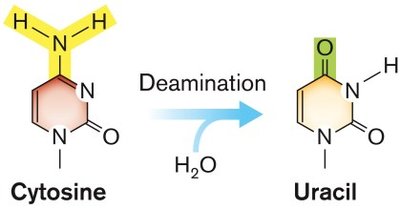
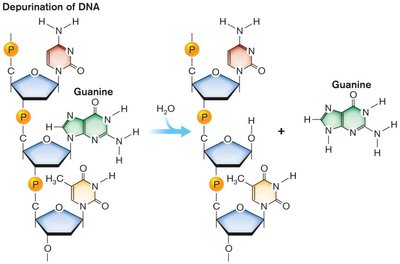
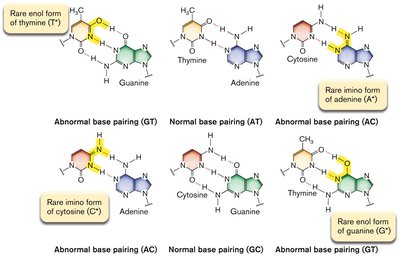
Mutagen-Induced DNA Damage
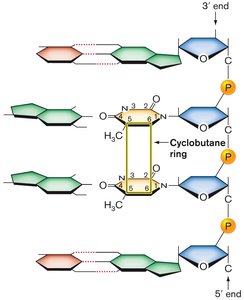
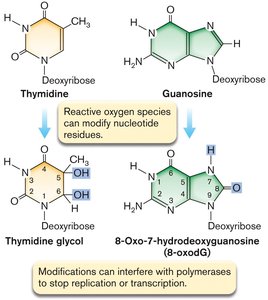
Mutagens can cause a variety of DNA lesions, including base modifications, strand breaks, and frameshift mutations. Reactive oxygen species (ROS) can modify nucleotide residues, interfering with replication and transcription.
Electromagnetic radiation: Causes DNA breaks and thymidine dimers.
Chemicals: Base analogs, base-modifying agents, intercalators.
Reactive oxygen species: Modify bases, leading to replication errors.
Measurement of Mutagenicity: The Ames Test
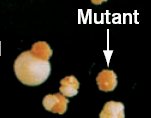
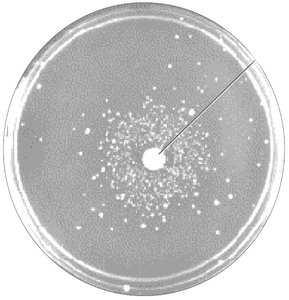
The Ames test is used to assess the mutagenic potential of chemicals. It uses a bacterial strain auxotrophic for histidine, which cannot grow unless a mutation reverts the hisG gene to normal. The number of revertant colonies indicates the strength of the mutagen.
Auxotrophic strain: Requires histidine for growth.
Mutagen exposure: Increases revertant colony count.
Carcinogenicity: Most mutagens are also carcinogens.
DNA Repair Mechanisms
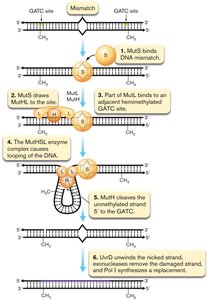
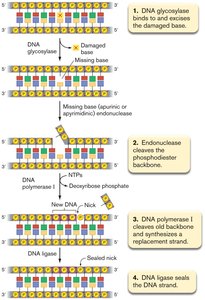
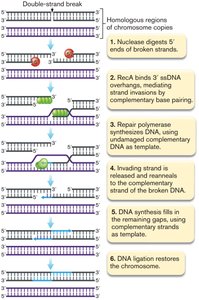
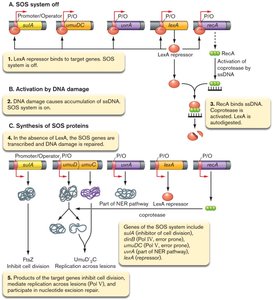
Cells possess multiple mechanisms to repair DNA damage and maintain genome integrity. These include mismatch repair, base excision repair, recombinational repair, and SOS repair.
Mismatch repair: Corrects mispaired bases using methylation status to identify the new strand.
Base excision repair: Removes damaged bases and replaces them with correct ones.
Recombinational repair: Uses undamaged DNA as a template to repair double-strand breaks.
SOS repair: Induced by extensive DNA damage; activates many repair genes and is error-prone.
Gene Transfer Mechanisms in Bacteria
Discovery of Sexual Recombination in E. coli
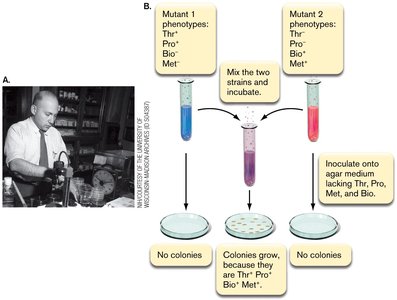
Sexual recombination in bacteria was discovered through experiments mixing mutant strains and observing the restoration of prototrophic colonies, indicating gene transfer between cells.
Conjugation
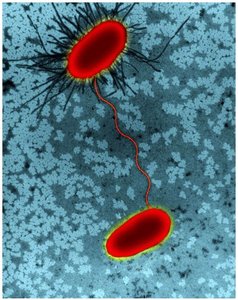
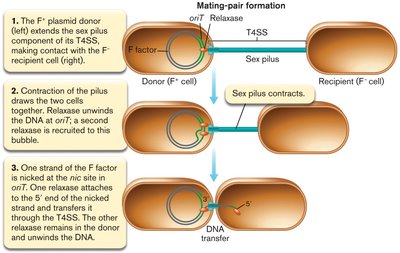
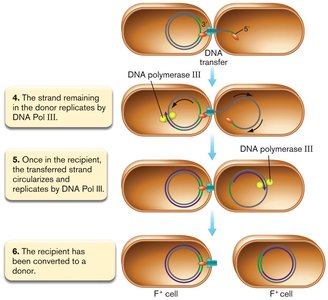
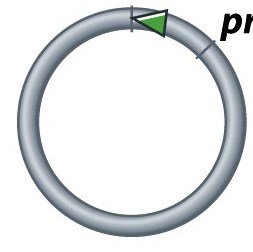
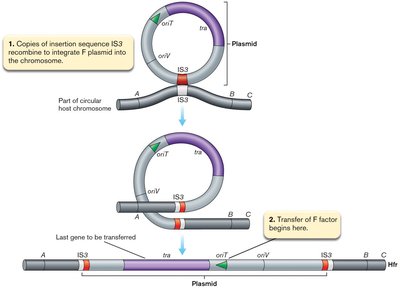
Conjugation is a process where DNA is transferred from one bacterium to another via a pilus. The F (fertility) factor encodes the pilus and transfer machinery. DNA transfer starts at the oriT site, and recipient cells become donors after acquiring the F plasmid.
F factor: Plasmid encoding pilus and transfer genes.
F' factor: F plasmid with extra genes.
Hfr: F factor integrated into chromosome, enabling transfer of chromosomal genes.
Transduction
Transduction involves the transfer of DNA from one bacterium to another via bacteriophages. Sometimes, phages package bacterial DNA by mistake and transfer it to new hosts.
Bacteriophage: Virus that infects bacteria.
Generalized transduction: Random bacterial DNA is transferred.
Specialized transduction: Specific bacterial genes are transferred.
Transformation
Transformation is the uptake of free DNA from the environment by competent cells. The translocasome complex facilitates DNA uptake, and competence can be induced by stress or specific signals.
Competence factor: Signal that induces competence in Gram-positive bacteria.
Stress-induced competence: Starvation or environmental stress triggers DNA uptake.
Summary of Gene Transfer Mechanisms
Bacteria and archaea utilize transformation, conjugation, and transduction to exchange genetic material, contributing to genome evolution and adaptation.
Genome Evolution and Recombination
Genome Evolution
Genome evolution occurs through the gain or loss of genetic material, small changes in gene sequences, and large chromosomal rearrangements. Gene duplication can create new functions while maintaining original activity.
Small changes: Slow protein evolution, no new functions.
Large changes: Insertions, duplications, new functions.
Recombination
Recombination replaces chromosomal DNA with incoming DNA if sequences are similar. It is essential for DNA repair and genetic diversity, requiring specific proteins such as RecA, RecBCD, and RuvAB.
Homologous recombination: Can lead to gene deletion or duplication.
Paralogous genes: Genes duplicated within a genome.
Orthologous genes: Genes in different species derived from a common ancestor.
Horizontal Gene Transfer (HGT)
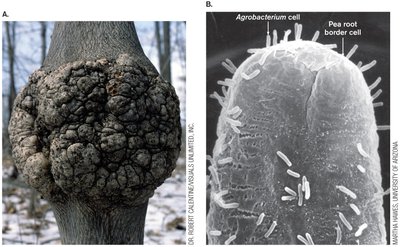
HGT is the movement of genes between cells outside of cell division. It spreads useful genes, such as antibiotic resistance, and creates genomic islands with specialized functions.
Transformation, conjugation, transduction: Main HGT mechanisms.
Plasmids: Carry genes between cells.
Genomic islands: Pathogenicity and metabolic islands.
Evolutionary Relatedness of Life
Archaea share genes with both bacteria and eukaryotes, making their evolutionary history complex. Bacterial species are related through both lateral gene transfer and parentage, complicating phylogenetic analysis.
Lateral gene transfer: Genes acquired from other bacteria.
Parentage: Genes inherited from ancestors.
Additional info: This study guide expands on the original notes with definitions, examples, and academic context to ensure completeness and clarity for exam preparation.
