 Indietro
Microbial Genetics: Structure, Function, and Variation
Guida di studio - Note intelligenti
 Appunti personalizzati basati sui tuoi materiali, ampliati con definizioni chiave, esempi e contesto.
Genetics: The Foundation of Microbial Life
Introduction to Genetics
Genetics is the study of genes, their functions, and the mechanisms by which genetic variation arises in genomes. In microbiology, understanding genetics is essential for exploring how microorganisms inherit traits, adapt, and evolve.
Genomes: The complete set of genetic material in a cell or virus.
Genotype: The genetic makeup of an organism.
Phenotype: The observable physical and physiological traits determined by the genotype.
Gregor Mendel, the father of modern genetics, established that traits are heritable and passed from one generation to the next.
Genomes act as instruction manuals, determining all possible features of a cell or virus.
Types of Genomes
Cells possess DNA genomes.
Viruses may have either DNA or RNA genomes.
Additional genetic elements include plasmid DNA (extrachromosomal) and, in eukaryotes, mitochondrial and chloroplastic DNA (the latter only in photosynthetic cells).
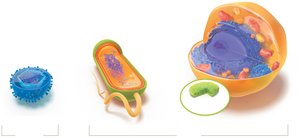
Organization of Prokaryotic and Eukaryotic Genomes
Genome Size and Structure
The complexity of an organism generally correlates with the number of genes it possesses, but not with the number of chromosomes.
Prokaryotes: Typically have 1–3 circular chromosomes located in the nucleoid region; organized by histone-like proteins.
Eukaryotes: Possess multiple linear chromosomes housed in the nucleus; DNA is organized by histones.
Plasmids: Small, circular DNA molecules that exist outside the chromosomal DNA and often confer survival advantages, such as antibiotic resistance.
Nucleic Acids: DNA and RNA
Structure of Nucleic Acids
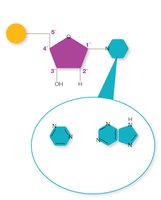
Nucleic acids (DNA and RNA) are polymers of nucleotides, each consisting of a phosphate group, a five-carbon sugar, and a nitrogenous base.
DNA: Contains deoxyribose sugar; bases are adenine (A), guanine (G), cytosine (C), and thymine (T).
RNA: Contains ribose sugar; bases are adenine (A), guanine (G), cytosine (C), and uracil (U) (replaces thymine).
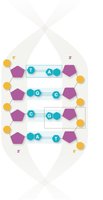
Base Pairing and Double Helix
Nitrogen bases pair specifically: A with T (or U in RNA), G with C.
DNA is a double-stranded helix with antiparallel strands (one runs 5' to 3', the other 3' to 5').
The "rungs" of the ladder are base pairs; the "rails" are alternating sugar and phosphate groups linked by phosphodiester bonds.
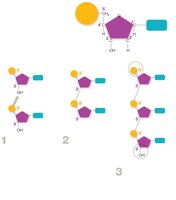
Directionality and Antiparallel Structure
DNA and RNA are synthesized in the 5' to 3' direction.
Antiparallel arrangement is essential for proper base pairing and replication.
Central Dogma: Flow of Genetic Information
DNA to RNA to Protein
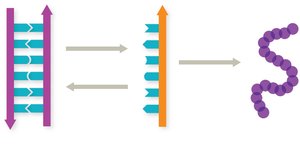
The central dogma of molecular biology describes the flow of genetic information: DNA is transcribed into RNA, which is then translated into protein.
Transcription: DNA → RNA
Translation: RNA → Protein
DNA Replication
Mechanism of DNA Replication
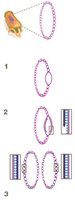
DNA replication is the process by which a cell copies its genome before division. It is highly accurate due to complementary base pairing and proofreading enzymes.
Replication begins at the origin of replication.
Enzymes unwind DNA, synthesize new strands, and reassemble the double helix.
Replication is semiconservative: each new DNA molecule contains one parent and one daughter strand.
Key Enzymes in DNA Replication
Helicase: Unwinds the DNA helix.
Primase: Synthesizes RNA primers.
DNA Polymerase: Synthesizes new DNA strands; requires a primer with a free 3' OH group.
Ligase: Seals nicks in the sugar-phosphate backbone.
Gyrase/Topoisomerase: Relieves supercoiling tension.
Leading vs. Lagging Strand Synthesis
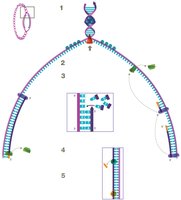
Leading strand: Synthesized continuously toward the replication fork.
Lagging strand: Synthesized discontinuously away from the fork in short segments called Okazaki fragments.
Ligase joins Okazaki fragments to form a continuous strand.
Transcription: Synthesis of RNA
Steps of Transcription
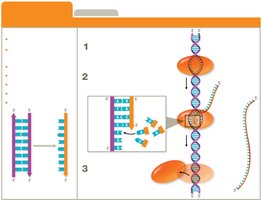
Transcription is the process of synthesizing RNA from a DNA template. It occurs in three main steps:
Initiation: RNA polymerase binds to the promoter and unwinds DNA.
Elongation: RNA polymerase synthesizes RNA in the 5' to 3' direction.
Termination: RNA polymerase reaches a termination sequence and releases the RNA transcript.
Types of RNA
Messenger RNA (mRNA): Carries genetic code from DNA to ribosomes.
Transfer RNA (tRNA): Brings amino acids to the ribosome during translation.
Ribosomal RNA (rRNA): Combines with proteins to form ribosomes.
RNA Processing in Eukaryotes
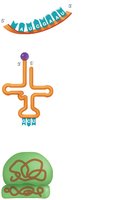
In eukaryotes, mRNA is processed by splicing to remove non-coding introns and join exons.
Splicing is performed by a complex called the spliceosome.
Processed mRNA is exported from the nucleus for translation.
Translation: Protein Synthesis
Genetic Code and Codons
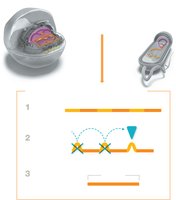
The genetic code consists of 64 codons (triplets of nucleotides) that specify 20 amino acids and stop signals. The code is redundant, meaning multiple codons can encode the same amino acid.
Steps of Translation
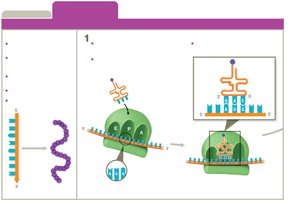
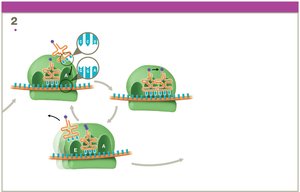
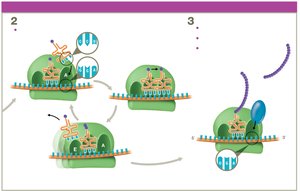
Initiation: Ribosome assembles on mRNA and the initiator tRNA binds the start codon (usually AUG).
Elongation: tRNAs bring amino acids to the ribosome, which links them into a growing polypeptide chain.
Termination: When a stop codon is reached, the ribosome releases the completed protein.
Post-Translational Modifications
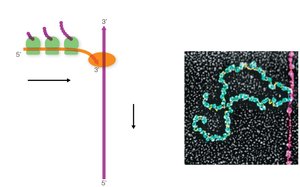
Proteins may require trimming or the addition of organic/inorganic groups to become functional.
Regulation of Gene Expression
Levels of Regulation
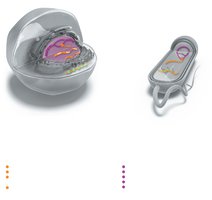
Pre-transcriptional regulation: Controls when and how much mRNA is produced (e.g., operons, DNA methylation, transcription factors).
Post-transcriptional regulation: Controls mRNA stability and translation efficiency (e.g., small noncoding RNAs, riboswitches, mRNA splicing in eukaryotes).
Mutations: Sources of Genetic Variation
Types of Mutations
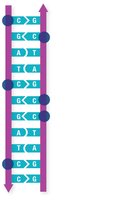
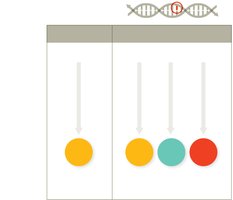
Substitution: One nucleotide is replaced by another.
Insertion: One or more nucleotides are added.
Deletion: One or more nucleotides are removed.
Effects of Mutations
Silent mutation: No change in amino acid sequence.
Missense mutation: Changes one amino acid in the protein.
Nonsense mutation: Introduces a premature stop codon.
Frameshift mutation: Alters the reading frame, usually by insertion or deletion not in multiples of three.
Reversion mutation: A second mutation restores the original sequence or function.
Mutation Origins
Spontaneous mutations: Occur naturally during DNA replication.
Induced mutations: Caused by mutagens (chemical, physical, or biological agents).
Carcinogens: Mutagens that increase cancer risk.
DNA Repair Mechanisms
Proofreading: DNA polymerases correct errors during replication.
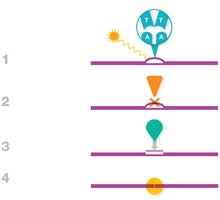
Excision repair: Enzymes remove and replace damaged or mismatched nucleotides (e.g., repair of thymine dimers caused by UV light).
Genetic Variation in Bacteria: Horizontal Gene Transfer
Mechanisms of Horizontal Gene Transfer
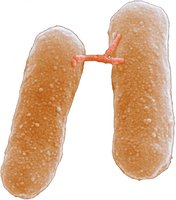
Conjugation: Transfer of plasmids via a pilus between bacterial cells.
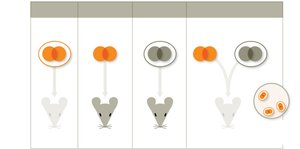
Transformation: Uptake of free DNA from the environment by competent cells.
Transduction: Transfer of DNA by bacteriophages (viruses that infect bacteria).
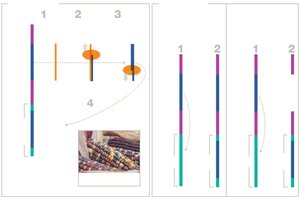
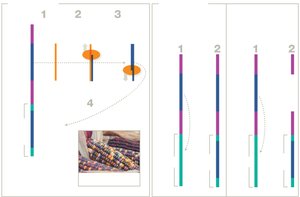
Transposons: "Jumping genes" that can move within and between genomes, causing genetic rearrangements.
Applications and Importance
Horizontal gene transfer contributes to the spread of antibiotic resistance and genetic diversity in microbial populations.
Plasmids are used in biotechnology to engineer bacteria for medical and industrial applications.
Key Terms and Concepts
Transcription: Synthesis of RNA from a DNA template.
Translation: Synthesis of protein from an mRNA template.
Transformation: Uptake of environmental DNA by bacteria.
Transduction: Gene transfer via bacteriophages.
Transposon: Mobile genetic element that can change position within the genome.
