 Indietro
Microbial Nutrition and Growth: Study Notes
Guida di studio - Note intelligenti
 Appunti personalizzati basati sui tuoi materiali, ampliati con definizioni chiave, esempi e contesto.
Microbial Nutrition and Growth
Growth Requirements
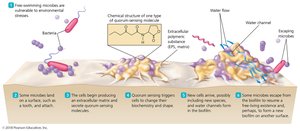
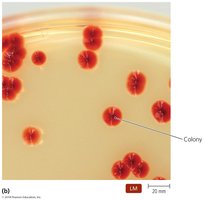
Microbial growth refers to the increase in a population of microbes, primarily due to the reproduction of individual cells. The results of microbial growth can be observed as discrete colonies—aggregations of cells arising from a single parent cell—or as biofilms, which are collections of microbes living on a surface in a complex community.
Discrete colony: Visible mass of cells derived from a single cell.
Biofilm: Multispecies microbial community attached to surfaces, often with enhanced resistance to environmental stresses.
Growth Requirements: Nutrients and Energy
Microorganisms require a variety of nutrients to meet their energy needs and to build organic molecules and cellular structures. The most common nutrients contain essential elements such as carbon, oxygen, nitrogen, and hydrogen. Microbes obtain these nutrients from diverse sources.
Carbon: Fundamental for organic molecules.
Oxygen: Required for aerobic metabolism.
Nitrogen: Needed for amino acids and nucleotides.
Hydrogen: Important for redox reactions and organic compounds.
Chemical and Energy Requirements
Microbes are classified based on their sources of carbon, energy, and electrons:
Autotrophs: Use inorganic carbon (CO2).
Heterotrophs: Use organic carbon sources.
Chemotrophs: Obtain energy from chemical compounds.
Phototrophs: Obtain energy from light.
Organotrophs: Use organic molecules as electron sources.
Lithotrophs: Use inorganic molecules as electron sources.
Four Basic Groups of Organisms Based on Carbon and Energy Sources
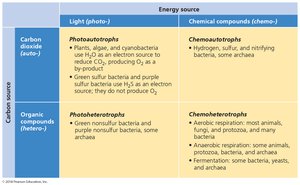
Microorganisms can be grouped according to their carbon and energy sources. The table below summarizes these groups:
Carbon Source | Energy Source | Type | Examples |
|---|---|---|---|
CO2 (inorganic) | Light | Photoautotrophs | Plants, algae, cyanobacteria |
CO2 (inorganic) | Chemical compounds | Chemoautotrophs | Hydrogen, sulfur, nitrifying bacteria |
Organic compounds | Light | Photoheterotrophs | Green nonsulfur bacteria, purple nonsulfur bacteria |
Organic compounds | Chemical compounds | Chemoheterotrophs | Most animals, fungi, protozoa, many bacteria |
Oxygen Requirements
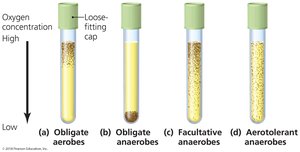
Oxygen is essential for obligate aerobes but is toxic for obligate anaerobes. Toxic forms of oxygen, known as reactive oxygen species (ROS), are highly reactive and can cause irreparable damage to cells. The four toxic forms of oxygen are singlet oxygen, superoxide radicals, peroxide anion, and hydroxyl radical.
Obligate aerobes: Require oxygen for growth.
Obligate anaerobes: Cannot tolerate oxygen.
Facultative anaerobes: Can grow with or without oxygen.
Aerotolerant anaerobes: Tolerate oxygen but do not use it.
Microaerophiles: Require low concentrations of oxygen (2%-10%).
Nitrogen, Phosphorus, Sulfur, and Other Requirements
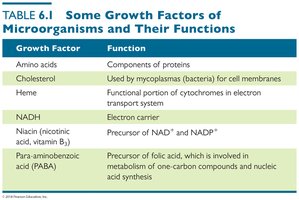
Nitrogen is acquired from organic and inorganic sources and is essential for amino acids and nucleotides. Anabolism often ceases due to insufficient nitrogen. Nitrogen fixation by certain bacteria is crucial for life. Phosphorus and sulfur are also required, along with trace elements and growth factors—organic chemicals that some organisms cannot synthesize.
Growth Factor | Function |
|---|---|
Amino acids | Components of proteins |
Cholesterol | Used by mycoplasmas for cell membranes |
Heme | Cytochrome function in electron transport |
NADH | Electron carrier |
Niacin | Precursor of NAD+ and NADP+ |
PABA | Precursor of folic acid, involved in nucleic acid synthesis |
Physical Requirements: Temperature
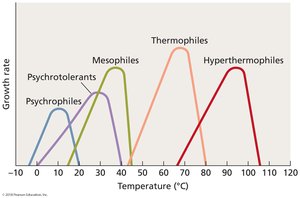
Temperature affects the three-dimensional structure of proteins and the fluidity of lipid-containing membranes. Microbes are classified into five categories based on their temperature preferences:
Psychrophiles: Grow best at low temperatures (below 20°C).
Psychrotolerants: Can tolerate cold but prefer moderate temperatures.
Mesophiles: Grow best at moderate temperatures (20–40°C).
Thermophiles: Grow best at high temperatures (above 45°C).
Hyperthermophiles: Grow best at extremely high temperatures (above 80°C).
Physical Requirements: pH
Microorganisms are sensitive to changes in acidity. Neutrophiles grow best near neutral pH, acidophiles thrive in acidic environments, and alkalinophiles live in alkaline soils and water.
Neutrophiles: Optimal growth at pH 6.5–7.5.
Acidophiles: Optimal growth at pH below 6.
Alkalinophiles: Optimal growth at pH above 8.
Physical Requirements: Water, Osmotic Pressure, and Hydrostatic Pressure
Water is essential for dissolving enzymes and nutrients and is a reactant in many metabolic reactions. Osmotic pressure affects microbial survival in different environments:
Hypotonic solution: Cell swells due to water influx.
Hypertonic solution: Cell shrivels due to water loss.
Obligate halophiles: Require high salt concentrations.
Facultative halophiles: Can tolerate high salt but do not require it.
Barophiles: Live under extreme hydrostatic pressure.
Microbial Associations and Biofilms
Microorganisms often live in association with other species, forming antagonistic, synergistic, or symbiotic relationships. Biofilms are complex communities formed on surfaces, medical devices, and mucous membranes, often as a result of quorum sensing. Microbes in biofilms are typically more resistant to environmental stresses and antimicrobial agents.
Culturing Microorganisms
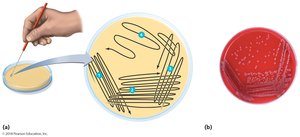
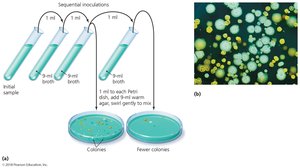
Microorganisms are cultivated by introducing an inoculum into a growth medium. Pure cultures are obtained from a single progenitor cell, known as a colony-forming unit (CFU). Aseptic technique is essential to prevent contamination. Two common isolation techniques are streak plates (for isolation only) and pour plates (for isolation and enumeration).
Characteristics of Bacterial Colonies
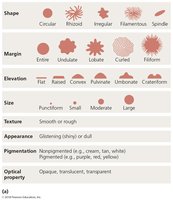
Bacterial colonies can be described by their shape, margin, elevation, size, texture, appearance, pigmentation, and optical property. These characteristics help in identifying and classifying microorganisms.
Culture Media
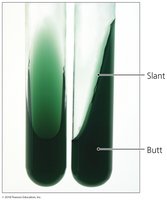
A variety of liquid and solid media are used to culture microbes. Nutrient broth is a common liquid medium, while agar is used to solidify media for Petri plates and slant tubes. Most prokaryotes have not been grown in culture medium.
Types of Culture Media
Defined media: Exact chemical composition is known.
Complex media: Contains nutrients from yeast, beef, soy, and proteins; composition is unknown.
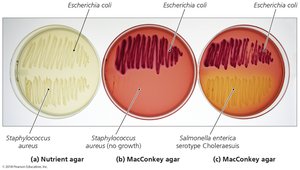
Selective media: Favors or inhibits growth of specific organisms.
Differential media: Allows visible changes in media or colonies.
Anaerobic media: Supports growth of anaerobes.
Transport media: Used for transporting clinical specimens.
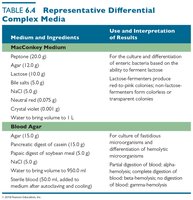
Representative Differential Complex Media
Medium | Ingredients | Use and Interpretation |
|---|---|---|
MacConkey Medium | Peptone, agar, lactose, bile salts, NaCl, neutral red, crystal violet | Selective for Gram-negative bacteria; differentiates lactose fermenters (pink colonies) from non-fermenters (colorless colonies) |
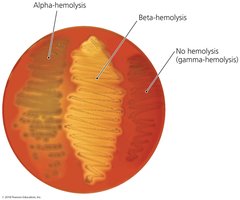
Blood Agar | Agar, peptone digest, soybean meal, NaCl, blood | Used for culture of fastidious organisms; differentiates hemolytic activity (alpha, beta, gamma hemolysis) |
Preserving Cultures
Microbial cultures can be preserved by refrigeration (short-term), deep-freezing (years), or lyophilization (decades).
Microbial Reproduction: Binary Fission
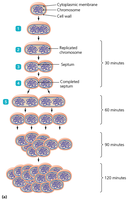
Most microorganisms reproduce by binary fission, where one cell divides in half to produce two daughter cells. The generation time is the time required for a bacterial cell to grow and divide, and binary fission results in exponential (logarithmic) growth.
Binary fission equation:
Where is the final number of cells, is the initial number of cells, and is the number of generations.
Microbial Growth Curve
A typical microbial growth curve consists of four phases: lag phase, log (exponential) phase, stationary phase, and death (decline) phase.

Chemostat
A chemostat is used to maintain a microbial population in a particular phase of growth by continuously adding fresh medium and removing spent medium. This is an open system and is used in industrial settings and is analogous to the human GI tract.
Measuring Microbial Reproduction
Estimating the number of microorganisms is important for determining infection severity, effectiveness of food preservation, contamination of water supplies, and evaluating disinfectants and antibiotics.
Direct Methods of Measuring Growth
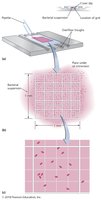
Electronic counters: Coulter counter counts cells as they interrupt an electrical current; flow cytometry detects changes in light transmission.
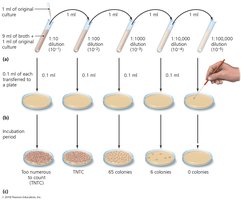
Serial dilution and viable plate counts: Used to estimate population size.
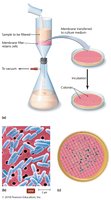
Membrane filtration: Used for low-density populations.
Most probable number (MPN): Statistical estimation method.
Indirect Methods of Measuring Growth
Turbidity: The more turbid a culture, the greater the bacterial population.
Metabolic activity: Measurement of metabolic products.
Dry weight: Measurement of biomass.
Molecular methods: Isolation of DNA sequences from unculturable prokaryotes.
