Indietro
Microbiology Course Materials Overview
Guida di studio - Note intelligenti
 Appunti personalizzati basati sui tuoi materiali, ampliati con definizioni chiave, esempi e contesto.
Microbiology Course Materials Overview
Introduction
This overview presents the primary textbooks and resources used in a college-level Microbiology course at Polk State College. These materials are directly relevant to the study of microbiology, covering laboratory theory, application, and taxonomy of microbial diseases. The following sections describe the main textbooks and their academic significance for students preparing for topics such as microbial cell structure, classification, laboratory techniques, and infectious diseases.
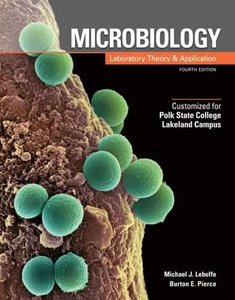
Microbiology Laboratory Theory & Application
Textbook: Microbiology Laboratory Theory & Application (Fourth Edition)
This textbook provides foundational knowledge and practical laboratory skills essential for microbiology students. It covers core topics such as microbial cell structure, laboratory techniques, and microbial metabolism.
Laboratory Theory: Explains the principles behind microbiological experiments and procedures.
Application: Guides students through hands-on activities, including staining, culturing, and identifying microorganisms.
Microbial Cell Structure: Describes the anatomy and physiology of prokaryotic and eukaryotic cells.
Microbial Classification: Introduces methods for classifying bacteria, fungi, and other microbes.
Example: Laboratory exercises on Gram staining and microbial growth.
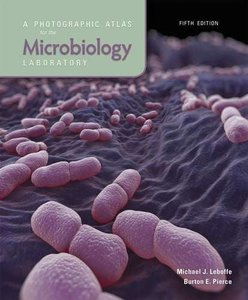
Photographic Atlas for the Microbiology Laboratory
Textbook: A Photographic Atlas for the Microbiology Laboratory (Fifth Edition)
This atlas provides visual references for identifying microorganisms and understanding their morphology. It is an essential resource for laboratory identification and classification exercises.
Microbial Morphology: High-quality images of bacteria, fungi, and protozoa.
Laboratory Identification: Visual guides for recognizing microbial colonies and cellular structures.
Example: Photographs of Gram-positive and Gram-negative bacteria for comparison.
Mastering Microbiology: Microbiology with Diseases by Taxonomy
Resource: Modified Mastering Microbiology with Pearson eText (Microbiology with Diseases by Taxonomy, 6e)
This digital resource supports student learning with interactive content, quizzes, and access to the textbook Microbiology with Diseases by Taxonomy. It covers microbial taxonomy, infectious diseases, and epidemiology.
Microbial Taxonomy: Classification of microorganisms based on genetic and phenotypic characteristics.
Infectious Diseases: Overview of diseases caused by bacteria, viruses, fungi, and parasites.
Epidemiology: Study of disease transmission and prevention.
Example: Interactive modules on pathogenic bacteria and immune responses.
Course Syllabus
Polk State College Microbiology Syllabus
The syllabus outlines the structure and expectations for the Microbiology course, including required textbooks, laboratory activities, and assessment methods. It ensures students are prepared for topics such as microbial genetics, immunity, and applied microbiology.
Course Structure: Weekly topics, laboratory sessions, and exams.
Learning Outcomes: Understanding microbial diversity, laboratory safety, and disease mechanisms.
Example: Syllabus sections on laboratory safety and microbial ecology.