 Indietro
(Chapter 14) Principles of Disease and Epidemiology: Study Notes for Microbiology Students
Guida di studio - Note intelligenti
 Appunti personalizzati basati sui tuoi materiali, ampliati con definizioni chiave, esempi e contesto.
Principles of Disease and Epidemiology
Pathology, Infection, and Disease
Pathology is the scientific study of disease, focusing on its causes, development, and effects on the body. Understanding the terminology is essential for microbiology students:
Pathology: Study of disease.
Etiology: Cause of a disease.
Pathogenesis: Manner in which a disease develops.
Infection: Invasion or colonization of the body by pathogens.
Infectious disease: Occurs when infection results in a change in health status.
Disease: May result when microorganisms locate in parts of the body where they are not normally found.
Human Microbiome
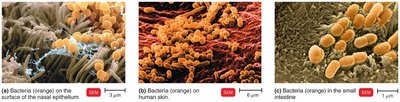
The human microbiome consists of the collection of microorganisms living in and on the human body. It is established early in life and plays a crucial role in health and disease.
Normal microbiota (normal flora): Permanently colonize the host and do not cause disease under normal conditions.
Transient microbiota: Present for limited periods and then disappear.
Human Microbiome Project: Analyzes relationships between microbial communities and human health.
Microbiome size: Estimated 3x10¹³ body cells vs. 4x10¹³ bacterial cells.
Factors Affecting Microbiome Distribution
The composition and distribution of normal microbiota are influenced by various factors:
Nutrients
Physical and chemical factors
Mechanical factors
Body’s defenses
Age, diet, geography, hygiene, living conditions, occupation, lifestyle
Birth, Microbiome, and Health Conditions
The method of birth affects the initial microbiome and can influence health outcomes:
Vaginal birth: Infants acquire microbes such as Lactobacillus and Bacteroides.
Cesarean birth: Microbiome resembles human skin, with Staphylococcus aureus prevalent.
Incidence of type 1 diabetes, asthma, and obesity is rising in cesarean-born infants.
Relationships Between Normal Microbiota and the Host
Normal microbiota interact with the host in several ways, including protection and competition:
Microbial antagonism: Competition between microbes for nutrients.
Production of bacteriocins (substances harmful to invading microbes).
Effects on pH and oxygen availability.
Disruption of normal microbiota (e.g., by antibiotics) can lead to infections such as Clostridium difficile.
Fecal microbial transfer (FMT) can restore normal microbiota.
Symbiosis and Types of Relationships
Symbiosis describes the relationship between organisms, including:
Commensalism: One organism benefits, the other is unaffected.
Mutualism: Both organisms benefit.
Parasitism: One organism benefits at the expense of the other.
Some normal microbiota are opportunistic pathogens.
Koch’s Postulates
Koch’s postulates are a set of criteria used to establish the causative relationship between a microbe and a disease:
The same pathogen must be present in every case of the disease.
The pathogen must be isolated and grown in pure culture.
The pathogen must cause disease when inoculated into a healthy host.
The pathogen must be re-isolated and shown to be the original organism.
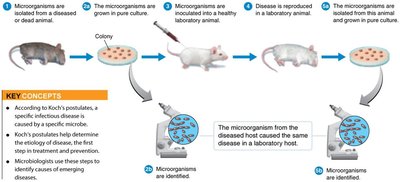
Exceptions: Some pathogens cause multiple diseases, some only infect humans, and some cannot be cultured.
Classifying Infectious Diseases
Diseases are classified based on symptoms, signs, and syndromes:
Symptoms: Subjective changes felt by the patient (e.g., pain).
Signs: Objective changes measurable or observable (e.g., fever).
Syndrome: Specific group of signs and symptoms accompanying a disease.
Types of Diseases
Communicable disease: Spread from one host to another (e.g., COVID-19, influenza).
Contagious disease: Easily and rapidly spread (e.g., measles).
Noncommunicable disease: Not spread from host to host (e.g., tetanus).
Occurrence of Disease
Incidence and prevalence are key epidemiological measures:
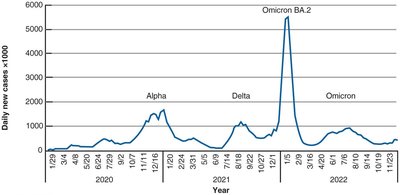
Incidence: Number of new cases during a specific time period.
Prevalence: Total number of cases at a specified time, including old and new cases.
Patterns of Disease Occurrence
Sporadic disease: Occurs occasionally (e.g., typhoid fever).
Endemic disease: Constantly present in a population (e.g., common cold).
Epidemic disease: Acquired by many people in a short time (e.g., influenza).
Pandemic disease: Worldwide epidemic (e.g., COVID-19).
Severity and Duration of Disease
Diseases vary in their severity and duration:
Acute disease: Rapid onset, short duration (e.g., influenza).
Chronic disease: Slow development, long duration (e.g., hepatitis).
Latent disease: Inactive for a time, then activates (e.g., herpes).
Herd immunity: Immunity in most of a population.
Stages of Disease Development
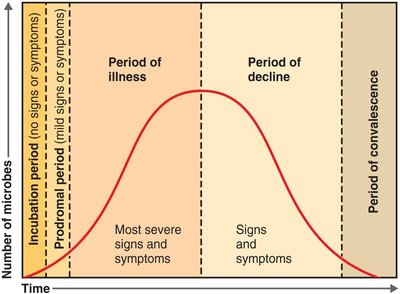
The progression of disease follows distinct stages:
Incubation period: Interval between infection and first symptoms.
Prodromal period: Early, mild symptoms.
Period of illness: Most severe symptoms.
Period of decline: Symptoms subside.
Period of convalescence: Recovery phase.
Extent of Host Involvement
Local infection: Limited to a small area (e.g., boils).
Systemic infection: Spread throughout the body (e.g., measles).
Focal infection: Systemic infection that began locally (e.g., bacterial endocarditis).
Sepsis: Toxic inflammatory condition from spread of microbes.
Bacteremia: Bacteria in the blood.
Septicemia: Growth of bacteria in the blood.
Toxemia: Toxins in the blood.
Viremia: Viruses in the blood.
Primary infection: Initial acute infection.
Secondary infection: Opportunistic infection after primary infection.
Subclinical infection: No noticeable symptoms (e.g., Hepatitis A).
Predisposing Factors
Factors that increase susceptibility to disease include:
Nutrition
Sex
Genetic inheritance
Climate and environment
Vaccination status
Age
Lifestyle and behaviors
Compromised host status
Reservoirs of Infection
Reservoirs are continual sources of infection:
Human reservoirs: People with symptoms or carriers (asymptomatic, incubating, convalescent, chronic, passive).
Animal reservoirs: Zoonoses (diseases transmitted from animals to humans, e.g., rabies).
Nonliving reservoirs: Soil, water, and foods (e.g., Clostridium tetani).
Transmission of Disease
Transmission can occur via contact, vehicles, or vectors:
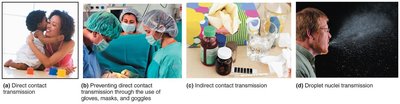
Direct contact: Close association between infected and susceptible host.
Congenital transmission: From mother to fetus or newborn.
Indirect contact: Via fomites (nonliving objects).
Droplet transmission: Airborne droplets less than 1 meter.
Vehicle Transmission
Transmission by inanimate reservoirs includes:
Airborne
Waterborne
Foodborne
Cross-contamination may occur between foods.

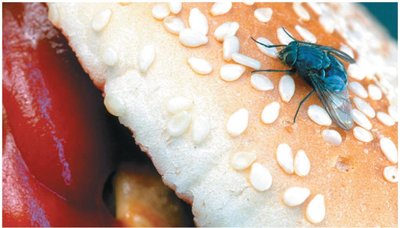
Vector Transmission
Vectors, especially arthropods, transmit disease by:
Mechanical transmission: Pathogen carried on vector's body parts.
Biological transmission: Pathogen reproduces in vector and is transmitted via bites or feces.
Healthcare-Associated Infections (HAIs)
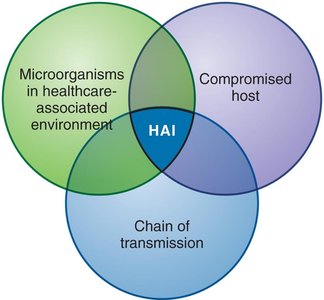
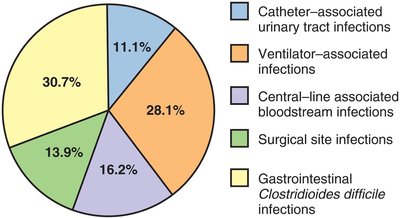
HAIs are infections acquired during treatment in healthcare facilities. They are a major concern due to their frequency and severity.
Also known as nosocomial infections.
Affect 1 in 31 hospital patients in the US.
Result from microorganisms in the hospital, compromised hosts, and chain of transmission.
Compromised hosts have impaired resistance due to disease, therapy, or burns.
Chain of Transmission in Hospitals
Transmission occurs via direct contact (staff to patient, patient to patient) and indirect contact (fomites, ventilation systems, medical devices).
Urinary catheters, intravenous catheters, respiratory aids, needles, surgical dressings are common fomites.
Emerging Infectious Diseases
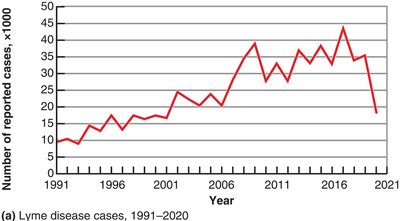
Emerging infectious diseases are new, changing, or increasing in incidence. Most are zoonotic, viral, and vector-borne.
Contributing factors: genetic recombination, evolution, antibiotic resistance, climate change, modern transportation, ecological disasters, animal control, public health failures, bioterrorism.
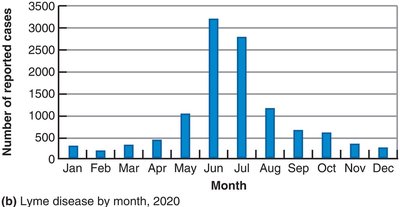
Examples: Escherichia coli O157:H7, avian influenza, Zika virus, Lyme disease.
Epidemiology
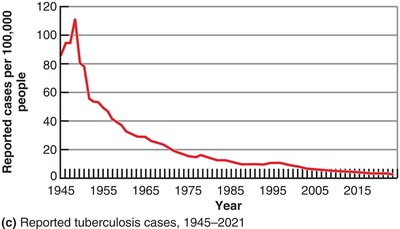
Epidemiology is the study of disease occurrence and transmission in populations. It helps determine etiology, identify risk factors, assemble data, and predict disease spread.
Reproductive number (R0): Average number of people infected by one individual.
Methods for controlling disease are explored.
Types of Epidemiology
Descriptive epidemiology: Collection and analysis of data (e.g., John Snow's cholera map).
Analytical epidemiology: Analyzes disease to determine probable cause or risk factors (e.g., Florence Nightingale).
Experimental epidemiology: Hypothesis-driven, controlled experiments (e.g., Ignaz Semmelweis).
Clinical trial: Test and control groups used to evaluate interventions.
Case Reporting and Public Health
Case reporting enables researchers to track disease transmission and outbreaks. The CDC collects and analyzes epidemiological data, publishing the Morbidity and Mortality Weekly Report (MMWR).
Morbidity: Incidence of specific notifiable diseases.
Mortality: Deaths from notifiable diseases.
Morbidity rate: Number of people affected relative to population.
Mortality rate: Number of deaths relative to population.
Term | Definition | Example |
|---|---|---|
Incidence | New cases in a time period | COVID-19 cases in spring 2020 |
Prevalence | Total cases at a time | COVID-19 cases in summer 2020 |
Endemic | Constantly present | Common cold |
Epidemic | Sudden increase | Influenza |
Pandemic | Worldwide epidemic | COVID-19 |
Additional info: The study notes above expand on brief points with academic context, definitions, and examples to ensure completeness and clarity for exam preparation.
