 Indietro
Study Guide: The Prokaryotes – Domains Bacteria and Archaea (Chapter 11)
Guida di studio - Note intelligenti
 Appunti personalizzati basati sui tuoi materiali, ampliati con definizioni chiave, esempi e contesto.
The Prokaryotes: Domains Bacteria and Archaea
Overview of Prokaryotic Diversity
Prokaryotes are classified into two domains: Bacteria and Archaea. These organisms exhibit remarkable diversity in morphology, metabolism, and ecological roles. Classification is based on genetic, biochemical, and structural characteristics.
Bacteria: Includes Gram-negative and Gram-positive groups, with further subdivisions based on metabolic and structural features.
Archaea: Distinct from bacteria, often found in extreme environments and lacking peptidoglycan in their cell walls.
Classification of Selected Prokaryotes
Prokaryotes are classified using a combination of genetic, phenotypic, and ecological criteria. The major groups discussed include:
Gram-Negative Bacteria: Includes Pseudomonadota (Proteobacteria), Bacteroidota, Spirochaetes, and others.
Gram-Positive Bacteria: Divided based on G+C content into high and low G+C groups.
Archaea: Includes extremophiles such as halophiles, thermophiles, acidophiles, and methanogens.
Gram-Negative Bacteria
Pseudomonadota (Proteobacteria)
Pseudomonadota is the largest taxonomic group of bacteria, divided into five classes based on genetic and metabolic characteristics:
Alphaproteobacteria
Betaproteobacteria
Gammaproteobacteria
Deltaproteobacteria
Campylobacterota
Alphaproteobacteria
Alphaproteobacteria are notable for their ability to grow in low-nutrient environments and often possess prosthecae (stalks or buds).
Pelagibacter: Extremely abundant in oceans; plays a key role in the carbon cycle.
Azospirillum: Associates with plant roots and fixes nitrogen, benefiting tropical grasses and sugarcane.
Acetobacteraceae (Acetobacter, Gluconobacter): Convert ethanol to acetic acid.
Rickettsia: Obligate intracellular parasites causing spotted fevers; transmitted by insects and ticks. Examples: R. prowazekii (epidemic typhus), R. typhi (endemic murine typhus), R. rickettsii (Rocky Mountain spotted fever).
Ehrlichia: Tick-transmitted; causes ehrlichiosis.
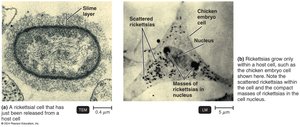
Rhizobium and Bradyrhizobium: Fix nitrogen in leguminous plant roots; known as rhizobia.
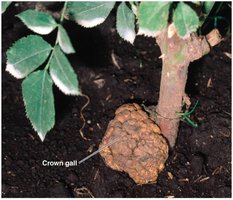
Agrobacterium: Plant pathogen causing crown gall disease by inserting a plasmid into plant cells. Example: Crown gall disease on rose plant.
Nitrobacter and Nitrosomonas: Chemoautotrophic bacteria involved in nitrogen cycling. Nitrosomonas: Converts ammonium ion to nitrite. Nitrobacter: Converts nitrite to nitrate.
Betaproteobacteria
Betaproteobacteria are diverse, often found in aquatic environments and sewage.
Spirillum: Freshwater bacteria with polar flagella.
Sphaerotilus: Forms protective sheaths; found in freshwater and sewage.
Burkholderia: B. cepacia degrades organic molecules; B. pseudomallei causes meliodosis.
Bordetella: Nonmotile rods; B. pertussis causes whooping cough.
Neisseria: N. gonorrhoeae causes gonorrhoea; N. meningitidis causes meningococcal meningitis.
Zoogloea: Important in activated sludge systems for wastewater treatment.
Gammaproteobacteria
Gammaproteobacteria include many medically and ecologically important genera.
Acidithiobacillus: Oxidizes sulfur compounds for energy.
Thiotrichales (Beggiatoa): Grows in aquatic sediments; oxidizes sulfur.
Francisella: F. tularensis causes tularemia.
Pseudomonas: Common soil bacteria; opportunistic pathogens with polar flagella. Example: P. aeruginosa causes wound and urinary tract infections.
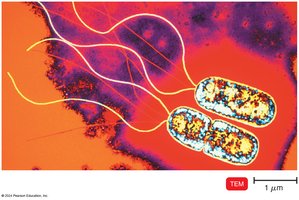
Legionella: Found in water systems; causes legionellosis.
Coxiella: C. burnetii causes Q fever; transmitted via aerosols or milk from infected animals.
Vibrio: Found in aquatic habitats; V. cholerae causes cholera, V. parahaemolyticus causes gastroenteritis.
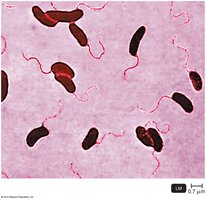
Enterobacteriales: Commonly called enterics; inhabit the intestinal tract, ferment carbohydrates, and are facultative anaerobes with peritrichous flagella.
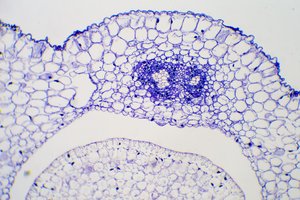
Escherichia: E. coli is an indicator of fecal contamination; some strains cause foodborne disease and UTIs.
Salmonella: 2500 serovars; causes foodborne illness and typhoid fever (S. Typhi).
Shigella: Causes bacillary dysentery.
Klebsiella: K. pneumoniae causes pneumonia.
Serratia: Produces red pigment; common cause of nosocomial infections.
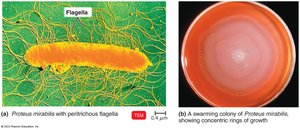
Proteus: Exhibits swarming motility; colonies form concentric rings.
Yersinia: Y. pestis causes plague; transmitted via fleas.
Erwinia: Plant pathogens.
Campylobacterota
Campylobacterota are slender, helical or curved, microaerophilic gram-negative rods.
Campylobacter: Microaerophilic vibrios with one polar flagellum; C. jejuni causes foodborne intestinal disease.
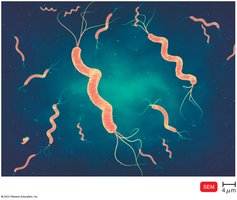
Helicobacter: Microaerophilic curved rods with multiple flagella; causes peptic ulcers and stomach cancer.
Chlamydiae
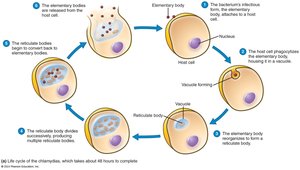
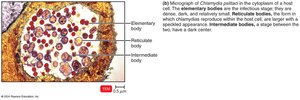
Chlamydiae lack peptidoglycan in their cell walls and grow intracellularly. They form an elementary body that is infective.
Chlamydia trachomatis: Causes trachoma and urethritis.
Chlamydophila psittaci: Causes respiratory psittacosis.
Chlamydophila pneumoniae: Causes mild pneumonia in young adults.
Bacteroidota and Fusobacteria
Bacteroidota and Fusobacteria are anaerobic bacteria found in the mouth, intestine, and soil.
Bacteroides: Found in the mouth and large intestine; abundant in feces.
Cytophaga: Degrades cellulose and chitin in soil.
Fusobacteria: Found in the mouth; cause dental abscesses.
Spirochaetes
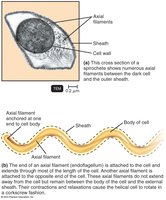
Spirochaetes are coiled bacteria that move via axial filaments, resulting in corkscrew motility.
Treponema: T. pallidum causes syphilis.
Borrelia: Causes relapsing fever and Lyme disease.
Leptospira: Excreted in animal urine.
Gram-Positive Bacteria
Classification by G+C Content
Gram-positive bacteria are divided based on their guanine-cytosine (G+C) content:
High G+C ratios: Streptomyces (69–73%), Mycobacterium (62–70%)
Low G+C ratios: Streptococcus (33–44%), Clostridium (21–54%)
Bacillota (Low G+C Gram-Positive Bacteria)
Bacillus: Endospore-producing rods; common in soil. Examples: B. anthracis (anthrax), B. thuringiensis (insect pathogen), B. cereus (food poisoning).
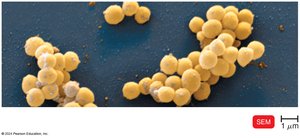
Staphylococcus: Grapelike clusters of cocci; S. aureus causes wound infections, is often antibiotic resistant, and produces an enterotoxin.
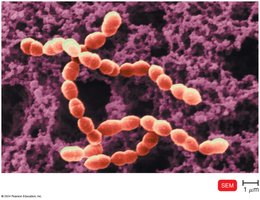
Streptococcus: Chains of cocci; important in human disease.
Archaea
Diversity within the Archaea
Archaea are a distinct taxonomic group, lacking peptidoglycan and often thriving in extreme environments.
Halophiles: Require salt concentrations >25%.
Thermophiles: Require high growth temperatures.
Acidophiles: Can grow at pH values approaching 0.
Methanogens: Anaerobic; produce methane. Some are part of the human microbiota.
Microbial Diversity and Detection
Limits of Microbial Diversity Knowledge
Many bacteria cannot be cultured using standard laboratory techniques.
Detection of unculturable bacteria relies on molecular methods such as PCR and DNA sequencing.
Tables
Classification of Selected Prokaryotes
Group | Key Genera | Characteristics |
|---|---|---|
Alphaproteobacteria | Pelagibacter, Azospirillum, Rickettsia, Rhizobium, Agrobacterium | Low-nutrient growth, nitrogen fixation, intracellular parasitism, plant pathogens |
Betaproteobacteria | Spirillum, Sphaerotilus, Burkholderia, Bordetella, Neisseria | Freshwater, organic degradation, human pathogens |
Gammaproteobacteria | Pseudomonas, Legionella, Vibrio, Enterobacteriales | Metabolic diversity, aquatic habitats, intestinal tract inhabitants |
Campylobacterota | Campylobacter, Helicobacter | Microaerophilic, foodborne and gastric diseases |
Gram-Positive Bacteria | Bacillus, Staphylococcus, Streptococcus | Endospore formation, cocci clusters/chains, human pathogens |
Archaea | Halophiles, Thermophiles, Methanogens | Extreme environments, methane production |
Key Terms and Concepts
Gram-negative: Bacteria with a thin peptidoglycan layer and an outer membrane.
Gram-positive: Bacteria with a thick peptidoglycan layer and no outer membrane.
Chemoheterotrophic: Organisms that obtain energy and carbon from organic compounds.
Chemoautotrophic: Organisms that obtain energy from inorganic compounds and carbon from CO2.
Facultative anaerobe: Can grow with or without oxygen.
Obligate intracellular parasite: Must live within a host cell to survive.
Endospore: A resistant, dormant structure formed by some bacteria.
Serovar: Distinct variation within a species of bacteria.
Important Equations
Nitrogen Cycle (Nitrification):
Ammonium ion to Nitrite:
Nitrite to Nitrate:
Summary Table: Gram-Positive vs. Gram-Negative Bacteria
Feature | Gram-Positive | Gram-Negative |
|---|---|---|
Peptidoglycan Layer | Thick | Thin |
Outer Membrane | Absent | Present |
Endospore Formation | Common | Rare |
Examples | Bacillus, Staphylococcus | Escherichia, Pseudomonas |
Conclusion
Chapter 11 provides a comprehensive overview of the classification, diversity, and ecological significance of prokaryotes in the domains Bacteria and Archaea. Understanding these groups is fundamental to microbiology, as they play critical roles in health, disease, and environmental processes.
