

Ch. 10 - Controlling Microbial Growth in the Body: Antimicrobial Drugs
Bauman - Microbiology with Diseases by Taxonomy 6th Edition
Bauman6th EditionMicrobiology with Diseases by TaxonomyISBN: 9780134832302Non è quello che usi tu?Cambia libro di testo
Capitolo 10, Problema 3

The key to successful chemotherapy is __________ .
a. Selective toxicity
b. A diffusion test
c. The minimum inhibitory concentration test
d. The spectrum of action

Guida verificata passo dopo passo
1
Understand the concept of chemotherapy in microbiology, which refers to the use of chemical substances to treat infectious diseases by targeting microorganisms.
Recognize that the key to successful chemotherapy is the ability to harm the pathogen without damaging the host, which is known as selective toxicity.
Review the options given: (a) selective toxicity, (b) a diffusion test, (c) the minimum inhibitory concentration test, and (d) the spectrum of action, and consider their definitions and roles in chemotherapy.
Identify that a diffusion test and minimum inhibitory concentration test are methods to evaluate antimicrobial effectiveness, but they are not the fundamental principle behind successful chemotherapy.
Conclude that the principle of selective toxicity, which ensures that the drug targets microbial cells specifically while sparing host cells, is the key to successful chemotherapy.

Risposta video verificata per un problema simile:

Questa soluzione video è stata consigliata dai nostri tutor come utile per risolvere questo problema.
Durata del video:
1m

Concetti chiave

Ecco i concetti essenziali che devi comprendere per rispondere correttamente alla domanda.

Selective Toxicity

Selective toxicity refers to the ability of a chemotherapeutic agent to target and kill or inhibit pathogens without causing harm to the host's cells. This principle is fundamental in chemotherapy to ensure effective treatment with minimal side effects.
Video consigliato:
03:27
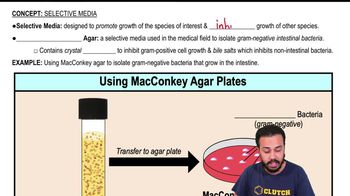
Selective Media

Minimum Inhibitory Concentration (MIC) Test

The MIC test determines the lowest concentration of an antimicrobial agent that prevents visible growth of a microorganism. It helps guide dosage but is not the key principle behind successful chemotherapy.
Video consigliato:
06:59
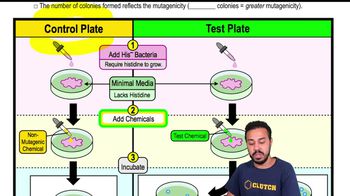
The Ames Test

Spectrum of Action

The spectrum of action describes the range of microorganisms affected by an antimicrobial agent, whether broad or narrow. While important for choosing treatment, it is secondary to the concept of selective toxicity in chemotherapy success.
Video consigliato:
04:29
Electromagnetic Spectrum