Ch. 15 - Innate Immunity
Bauman - Microbiology with Diseases by Taxonomy 6th Edition
Bauman6th EditionMicrobiology with Diseases by TaxonomyISBN: 9780134832302Non è quello che usi tu?Cambia libro di testo
Capitolo 15, Problema 15.2a

Name the cells.


a. ___________ <IMAGE> b. ___________ <IMAGE> c. ___________ <IMAGE> d. ___________ <IMAGE> e. ___________ <IMAGE>

Guida verificata passo dopo passo
1
Step 1: Identify the context of the problem, which involves naming different types of cells based on provided images.
Step 2: Review the characteristics of common cell types in microbiology, such as prokaryotic cells (bacteria), eukaryotic cells (animal, plant, fungi), and specialized cells (e.g., immune cells).
Step 3: Examine each image carefully, noting distinctive features such as shape, size, presence of organelles, or any unique structures that can help in identifying the cell type.
Step 4: Match the observed features from the images with known characteristics of cell types. For example, look for cell wall presence, nucleus, or flagella.
Step 5: Assign the correct cell name to each image based on the analysis and comparison with known cell types.

Risposta video verificata per un problema simile:

Questa soluzione video è stata consigliata dai nostri tutor come utile per risolvere questo problema.
Durata del video:
1m

Concetti chiave

Ecco i concetti essenziali che devi comprendere per rispondere correttamente alla domanda.

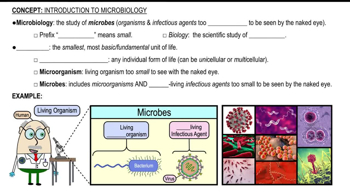
Cell Types in Microbiology

In microbiology, understanding the different types of cells is crucial. This includes prokaryotic cells, such as bacteria, which lack a nucleus and membrane-bound organelles, and eukaryotic cells, which have a defined nucleus and organelles. Recognizing these distinctions helps in identifying various microorganisms and their functions.
Video consigliato:
07:27
Introduction to Microbiology

Cell Structure and Function

Each cell type has unique structures that determine its function. For instance, bacterial cells have a cell wall, plasma membrane, and ribosomes, while eukaryotic cells may have additional structures like mitochondria and chloroplasts. Understanding these components is essential for identifying cells based on images.
Video consigliato:
05:33
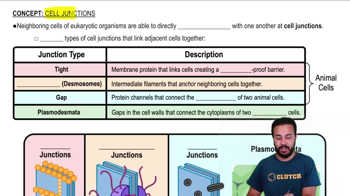
Cell Junctions

Microscopy Techniques

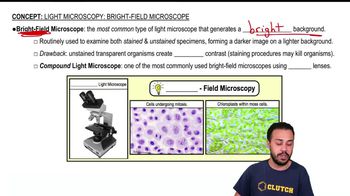
Microscopy is a fundamental technique in microbiology for visualizing cells. Different types of microscopy, such as light microscopy and electron microscopy, provide varying levels of detail and can reveal specific features of cells. Familiarity with these techniques aids in accurately naming and classifying cells based on their images.
Video consigliato:
03:46
Light Microscopy: Bright-Field Microscopes