Ch. 19 - Pathogenic Gram-Positive Bacteria
Bauman - Microbiology with Diseases by Taxonomy 6th Edition
Bauman6th EditionMicrobiology with Diseases by TaxonomyISBN: 9780134832302Non è quello che usi tu?Cambia libro di testo
Capitolo 19, Problema 10

Explain the action of the toxin of Clostridium tetani.

Guida verificata passo dopo passo
1
Identify that the toxin produced by Clostridium tetani is called tetanospasmin, which is a neurotoxin responsible for the symptoms of tetanus.
Understand that tetanospasmin acts by targeting the central nervous system, specifically the inhibitory neurons that regulate muscle contraction.
Explain that the toxin enters the peripheral nervous system at the site of infection and travels retrograde along motor neurons to the spinal cord.
Describe how tetanospasmin blocks the release of inhibitory neurotransmitters such as gamma-aminobutyric acid (GABA) and glycine by cleaving synaptobrevin, a protein essential for neurotransmitter vesicle fusion.
Conclude that this inhibition leads to unregulated muscle contraction and spastic paralysis, which are characteristic of tetanus.

Risposta video verificata per un problema simile:

Questa soluzione video è stata consigliata dai nostri tutor come utile per risolvere questo problema.
Durata del video:
2m

Concetti chiave

Ecco i concetti essenziali che devi comprendere per rispondere correttamente alla domanda.

Clostridium tetani and Its Characteristics

Clostridium tetani is a Gram-positive, anaerobic, spore-forming bacterium responsible for tetanus. It thrives in low-oxygen environments like deep wounds, producing a potent neurotoxin. Understanding its biology helps explain how infection and toxin production occur.
Video consigliato:
05:09
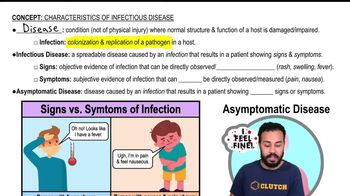
Intro to Characteristics of Infectious Disease

Tetanospasmin (Tetanus Toxin) Structure and Mechanism

Tetanospasmin is the neurotoxin produced by C. tetani, composed of heavy and light chains. It binds to peripheral nerves, travels retrograde to the central nervous system, and blocks inhibitory neurotransmitter release, causing muscle rigidity and spasms.
Video consigliato:
03:40
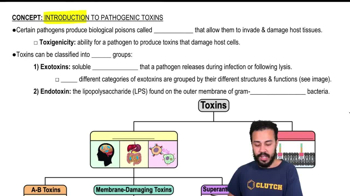
Introduction to Pathogenic Toxins

Pathophysiology of Tetanus Toxin Action

The toxin inhibits release of inhibitory neurotransmitters like GABA and glycine in the spinal cord, leading to unregulated motor neuron firing. This results in sustained muscle contractions and characteristic symptoms such as lockjaw and muscle spasms.
Video consigliato:
03:40
Introduction to Pathogenic Toxins