

Ch. 21 - Rickettsias, Chlamydias, Spirochetes, and Vibrios
Bauman - Microbiology with Diseases by Taxonomy 6th Edition
Bauman6th EditionMicrobiology with Diseases by TaxonomyISBN: 9780134832302Non è quello che usi tu?Cambia libro di testo
Capitolo 21, Problema 1

Match the disease with the causative pathogen in the list.


___ Spotted fever rickettsiosis
___ Murine typhus
___ Epidemic typhus
___ Scrub typhus
___ Ehrlichiosis


A. Rickettsia typhi
B. Rickettsia prowazekii
C. Rickettsia rickettsii
D. Orientia tsutsugamushi
E. Ehrlichia chaffeensis

Guida verificata passo dopo passo
1
Understand that each disease listed is caused by a specific bacterial pathogen, mostly from the genera Rickettsia, Orientia, or Ehrlichia, which are obligate intracellular bacteria transmitted by arthropods.
Identify 'Spotted fever rickettsiosis' as a disease caused by Rickettsia species, specifically Rickettsia rickettsii, which is known for causing Rocky Mountain spotted fever.
Recognize 'Murine typhus' as a disease caused by Rickettsia typhi, typically transmitted by fleas from rodents.
Match 'Epidemic typhus' with Rickettsia prowazekii, which is transmitted by body lice and causes severe outbreaks.
Associate 'Scrub typhus' with Orientia tsutsugamushi, a related organism transmitted by chigger mites, and 'Ehrlichiosis' with Ehrlichia chaffeensis, which infects white blood cells and is transmitted by ticks.

Risposta video verificata per un problema simile:

Questa soluzione video è stata consigliata dai nostri tutor come utile per risolvere questo problema.
Durata del video:
1m

Concetti chiave

Ecco i concetti essenziali che devi comprendere per rispondere correttamente alla domanda.

Rickettsial Diseases and Their Pathogens

Rickettsial diseases are caused by bacteria in the genera Rickettsia and Orientia, transmitted mainly by arthropod vectors like ticks, fleas, and lice. Each disease is linked to a specific pathogen species, such as Rickettsia rickettsii causing spotted fever rickettsiosis. Understanding these associations is key to accurate diagnosis and treatment.
Video consigliato:
03:40
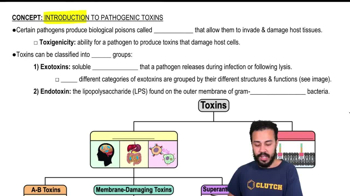
Introduction to Pathogenic Toxins

Disease-Vector-Pathogen Relationships

Many rickettsial diseases are transmitted through specific vectors that carry particular pathogens. For example, murine typhus is transmitted by fleas carrying Rickettsia typhi, while epidemic typhus is spread by lice infected with Rickettsia prowazekii. Recognizing these relationships helps in matching diseases to their causative agents.
Video consigliato:
05:59
Symbiotic Relationships

Differentiation Between Closely Related Pathogens

Closely related pathogens like Rickettsia and Ehrlichia cause distinct diseases with overlapping symptoms but differ in their biology and vectors. Ehrlichiosis, caused by Ehrlichia chaffeensis, is distinct from rickettsioses and involves different host cells. Distinguishing these pathogens is essential for proper disease identification.
Video consigliato:
04:07
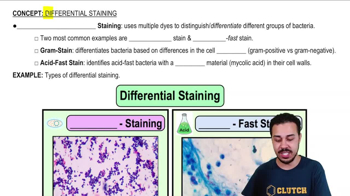
Differential Staining