Ch. 23 - Parasitic Protozoa, Helminths, and Arthropod Vectors
Bauman - Microbiology with Diseases by Taxonomy 6th Edition
Bauman6th EditionMicrobiology with Diseases by TaxonomyISBN: 9780134832302Non è quello che usi tu?Cambia libro di testo
Capitolo 23, Problema 1

Why do insect vectors and animal reservoirs increase the difficulty of preventing and controlling parasitic infections in humans?

Guida verificata passo dopo passo
1
Understand the role of insect vectors and animal reservoirs in the life cycle of parasitic infections. Insect vectors are organisms that transmit parasites from one host to another, while animal reservoirs are non-human hosts that harbor the parasite, maintaining its presence in the environment.
Recognize that insect vectors can carry parasites without being affected themselves, allowing continuous transmission to humans. This means that even if human cases are treated, the parasite can persist in the vector population and cause new infections.
Consider that animal reservoirs serve as a source of infection independent of human hosts. Parasites can survive and multiply in these animals, making it difficult to eliminate the parasite solely by treating human cases.
Acknowledge that controlling insect vectors often requires environmental management, insecticide use, or behavioral changes, which can be challenging to implement consistently and effectively in diverse settings.
Realize that the presence of animal reservoirs and insect vectors creates a complex transmission cycle, requiring integrated control strategies targeting humans, vectors, and animal hosts simultaneously to effectively prevent and control parasitic infections.

Risposta video verificata per un problema simile:

Questa soluzione video è stata consigliata dai nostri tutor come utile per risolvere questo problema.
Durata del video:
2m

Concetti chiave

Ecco i concetti essenziali che devi comprendere per rispondere correttamente alla domanda.

Role of Insect Vectors in Disease Transmission

Insect vectors, such as mosquitoes and ticks, transmit parasites by carrying them from infected hosts to humans. Their mobility and breeding habits make it challenging to control the spread, as they can infect multiple hosts over wide areas, complicating prevention efforts.
Video consigliato:
04:57
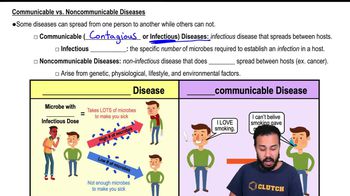
Communicable vs. Noncommunicable Diseases

Animal Reservoirs as Sources of Infection

Animal reservoirs harbor parasites without showing symptoms, maintaining the parasite population in nature. These reservoirs can reintroduce infections to humans even after control measures, making eradication difficult and requiring strategies beyond human treatment.
Video consigliato:
02:33
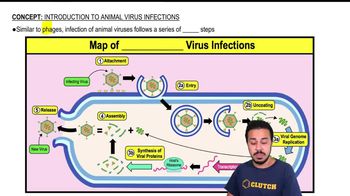
Introduction to Animal Virus Infections

Complexity of Parasite Life Cycles

Many parasites have complex life cycles involving multiple hosts, including vectors and reservoirs. This complexity means interrupting transmission requires targeting several stages and hosts, increasing the difficulty of effective prevention and control.
Video consigliato:
02:59
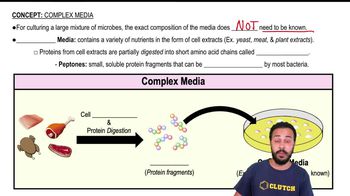
Complex Media
Pratica correlata
Domanda del libro di testo

Parasitology is the study of parasitic:

a. A.viruses

b. Prokaryotes

c. Fungi

d. Eukaryotes

1799
views

Domanda del libro di testo

Label the three stages of the Plasmodium life cycle and label the forms of the parasite where indicated.

1298
views
Domanda del libro di testo

Identify the genera of the parasites in these clinical specimens.


<IMAGE> <IMAGE>

fecal anal

a. ________ b. _________


<IMAGE> <IMAGE>

blood fecal

c. _________ d. _________


<IMAGE> <IMAGE>

vaginal blood

e. _________ f. __________


<IMAGE> <IMAGE>

fecal fecal

g. ___________ h. ___________

1175
views
Domanda del libro di testo

Mark each statement as true or false. Rewrite the false statements to make them true by changing the underlined word(s).


__________ Sexual contact is the most common method of transmission of parasites.

1132
views
Domanda del libro di testo

Balantidium coli can be distinguished from Entamoeba histolytica microscopically because B. coli has ___________.

1172
views
Domanda del libro di testo

Match the numbered organism with the correct lettered term. Answers may be used more than once, and an organism may have more than one answer.


1. ___ Balantidium coli

2. ___ Echinococcus granulosus

3. ___ Fasciola spp.

4. ___ Leishmania spp.

5. ___ Plasmodium falciparum

6. ___ Plasmodium vivax

7. ___ Taenia spp.

8. ___ Toxoplasma gondii

9. ___ Trypanosoma

10. ___ Wuchereria bancrofti


A. Miracidia

B. Bradyzoites

C. Schizogony

D. Microfilaria

E. Hydatid cyst

F. Cysticerci

G. Trophozoites

H. Amastigotes

I. Hypnozoites

J. Flagellated trypanosomes

1108
views