
Ch. 24 - Pathogenic DNA Viruses
Bauman - Microbiology with Diseases by Taxonomy 6th Edition
Bauman6th EditionMicrobiology with Diseases by TaxonomyISBN: 9780134832302Non è quello che usi tu?Cambia libro di testo
Capitolo 24, Problema 4

What observation led scientists to understand the relationship between shingles and chickenpox?

Guida verificata passo dopo passo
1
Step 1: Understand the diseases involved—chickenpox is caused by the varicella-zoster virus, which initially infects a person and causes the characteristic rash and symptoms.
Step 2: Recognize that after recovery from chickenpox, the varicella-zoster virus remains dormant (inactive) in nerve cells, specifically in the dorsal root ganglia.
Step 3: Observe that years later, some individuals develop shingles, which presents as a painful rash localized to a specific dermatome (area of skin supplied by a single nerve).
Step 4: Note that scientists observed the virus causing shingles is the same varicella-zoster virus responsible for chickenpox, indicating reactivation rather than a new infection.
Step 5: Conclude that the key observation was the clinical and virological evidence showing that shingles arises from the reactivation of the latent varicella-zoster virus in individuals who previously had chickenpox.

Risposta video verificata per un problema simile:

Questa soluzione video è stata consigliata dai nostri tutor come utile per risolvere questo problema.
Durata del video:
2m

Concetti chiave

Ecco i concetti essenziali che devi comprendere per rispondere correttamente alla domanda.

Varicella-Zoster Virus (VZV)

The varicella-zoster virus is the causative agent of both chickenpox and shingles. After causing chickenpox, the virus remains dormant in nerve cells and can reactivate later in life, leading to shingles. Understanding this viral behavior was key to linking the two diseases.
Video consigliato:
02:33
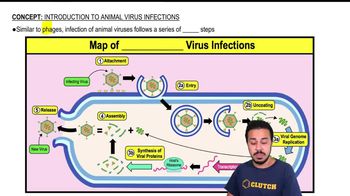
Introduction to Animal Virus Infections

Latency and Reactivation of Viruses

Latency refers to a virus's ability to remain inactive within host cells for extended periods. Reactivation occurs when the dormant virus becomes active again, causing symptoms. This concept explains how the same virus can cause two distinct diseases at different times.
Video consigliato:
04:43
Reactive Oxygen Species

Clinical Observation of Disease Patterns

Scientists observed that individuals who had chickenpox in childhood could develop shingles later in life, often in the same nerve regions. This epidemiological pattern suggested a connection between the two conditions, prompting further virological studies.
Video consigliato:
04:24
Pattern Recognition Receptors