
Ch. 25 - Pathogenic RNA Viruses
Bauman - Microbiology with Diseases by Taxonomy 6th Edition
Bauman6th EditionMicrobiology with Diseases by TaxonomyISBN: 9780134832302Non è quello che usi tu?Cambia libro di testo
Capitolo 25, Problema 11

Compare influenzavirus A 2009 (H1N1) to the 1918–1919 pandemic influenzavirus.

Guida verificata passo dopo passo
1
Step 1: Identify the key characteristics of the 1918–1919 influenza pandemic virus, including its subtype (H1N1), virulence, mortality rate, and genetic features. Understand that it was an avian-origin virus that caused a severe global pandemic with high mortality, especially among young adults.
Step 2: Examine the 2009 H1N1 influenza virus, noting that it is also an H1N1 subtype but genetically distinct from the 1918 virus. Recognize that the 2009 virus is a reassortant containing gene segments from swine, avian, and human influenza viruses.
Step 3: Compare the epidemiological impact of both viruses, focusing on differences in mortality rates, affected populations, and global spread. Note that the 2009 H1N1 pandemic had a lower mortality rate and different age group susceptibility compared to the 1918 pandemic.
Step 4: Analyze the molecular differences by comparing the hemagglutinin (HA) and neuraminidase (NA) proteins of both viruses, which influence host immune response and virus transmissibility.
Step 5: Summarize the comparison by highlighting similarities (both are H1N1 subtypes causing pandemics) and differences (genetic makeup, virulence, epidemiology), emphasizing how advances in surveillance and medical care influenced the outcomes.

Risposta video verificata per un problema simile:

Questa soluzione video è stata consigliata dai nostri tutor come utile per risolvere questo problema.
Durata del video:
1m

Concetti chiave

Ecco i concetti essenziali che devi comprendere per rispondere correttamente alla domanda.

Influenza Virus Structure and Subtypes

Influenza viruses are categorized by their surface proteins hemagglutinin (H) and neuraminidase (N), which define subtypes like H1N1. These proteins are critical for virus entry into host cells and release of new viral particles, influencing infectivity and immune recognition.
Video consigliato:
02:33
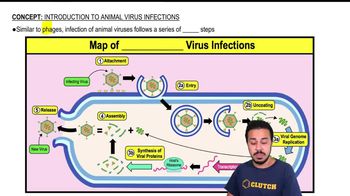
Introduction to Animal Virus Infections

Pandemic Influenza Characteristics

Pandemic influenza arises when a novel virus strain emerges with little population immunity, causing widespread illness. The 1918 and 2009 H1N1 pandemics involved different viral origins and impacts, highlighting factors like transmissibility, virulence, and host immune response.
Video consigliato:
05:09
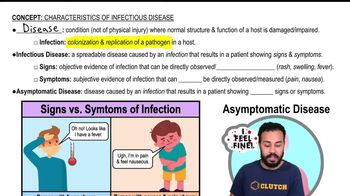
Intro to Characteristics of Infectious Disease

Genetic Evolution and Antigenic Shift

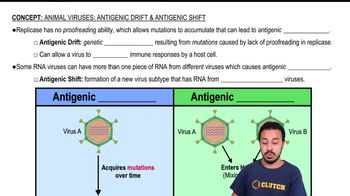
Influenza viruses undergo genetic changes through antigenic drift and shift. Antigenic shift, a major reassortment event, can create new subtypes like the 2009 H1N1, enabling the virus to evade immunity and cause pandemics, unlike the more stable seasonal strains.
Video consigliato:
05:27
Animal Viruses: Antigenic Drift vs. Antigenic Shift