
Ch. 5 - Microbial Metabolism
Bauman - Microbiology with Diseases by Taxonomy 6th Edition
Bauman6th EditionMicrobiology with Diseases by TaxonomyISBN: 9780134832302Non è quello che usi tu?Cambia libro di testo
Capitolo 5, Problema 10

Why do cyanobacteria and algae take in carbon dioxide and give off oxygen?

Guida verificata passo dopo passo
1
Understand that cyanobacteria and algae are photosynthetic organisms, meaning they use light energy to convert carbon dioxide and water into organic compounds.
Recognize that during photosynthesis, these organisms take in carbon dioxide (CO\_2) from their environment as a carbon source to build sugars and other organic molecules.
Know that the process of photosynthesis involves the splitting of water molecules (H\_2O) to release oxygen (O\_2) as a byproduct.
Recall the general photosynthesis equation: \(6CO\_2 + 6H\_2O + light \ energy \rightarrow C\_6H\_{12}O\_6 + 6O\_2\), which shows carbon dioxide intake and oxygen release.
Conclude that cyanobacteria and algae take in carbon dioxide to produce energy-rich organic compounds and release oxygen as a result of water splitting during photosynthesis.

Risposta video verificata per un problema simile:

Questa soluzione video è stata consigliata dai nostri tutor come utile per risolvere questo problema.
Durata del video:
2m

Concetti chiave

Ecco i concetti essenziali che devi comprendere per rispondere correttamente alla domanda.

Photosynthesis

Photosynthesis is the process by which organisms like cyanobacteria and algae convert carbon dioxide and water into glucose and oxygen using sunlight. This process involves chlorophyll capturing light energy to drive chemical reactions that produce oxygen as a byproduct.
Video consigliato:
05:58
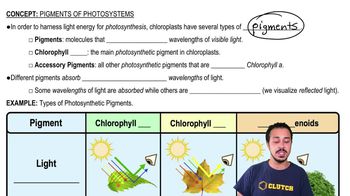
Pigments of Photosynthesis

Role of Chlorophyll and Pigments

Chlorophyll and other pigments in cyanobacteria and algae absorb light energy necessary for photosynthesis. These pigments enable the organisms to harness sunlight efficiently, facilitating the conversion of CO2 into organic compounds and releasing oxygen.
Video consigliato:
05:58
Pigments of Photosynthesis

Carbon Dioxide Fixation

Carbon dioxide fixation refers to the incorporation of CO2 into organic molecules during the Calvin cycle in photosynthesis. Cyanobacteria and algae use this process to build sugars that serve as energy sources, which explains their uptake of CO2 from the environment.
Video consigliato:
04:19
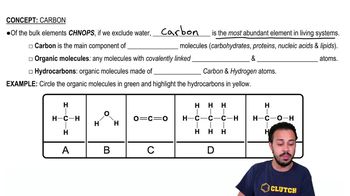
Carbon