How can campers effectively treat stream water to remove pathogenic protozoa, bacteria, and viruses?
Ch. 9 - Controlling Microbial Growth in the Environment
Bauman6th EditionMicrobiology with Diseases by TaxonomyISBN: 9780134832302Non è quello che usi tu?Cambia libro di testo
Tutti i libri di testo
Bauman 6th Edition
Ch. 9 - Controlling Microbial Growth in the Environment
Problema 14
Bauman 6th Edition
Ch. 9 - Controlling Microbial Growth in the Environment
Problema 14Capitolo 9, Problema 14
What are some advantages and disadvantages of using ionizing radiation to sterilize food?
Guida verificata passo dopo passo1
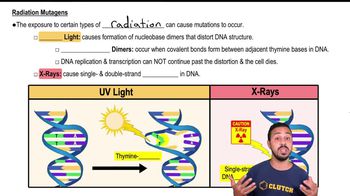
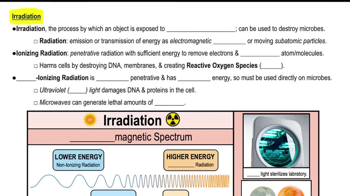
Step 1: Understand what ionizing radiation is and how it works in food sterilization. Ionizing radiation involves high-energy rays (such as gamma rays, X-rays, or electron beams) that can penetrate food and kill microorganisms by damaging their DNA and cellular structures.
Step 2: Identify the advantages of using ionizing radiation for food sterilization. These include its ability to effectively kill bacteria, viruses, and parasites without raising the temperature of the food, thus preserving the food's texture, flavor, and nutritional value.
Step 3: Recognize that ionizing radiation can penetrate packaged foods, allowing sterilization after packaging, which reduces the risk of recontamination.
Step 4: Consider the disadvantages, such as the potential for changes in food chemistry that might affect taste or texture in some foods, and the public perception or consumer concerns about irradiated food safety.
Step 5: Note the regulatory and cost factors, including the need for specialized equipment, safety precautions for workers, and compliance with food safety regulations, which can limit widespread use.

Risposta video verificata per un problema simile:
Questa soluzione video è stata consigliata dai nostri tutor come utile per risolvere questo problema.
Durata del video:
1mConcetti chiave
Ecco i concetti essenziali che devi comprendere per rispondere correttamente alla domanda.
Ionizing Radiation
Ionizing radiation refers to high-energy radiation, such as gamma rays, X-rays, or electron beams, that can remove tightly bound electrons from atoms, creating ions. It is used in food sterilization to kill microorganisms by damaging their DNA and cellular structures, effectively reducing spoilage and pathogens.
Video consigliato:
Radiation Mutagens
Advantages of Ionizing Radiation in Food Sterilization
Advantages include effective microbial inactivation without raising food temperature, preserving nutritional and sensory qualities. It extends shelf life, reduces the risk of foodborne illnesses, and can penetrate packaging, allowing sterilization after packaging.
Video consigliato:
Irradiation
Disadvantages of Ionizing Radiation in Food Sterilization
Disadvantages include potential changes in food texture or flavor, consumer concerns about safety, and the need for specialized equipment and regulatory approval. Some nutrients may degrade, and improper dosing can lead to incomplete sterilization or food damage.
Video consigliato:
Irradiation
Pratica correlata
Domanda del libro di testo
856
views
Domanda del libro di testo
Which of the following chemicals is active against bacterial endospores?
a. Copper ions
b. Ethylene oxide
c. Ethanol
d. Triclosan
824
views
Domanda del libro di testo
Which of the following substances is least toxic to humans?
a. Carbolic acid
b. Glutaraldehyde
c. Hydrogen peroxide
d. Formalin
765
views
Domanda del libro di testo
Biosafety Level 3 includes:
a. Double sets of entry doors
b. Pressurized suits
c. Showers in entryways
d. All of the above
672
views
Domanda del libro di testo
Contrast the structures and actions of soaps and quats.
732
views
Domanda del libro di testo
A sample of E. coli has been subjected to heat for a specified time, and 90% of the cells have been destroyed. Which of the following terms best describes this event?
a. Thermal death point
b. Thermal death time
c. Decimal reduction time
d. None of the above
824
views