Ch. 15 - Antimicrobial Drugs
Norman-McKay- Microbiology: Basic and Clinical Principles 2nd Edition
Norman-McKay2nd EditionMicrobiology: Basic and Clinical PrinciplesISBN: 9780137661619Non è quello che usi tu?Cambia libro di testo
Capitolo 11, Problema 7

Choose the true statement(s) about therapeutic index (TI). Select all that apply.
a. A drug with a high therapeutic index would be effective above the dose at which it is potentially toxic.
b. A narrow TI is preferable.
c. A drug for which the maximum safe dose is close to the minimum effective dose would have a high TI.
d. It is one measure of a drug’s general safety.
e. A drug that is not selectively toxic would most likely have a high TI.

Guida verificata passo dopo passo
1
Step 1: Understand the definition of Therapeutic Index (TI). TI is a ratio that compares the toxic dose of a drug to its effective dose, usually expressed as \(TI = \frac{TD_{50}}{ED_{50}}\), where \(TD_{50}\) is the dose that causes toxicity in 50% of the population, and \(ED_{50}\) is the dose that produces the desired effect in 50% of the population.
Step 2: Analyze statement (a): "A drug with a high therapeutic index would be effective above the dose at which it is potentially toxic." Since a high TI means the toxic dose is much higher than the effective dose, the drug is effective at doses well below toxic levels, so this statement is false.
Step 3: Analyze statement (b): "A narrow TI is preferable." A narrow TI means the effective dose and toxic dose are close, which increases risk; therefore, this statement is false because a wide TI is generally preferable for safety.
Step 4: Analyze statement (c): "A drug for which the maximum safe dose is close to the minimum effective dose would have a high TI." If the safe dose is close to the effective dose, the TI is low, so this statement is false.
Step 5: Analyze statements (d) and (e): Statement (d) says TI is a measure of a drug’s general safety, which is true because TI indicates the margin between effective and toxic doses. Statement (e) says a drug that is not selectively toxic would most likely have a high TI; lack of selective toxicity usually means higher toxicity to host cells, so TI would be low, making this statement false.

Risposta video verificata per un problema simile:

Questa soluzione video è stata consigliata dai nostri tutor come utile per risolvere questo problema.
Durata del video:
4m

Concetti chiave

Ecco i concetti essenziali che devi comprendere per rispondere correttamente alla domanda.

Therapeutic Index (TI)

The therapeutic index is a ratio that compares the toxic dose of a drug to its effective dose, indicating the drug's safety margin. A high TI means there is a large gap between effective and toxic doses, making the drug safer to use. Conversely, a low or narrow TI indicates a small safety margin, requiring careful dosing.

Selective Toxicity

Selective toxicity refers to a drug's ability to target harmful microbes or cells without damaging the host's cells. Drugs with high selective toxicity tend to have higher therapeutic indices because they affect pathogens specifically, reducing side effects and toxicity to the patient.
Video consigliato:
03:27
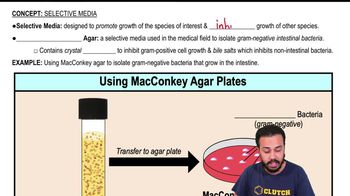
Selective Media

Safety and Efficacy in Drug Dosing

Drug safety involves balancing efficacy and toxicity, where the maximum safe dose should be well above the minimum effective dose. Drugs with a narrow therapeutic index require precise dosing to avoid toxicity, while those with a wide index allow more flexibility and are generally considered safer.
Video consigliato:
04:57
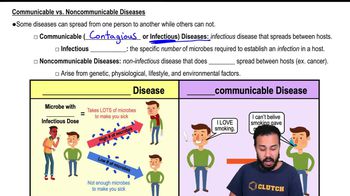
Communicable vs. Noncommunicable Diseases