
Ch. 17 - Skin and Eye Infections
Norman-McKay- Microbiology: Basic and Clinical Principles 2nd Edition
Norman-McKay2nd EditionMicrobiology: Basic and Clinical PrinciplesISBN: 9780137661619Non è quello che usi tu?Cambia libro di testo
Capitolo 13, Problema 9

Select the false statement about cutaneous candidiasis:
a. The most common causative species is Candida albicans.
b. Candida albicans can be part of normal microbiota.
c. Usage of antibiotics can increase the chance of cutaneous candidiasis.
d. Changes in pH can permit overgrowth.
e. The causative agents are naturally found as mold filaments.

Guida verificata passo dopo passo
1
Step 1: Understand the nature of cutaneous candidiasis, which is a fungal infection caused primarily by Candida species, especially Candida albicans.
Step 2: Review each statement carefully: (a) Candida albicans is indeed the most common causative species, so this statement is true.
Step 3: Recognize that Candida albicans is part of the normal human microbiota, particularly on skin and mucous membranes, making statement (b) true.
Step 4: Consider that antibiotic use can disrupt normal bacterial flora, allowing Candida to overgrow and cause infection, so statement (c) is true.
Step 5: Know that Candida species typically exist as yeast cells or pseudohyphae, not as mold filaments in their natural state; therefore, statement (e) is false because the causative agents are not naturally found as mold filaments.

Risposta video verificata per un problema simile:

Questa soluzione video è stata consigliata dai nostri tutor come utile per risolvere questo problema.
Durata del video:
3m

Concetti chiave

Ecco i concetti essenziali che devi comprendere per rispondere correttamente alla domanda.

Candida albicans as a Causative Agent

Candida albicans is the most common species responsible for cutaneous candidiasis. It is a yeast-like fungus that can cause infections when the skin barrier is compromised or the immune system is weakened.
Video consigliato:
03:24
Lipid A Causes Septic Shock

Normal Microbiota and Opportunistic Infection

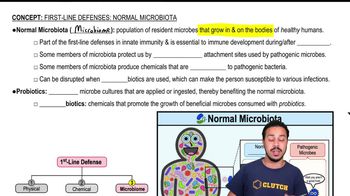
Candida albicans is part of the normal human microbiota, commonly found on skin and mucous membranes. It usually remains harmless but can overgrow and cause infection under certain conditions like antibiotic use or pH changes.
Video consigliato:
03:43
Normal Microbiota

Morphology of Candida Species

Candida species naturally exist as yeast cells, not mold filaments. They can form pseudohyphae or true hyphae during infection, but their normal environmental form is unicellular yeast, distinguishing them from mold fungi.
Video consigliato:
02:44
Types of Bacterial Cell Morphology