Ch. 20 - Antimicrobial Drugs
Tortora - Microbiology: An Introduction 14th Edition
Tortora14th EditionMicrobiology: An IntroductionISBN: 9780138200398Non è quello che usi tu?Cambia libro di testo
Capitolo 16, Problema 7

How does each of the following inhibit translation?
a. Chloramphenicol
b. Erythromycin
c. Tetracycline
d. Streptomycin
e. Oxazolidinone
f. Streptogramin

Guida verificata passo dopo passo
1
Step 1: Understand that translation is the process by which ribosomes synthesize proteins by decoding messenger RNA (mRNA). Antibiotics can inhibit translation by targeting different stages or components of the ribosome.
Step 2: For chloramphenicol, recognize that it inhibits the peptidyl transferase activity of the 50S ribosomal subunit, preventing peptide bond formation between amino acids during protein elongation.
Step 3: For erythromycin, note that it binds to the 50S subunit and blocks the exit tunnel of the ribosome, thereby preventing the elongation of the nascent polypeptide chain.
Step 4: For tetracycline, understand that it binds to the 30S ribosomal subunit and blocks the attachment of aminoacyl-tRNA to the A site, stopping the addition of new amino acids to the growing peptide chain.
Step 5: For streptomycin, oxazolidinone, and streptogramin, identify their specific mechanisms: streptomycin causes misreading of mRNA by binding to the 30S subunit; oxazolidinone prevents formation of the initiation complex by binding to the 50S subunit; streptogramins bind to the 50S subunit and inhibit peptide elongation or cause premature release of the peptide.

Risposta video verificata per un problema simile:

Questa soluzione video è stata consigliata dai nostri tutor come utile per risolvere questo problema.
Durata del video:
1m

Concetti chiave

Ecco i concetti essenziali che devi comprendere per rispondere correttamente alla domanda.

Mechanism of Translation Inhibition by Antibiotics

Many antibiotics inhibit bacterial protein synthesis by targeting the ribosome, interfering with different stages of translation such as initiation, elongation, or termination. Understanding how each antibiotic binds to specific ribosomal sites helps explain their inhibitory effects and spectrum of activity.
Video consigliato:
05:03
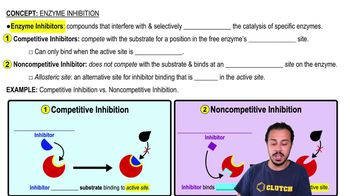
Enzyme Inhibition

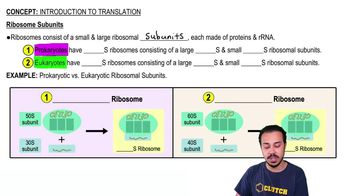
Ribosomal Subunits and Their Roles in Translation

Bacterial ribosomes consist of two subunits: 30S (small) and 50S (large). The 30S subunit is involved in mRNA decoding, while the 50S subunit catalyzes peptide bond formation. Antibiotics selectively bind to these subunits to block functions like tRNA binding or peptide elongation.
Video consigliato:
08:42
Ribosome Subunits

Specific Antibiotic Targets and Modes of Action

Each antibiotic inhibits translation differently: chloramphenicol blocks peptide bond formation on the 50S subunit; erythromycin and streptogramins bind the 50S subunit to block peptide exit; tetracycline prevents tRNA attachment to the 30S subunit; streptomycin causes misreading of mRNA on the 30S; oxazolidinones inhibit initiation by binding the 50S subunit.
Video consigliato:
03:29
Sex Pilus