Ch. 26 - Microbial Diseases of the Urinary and Reproductive Systems
Tortora - Microbiology: An Introduction 14th Edition
Tortora14th EditionMicrobiology: An IntroductionISBN: 9780138200398Non è quello che usi tu?Cambia libro di testo
Capitolo 22, Problema 7

Fluid-filled vesicles
a. candidiasis
b. bacterial vaginosis
c. genital herpes
d. lymphogranuloma venereum
e. trichomoniasis

Guida verificata passo dopo passo
1
Step 1: Understand the clinical presentation described by 'fluid-filled vesicles'. Vesicles are small, fluid-filled blisters on the skin or mucous membranes, often associated with viral infections.
Step 2: Review each option and recall the typical symptoms and causative agents: candidiasis (fungal infection), bacterial vaginosis (bacterial imbalance), genital herpes (viral infection causing vesicles), lymphogranuloma venereum (bacterial infection causing ulcers and lymphadenopathy), and trichomoniasis (protozoan infection causing discharge).
Step 3: Identify which condition is characteristically associated with fluid-filled vesicles. Genital herpes, caused by herpes simplex virus, typically presents with painful fluid-filled vesicles or blisters in the genital area.
Step 4: Exclude other options based on their usual clinical signs: candidiasis causes white plaques, bacterial vaginosis causes discharge without vesicles, lymphogranuloma venereum causes ulcers and swollen lymph nodes, and trichomoniasis causes frothy discharge.
Step 5: Conclude that the condition most consistent with fluid-filled vesicles is genital herpes.

Risposta video verificata per un problema simile:

Questa soluzione video è stata consigliata dai nostri tutor come utile per risolvere questo problema.
Durata del video:
1m

Concetti chiave

Ecco i concetti essenziali che devi comprendere per rispondere correttamente alla domanda.

Fluid-filled Vesicles in Infectious Diseases

Fluid-filled vesicles are small, blister-like lesions on the skin or mucous membranes containing clear fluid. They are characteristic of certain infections, especially viral ones, and help in clinical diagnosis by indicating the nature of the pathogen involved.
Video consigliato:
05:09
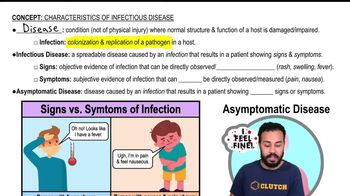
Intro to Characteristics of Infectious Disease

Genital Herpes

Genital herpes is a sexually transmitted infection caused by the herpes simplex virus (HSV). It typically presents with painful, fluid-filled vesicles or blisters on the genital or anal areas, which eventually rupture and form ulcers, making it a key condition associated with vesicular lesions.

Differential Diagnosis of Genital Infections

Differentiating genital infections involves recognizing specific symptoms and signs, such as discharge, ulcers, or vesicles. Conditions like candidiasis, bacterial vaginosis, lymphogranuloma venereum, and trichomoniasis have distinct clinical features that help distinguish them from infections causing vesicles, such as genital herpes.
Video consigliato:
04:07
Differential Staining