Ch. 26 - Microbial Diseases of the Urinary and Reproductive Systems
Tortora - Microbiology: An Introduction 14th Edition
Tortora14th EditionMicrobiology: An IntroductionISBN: 9780138200398Non è quello che usi tu?Cambia libro di testo
Capitolo 22, Problema 10

In cases of NGU, diagnosis is made using PCR to detect microbial DNA.
a. C. trachomatis
b. E. coli
c. Mycobacterium hominis
d. S. saprophyticus

Guida verificata passo dopo passo
1
Step 1: Understand the context of NGU (Nongonococcal Urethritis), which is an inflammation of the urethra not caused by Neisseria gonorrhoeae. The most common causative agents are bacterial pathogens detectable by PCR.
Step 2: Review the list of organisms provided: a. Chlamydia trachomatis, b. Escherichia coli, c. Mycoplasma hominis, d. Staphylococcus saprophyticus. Consider which are commonly associated with NGU.
Step 3: Recall that PCR (Polymerase Chain Reaction) is used to detect specific microbial DNA sequences, making it a sensitive method for identifying pathogens like C. trachomatis and M. hominis, which are known causes of NGU.
Step 4: Eliminate organisms less commonly linked to NGU, such as E. coli and S. saprophyticus, which are more often associated with other infections like urinary tract infections rather than NGU.
Step 5: Conclude that the most relevant organisms for NGU diagnosis by PCR are C. trachomatis and Mycoplasma hominis, and use this understanding to answer questions 9 and 10 accordingly.

Risposta video verificata per un problema simile:

Questa soluzione video è stata consigliata dai nostri tutor come utile per risolvere questo problema.
Durata del video:
2m

Concetti chiave

Ecco i concetti essenziali che devi comprendere per rispondere correttamente alla domanda.

Nongonococcal Urethritis (NGU)

NGU is an inflammation of the urethra not caused by Neisseria gonorrhoeae. It is commonly caused by various bacteria, including Chlamydia trachomatis and Mycoplasma species. Understanding NGU helps identify the pathogens involved and guides appropriate diagnostic and treatment strategies.

Polymerase Chain Reaction (PCR) in Microbial Diagnosis

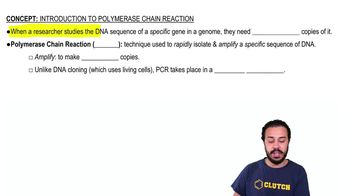
PCR is a molecular technique used to amplify and detect specific DNA sequences of pathogens. It is highly sensitive and specific, making it ideal for diagnosing infections like NGU by identifying microbial DNA directly from clinical samples, even when bacteria are difficult to culture.
Video consigliato:
01:31
Introduction to Polymerase Chain Reaction

Common Microbial Agents of NGU

The main bacteria causing NGU include Chlamydia trachomatis, Mycoplasma hominis, and Ureaplasma urealyticum. Recognizing these agents is crucial for diagnosis and treatment, as they differ from typical urinary tract pathogens like E. coli or skin flora such as Staphylococcus saprophyticus.
Video consigliato:
04:14
Liquid Chemicals: Surface-Active Agents