Ch. 28 - Applied and Industrial Microbiology
Tortora - Microbiology: An Introduction 14th Edition
Tortora14th EditionMicrobiology: An IntroductionISBN: 9780138200398Non è quello che usi tu?Cambia libro di testo
Capitolo 24, Problema 9

Which of the following reactions is undesirable in winemaking?
a. Sucrose → ethanol
b. Ethanol → acetic acid
c. Malic acid → lactic acid
d. Glucose → pyruvic acid

Guida verificata passo dopo passo
1
Step 1: Understand the context of winemaking and the role of each reaction. Winemaking primarily involves fermentation, where sugars are converted into ethanol by yeast.
Step 2: Analyze each reaction: (a) Sucrose → ethanol represents the fermentation of sugar to alcohol, which is a desired process in winemaking.
Step 3: Reaction (b) Ethanol → acetic acid involves the oxidation of ethanol to acetic acid, which leads to vinegar formation and spoilage, making it undesirable in winemaking.
Step 4: Reaction (c) Malic acid → lactic acid is malolactic fermentation, a process that softens wine acidity and is often desirable in winemaking.
Step 5: Reaction (d) Glucose → pyruvic acid is a step in glycolysis, a normal metabolic pathway leading to fermentation, so it is not undesirable.

Risposta video verificata per un problema simile:

Questa soluzione video è stata consigliata dai nostri tutor come utile per risolvere questo problema.
Durata del video:
1m

Concetti chiave

Ecco i concetti essenziali che devi comprendere per rispondere correttamente alla domanda.

Fermentation in Winemaking

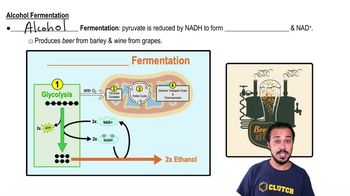
Fermentation is the biochemical process where yeast converts sugars like sucrose and glucose into ethanol and carbon dioxide. This reaction is essential in winemaking as it produces alcohol, the primary desired product, and influences the wine's flavor and aroma.
Video consigliato:
01:59
Alcohol Fermentation

Acetic Acid Formation and Wine Spoilage

The conversion of ethanol to acetic acid is typically caused by acetic acid bacteria and is undesirable in winemaking. This reaction leads to vinegar-like off-flavors, spoilage, and a decrease in wine quality, making it a negative reaction to avoid.
Video consigliato:
04:07
Formation & Breakdown of Nucleic Acids

Malolactic Fermentation

Malolactic fermentation is a secondary fermentation where malic acid is converted into lactic acid by bacteria. This process softens the wine's acidity, improves mouthfeel, and is generally considered beneficial in many wine styles.
Video consigliato:
01:59
Alcohol Fermentation