 Indietro
Demand and Supply: Foundations of Market Equilibrium
Guida di studio - Note intelligenti
 Appunti personalizzati basati sui tuoi materiali, ampliati con definizioni chiave, esempi e contesto.
Markets and Prices
Competitive Markets and Price Concepts
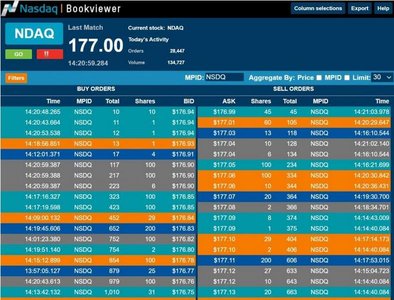
A market is any arrangement that enables buyers and sellers to exchange information and conduct business. In a competitive market, numerous buyers and sellers exist, ensuring that no single participant can influence the market price. The money price is the monetary amount required to purchase a good, while the relative price is the ratio of the money price of a good to the money price of its next best alternative, representing its opportunity cost.
Competitive markets are characterized by price-taking behavior.
Opportunity cost is reflected in relative prices.

Demand
Definition and Law of Demand
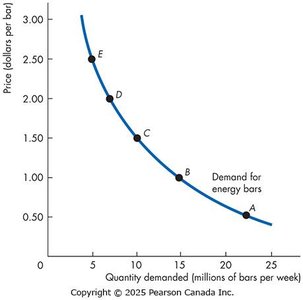
Demand refers to the relationship between the price of a good and the quantity consumers plan to buy. To demand a good, a consumer must want it, be able to afford it, and have a definite plan to purchase it. The law of demand states that, ceteris paribus, as the price of a good increases, the quantity demanded decreases, and vice versa.
Substitution effect: When the price of a good rises, consumers seek alternatives, reducing quantity demanded.
Income effect: A price increase reduces purchasing power, decreasing quantity demanded.
Demand Curve and Schedule
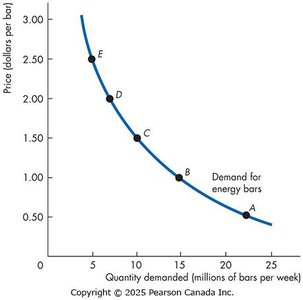
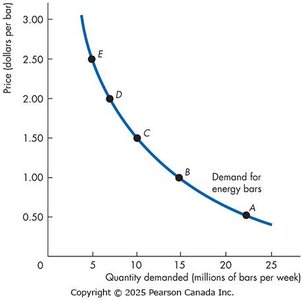
The demand curve graphically represents the relationship between price and quantity demanded, holding other factors constant. The demand schedule is a table showing quantities demanded at various prices.
A movement along the demand curve occurs when price changes.
The demand curve is also a willingness-and-ability-to-pay curve, measuring marginal benefit.
Changes in Demand
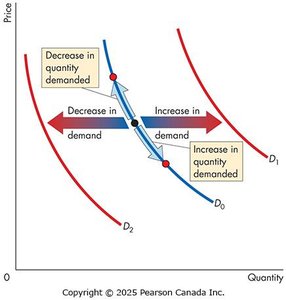
A change in demand occurs when factors other than price affect buying plans, shifting the demand curve. An increase in demand shifts the curve rightward; a decrease shifts it leftward.
Six main factors: prices of related goods, expected future prices, income, expected future income and credit, population, preferences.
Substitutes and complements affect demand through their price changes.
Normal goods: Demand increases as income rises.
Inferior goods: Demand decreases as income rises.
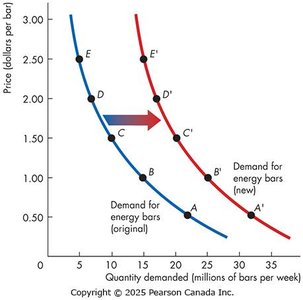
Distinguishing Changes in Demand and Quantity Demanded
A change in quantity demanded is a movement along the demand curve due to price changes. A change in demand is a shift of the entire curve due to other factors.
Supply
Definition and Law of Supply
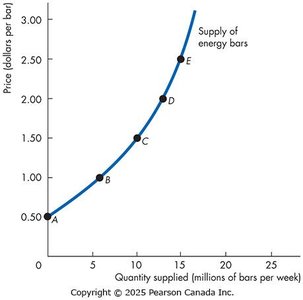
Supply is the relationship between the price of a good and the quantity producers plan to sell. The law of supply states that, ceteris paribus, as the price of a good increases, the quantity supplied increases, and vice versa. This is due to rising marginal costs as production increases.
Producers supply goods only if price covers marginal cost.
Supply Curve and Schedule
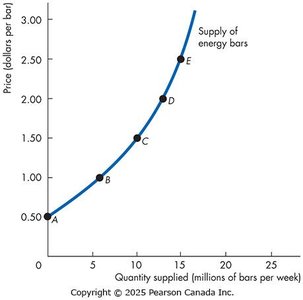
The supply curve shows the relationship between price and quantity supplied, holding other factors constant. The supply schedule is a table of quantities supplied at different prices.
Changes in Supply
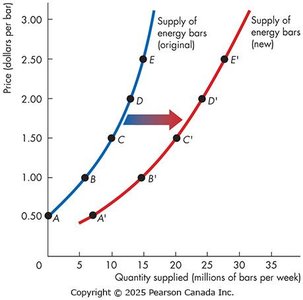
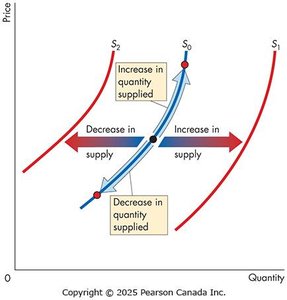
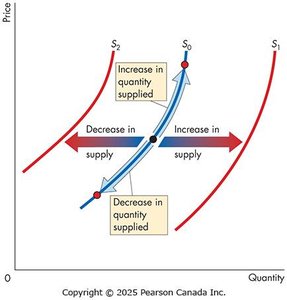
A change in supply occurs when factors other than price affect selling plans, shifting the supply curve. An increase in supply shifts the curve rightward; a decrease shifts it leftward.
Six main factors: prices of factors of production, prices of related goods produced, expected future prices, number of suppliers, technology, state of nature.
Substitutes in production: Supply increases if the price of a substitute falls.
Complements in production: Supply increases if the price of a complement rises.
Advances in technology and favorable state of nature increase supply.
Distinguishing Changes in Supply and Quantity Supplied
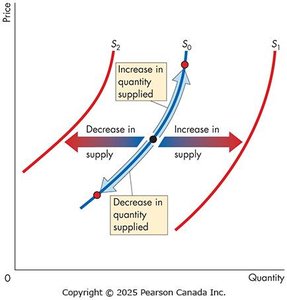
A change in quantity supplied is a movement along the supply curve due to price changes. A change in supply is a shift of the entire curve due to other factors.
Market Equilibrium
Equilibrium Price and Quantity
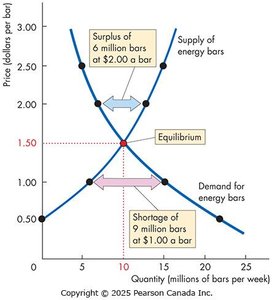
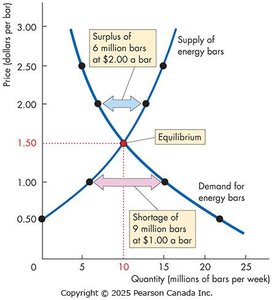
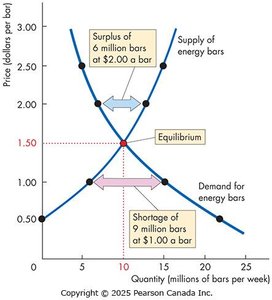
Market equilibrium occurs when the price balances the plans of buyers and sellers, so quantity demanded equals quantity supplied. The equilibrium price is where this balance occurs, and the equilibrium quantity is the amount bought and sold at that price.
At prices above equilibrium, a surplus exists, forcing price down.
At prices below equilibrium, a shortage exists, forcing price up.
Price adjusts until equilibrium is reached.
Market Equilibrium Table
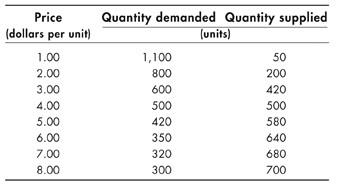
The following table summarizes the relationship between price, quantity demanded, and quantity supplied:
Price (dollars per unit) | Quantity demanded (units) | Quantity supplied (units) |
|---|---|---|
1.00 | 1,100 | 50 |
2.00 | 800 | 200 |
3.00 | 600 | 420 |
4.00 | 500 | 500 |
5.00 | 420 | 580 |
6.00 | 350 | 640 |
7.00 | 320 | 680 |
8.00 | 300 | 700 |
Predicting Changes in Price and Quantity
Effects of Changes in Demand and Supply
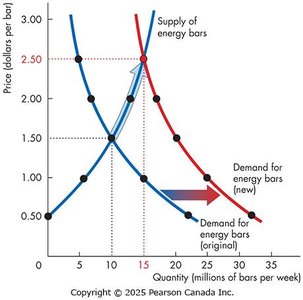
Changes in demand or supply shift the respective curves, affecting equilibrium price and quantity:
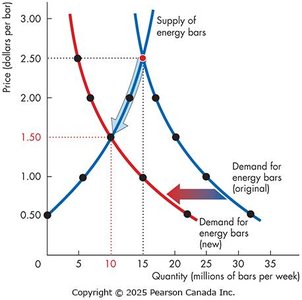
Increase in demand: Demand curve shifts right, causing a shortage at the original price. Price rises, quantity supplied increases.
Decrease in demand: Demand curve shifts left, causing a surplus at the original price. Price falls, quantity supplied decreases.
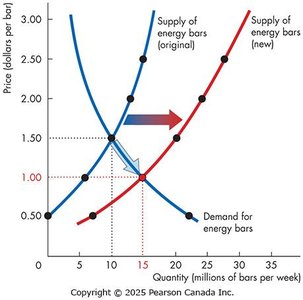
Increase in supply: Supply curve shifts right, causing a surplus at the original price. Price falls, quantity demanded increases.
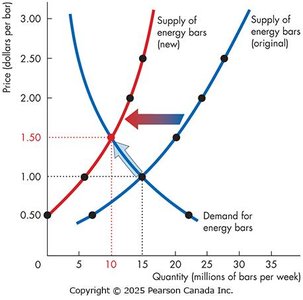
Decrease in supply: Supply curve shifts left, causing a shortage at the original price. Price rises, quantity demanded decreases.
Simultaneous Changes in Demand and Supply
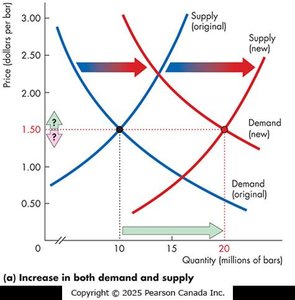
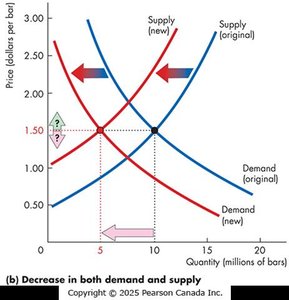
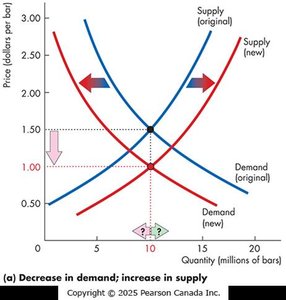
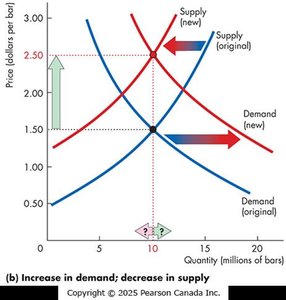
When both demand and supply change, the effects on equilibrium price and quantity depend on the direction and magnitude of the shifts:
Both increase: Equilibrium quantity rises; price change is uncertain.
Both decrease: Equilibrium quantity falls; price change is uncertain.
Demand decreases, supply increases: Price falls; quantity change is uncertain.
Demand increases, supply decreases: Price rises; quantity change is uncertain.
Key Equations
Demand and Supply Functions
Demand function:
Supply function:
Equilibrium condition:
Marginal Benefit and Marginal Cost
Marginal benefit:
Marginal cost:
Additional info: These equations summarize the relationships and conditions for market equilibrium, demand, and supply.
