Skip to main content
Nutrition
Il mio corso
Impara
Preparazione agli esami
AI Tutor
Guide di studio
Flashcard
Prova l'app
Il mio corso
Impara
Preparazione agli esami
AI Tutor
Guide di studio
Flashcard
Prova l'app
Indietro
Nutrition During Adolescence (Ages 12-19) quiz
Puoi toccare per girare la carta.
What age range defines adolescence in nutrition studies?
Puoi toccare per girare la carta.
👆
What age range defines adolescence in nutrition studies?
Adolescence is defined as ages 12 to 19 years old.
Avanzamenti del tracciato
I pulsanti di controllo sono stati cambiati in modalità "navigazione".
1/15
Flashcard correlate
Pratica correlata
Video consigliati
Nutrition During Adolescence (Ages 12-19) definitions
Nutrition During Adolescence (Ages 12-19)
15 Termini
Nutrition During Adolescence (Ages 12-19)
15. Nutrition: Toddlers to Late Adulthood
10 Problemi
Argomento
Nutrition For Older Adults (Ages 50+)
15. Nutrition: Toddlers to Late Adulthood
10 Problemi
Argomento
15. Nutrition: Toddlers to Late Adulthood
4 Argomenti
15 Problemi
Capitolo
VideoThumbView.guidedCourse
02:09
Nutrition During Adolescence (Ages 12-19)
176
views
Termini in questo insieme (15)
Nascondere definizioni
What age range defines adolescence in nutrition studies?
Adolescence is defined as ages 12 to 19 years old.
What triggers increased calorie needs during adolescence?
Puberty triggers growth spurts and hormonal changes that increase calorie needs.
What is the typical daily calorie range recommended for adolescents?
Adolescents are recommended to consume between 1800 and 3200 kilocalories per day.
Which sex generally requires more calories during adolescence?
Males typically require more calories than females during adolescence.
What percentage of daily calories should come from fat for adolescents?
Adolescents should get 25-35% of their daily calories from fat.
How much protein is recommended for adolescents per kilogram of body weight?
Adolescents should consume about 0.8 grams of protein per kilogram of body weight per day.
Do carbohydrate needs change during adolescence?
Carbohydrate needs remain stable during adolescence.
Which micronutrients are especially important for adolescents?
Calcium, iron, and vitamins A and D are especially important for adolescents.
Why are calcium and vitamin D particularly important during adolescence?
Calcium and vitamin D are crucial due to rapid bone growth during adolescence.
How much fluid should adolescents consume daily?
Adolescents should consume between 2.3 and 3.3 liters of fluids per day.
Why do adolescent girls need more iron than boys?
Girls need more iron to offset blood loss during menstruation.
What are two major nutritional risks during adolescence?
Eating disorders and obesity are major nutritional risks during adolescence.
How can peer influence affect adolescent nutrition?
Peer influence can lead adolescents to make unhealthier dietary choices, such as eating more fast food.
How does alcohol use impact adolescent nutrition?
Alcohol use can interfere with nutrient absorption and metabolism, leading to deficiencies.
What other substances besides alcohol can negatively impact adolescent nutrition?
Nicotine and other recreational drugs can negatively impact adolescent nutrition.
 IndietroIndietro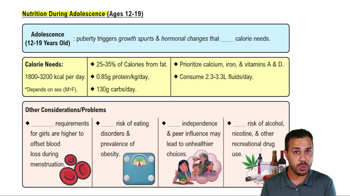
 02:09
02:09