Indietro
Carbohydrates: Structure, Function, and Health Implications
Guida di studio - Note intelligenti
 Appunti personalizzati basati sui tuoi materiali, ampliati con definizioni chiave, esempi e contesto.
Carbohydrates: Structure, Classification, and Function
What are Carbohydrates and How Are They Classified?
Carbohydrates are organic compounds produced by plants during photosynthesis, a process that uses sunlight to convert carbon dioxide and water into glucose and oxygen. After consuming plant foods, humans digest carbohydrates and convert them into glucose, which serves as the body's preferred energy source. Carbohydrate-rich foods form the foundation of diets worldwide.
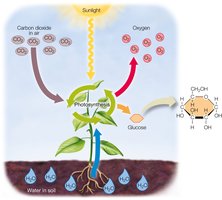
Glucose: The most abundant carbohydrate and the primary energy source for the body.
Carbohydrates are classified based on their chemical structure and complexity.
Classification of Carbohydrates
Carbohydrates are categorized as simple or complex based on the number of sugar units they contain.
Simple carbohydrates:
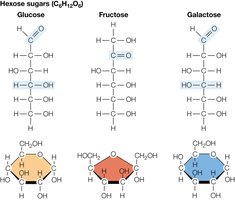
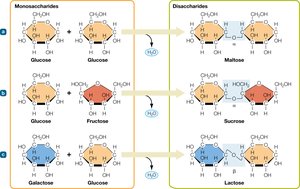
Monosaccharides: Single sugar units (e.g., glucose, fructose, galactose).
Disaccharides: Two sugar units (e.g., sucrose, lactose, maltose).
Simple carbohydrates are perceived as sweeter and dissolve easily in saliva, stimulating taste buds.
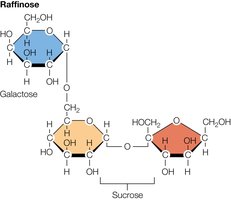
Oligosaccharides: Short chains of 3–10 sugar units (e.g., raffinose, stachyose, some fibers).
Complex carbohydrates:
Polysaccharides: Long chains of sugar units (e.g., amylose, amylopectin).
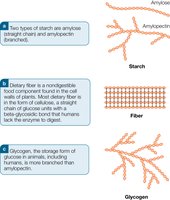
Comparison of Starch, Fiber, and Glycogen
Starch, fiber, and glycogen are all polysaccharides but differ in structure and function.
Type | Source | Structure | Function |
|---|---|---|---|
Starch | Plants | Branched (amylopectin) and unbranched (amylose) chains | Energy storage in plants |
Fiber | Plants | Straight chains (cellulose); not digestible by humans | Structural component; aids digestion |
Glycogen | Animals | Highly branched chains | Energy storage in animals (liver and muscle) |
Polysaccharides: Structure and Types
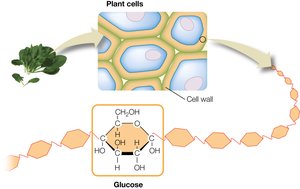
Polysaccharides are composed of many glucose units. The most common types are starch, fiber, and glycogen.
Starch: The main storage form of glucose in plants, consisting of amylose and amylopectin.
Fiber: Mostly nondigestible polysaccharides such as cellulose. Lignin, though not a carbohydrate, is also considered dietary fiber due to its role in plant cell walls.
Glycogen: The storage form of glucose in animals, found mainly in the liver and muscles.
Types and Functions of Dietary Fiber
Dietary fiber is classified as soluble or insoluble, each with distinct properties and health benefits.
Soluble fiber:
Dissolves in water and is easily fermented by intestinal bacteria.
Examples: Pectins, mucilages, beta-glucans.
Health benefits: Lowers cholesterol and blood glucose, aids in appetite control.
Insoluble fiber:
Does not dissolve in water and is not easily fermented.
Examples: Cellulose, lignins, some hemicelluloses.
Health benefits: Increases stool bulk, relieves constipation.
Both types of fiber are important for health, and overall intake is more significant than the specific type consumed.
Digestion, Absorption, and Metabolism of Carbohydrates
Carbohydrate Digestion and Absorption
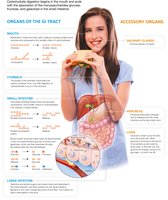
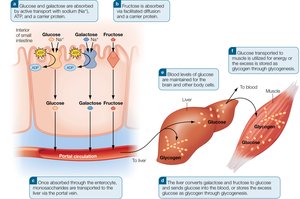
Carbohydrate digestion begins in the mouth and continues in the small intestine, where enzymes break down polysaccharides into monosaccharides for absorption. Monosaccharides are absorbed into the bloodstream and transported to the liver, where they are converted to glucose or stored as glycogen.
Functions of Carbohydrates in the Body
Carbohydrates serve several essential functions:
Primary energy source for the brain, nervous system, and red blood cells.
Spare protein from being used as an energy source.
Prevent ketosis by providing adequate glucose for fat metabolism.
Blood Glucose Regulation
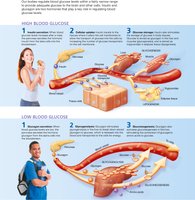
The body maintains blood glucose levels between 70 mg/dL and 110 mg/dL using hormones:
Insulin: Lowers blood glucose by facilitating cellular uptake of glucose, stimulating glycogenesis (formation of glycogen), and lipogenesis (fat synthesis), and inhibiting lipolysis (fat breakdown).
Glucagon: Raises blood glucose by stimulating glycogenolysis (breakdown of glycogen), gluconeogenesis (production of glucose from non-carbohydrate sources), and the conversion of lactic acid to glucose.
Hypoglycemia
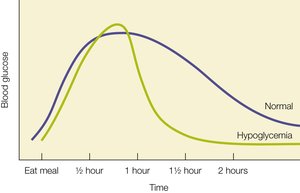
Hypoglycemia occurs when blood glucose drops below 70 mg/dL, often due to excess insulin. Symptoms include hunger, dizziness, confusion, weakness, and sweating. Treatment involves consuming carbohydrate-rich foods and eating smaller, balanced meals throughout the day.
Health Benefits of Dietary Fiber
Importance of Dietary Fiber
Dietary fiber is crucial for promoting health and preventing disease. It helps lower the risk of bowel irregularity, constipation, diverticulosis, obesity, heart disease, cancer, and diabetes.
Fiber and Digestive Health
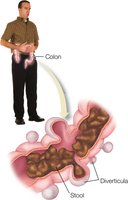
Fiber increases stool bulk and helps prevent constipation and diverticulosis. Diverticulosis is a condition where increased pressure in the colon forms pouches (diverticula), which can become infected (diverticulitis).
Fiber and Chronic Disease Prevention
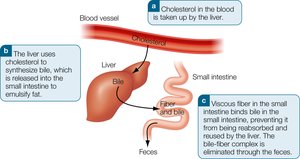
Heart Disease: Soluble fiber lowers blood cholesterol by binding bile acids, reducing their reabsorption, and promoting excretion. This process decreases cholesterol levels and may improve insulin sensitivity.
Diabetes: Soluble fiber slows glucose absorption, helping control blood glucose levels and reducing the risk of type 2 diabetes.
Cancer: Fiber reduces the time cancer-promoting substances contact the intestinal lining, encourages beneficial bacteria, and lowers bile acid and estrogen levels, reducing cancer risk.
Fiber and Obesity Prevention
Fiber increases satiety, leading to reduced food intake and supporting weight management. However, fiber should be introduced gradually, and fluid intake should be increased to minimize side effects like gas and bloating. Excessive fiber may reduce mineral absorption.
Recommended Intake: 14 grams per 1,000 kilocalories, or 25–38 grams per day.
Food Sources and Quality of Carbohydrates
Best Sources of Carbohydrates
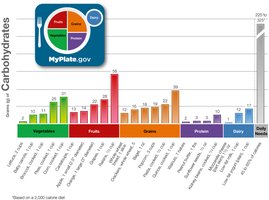
Whole plant foods and dairy products are the best sources of carbohydrates. Nutrient-dense choices include grains, vegetables, fruits, and beans, which are high in fiber and complex carbohydrates and low in added sugars and saturated fat.
Glycemic Index and Glycemic Load
The Glycemic Index (GI) rates foods based on their potential to raise blood glucose and insulin levels. However, GI does not account for portion size. Glycemic Load (GL) adjusts GI for the amount of carbohydrate in a typical serving, providing a more accurate measure for meal planning.
Added Sugars and Sugar Substitutes
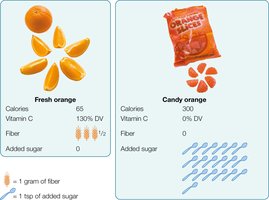
Added sugars contribute sweetness but not essential nutrients. Sugar substitutes provide sweetness with fewer or no kilocalories and can help reduce overall energy intake.

Carbohydrates and Disease: Diabetes
What is Diabetes?
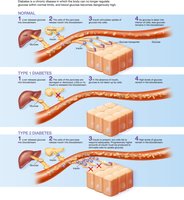
Diabetes mellitus is a condition characterized by insufficient insulin production or resistance to insulin's effects, resulting in elevated blood glucose levels. It is a growing global health concern, with increasing prevalence, especially of type 2 diabetes in children. Diabetes is associated with significant medical costs and complications.