 Indietro
Chapter 1: The Science of Nutrition – Foundations, Nutrients, and Research Methods
Guida di studio - Note intelligenti
 Appunti personalizzati basati sui tuoi materiali, ampliati con definizioni chiave, esempi e contesto.
The Science of Nutrition
Definition and Evolution of Nutrition
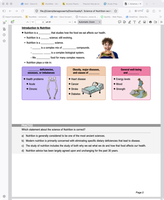
Nutrition is the scientific study of food, including how food nourishes the body and influences health. It is a relatively new discipline, focusing on supporting health and preventing or treating chronic diseases. The field encompasses food consumption, digestion, absorption, storage, eating patterns, recommended food amounts, food safety, and the global food supply.
Nutrition: The study of food and its impact on health and well-being.
Health: Encompasses physical, mental, and social well-being.
Physical health: Supported by nutrition and physical activity.

Nutrition and Chronic Disease Prevention
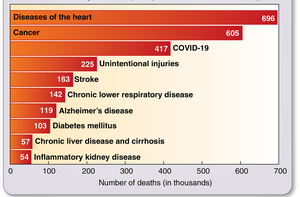
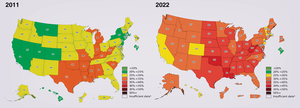
Nutrition plays a critical role in preventing both nutrient-deficiency diseases (such as scurvy and pellagra) and chronic diseases. Poor nutrition is strongly associated with heart disease, stroke, diabetes, and obesity, which are among the leading causes of death in the United States.
Nutrient-deficiency diseases: Result from inadequate intake of essential nutrients.
Chronic diseases: Heart disease, stroke, diabetes, osteoarthritis, osteoporosis.
Obesity: Primary link between poor nutrition and mortality.
Healthy People 2030
The Healthy People 2030 initiative is a national health promotion and disease prevention plan. It sets goals to attain healthy lives, eliminate health disparities, create supportive environments, promote healthy behaviors, and engage leadership across sectors.
Goals: Prevent disease, promote health equity, improve health literacy, foster healthy environments, and encourage healthy behaviors across life stages.
Essential Nutrients
Six Groups of Essential Nutrients
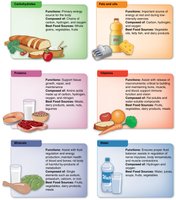
Nutrients are chemicals in foods critical to human growth and function. There are six essential groups: carbohydrates, fats and oils, proteins, vitamins, minerals, and water.
Macronutrients: Needed in large amounts; provide energy (carbohydrates, fats, proteins).
Micronutrients: Needed in small amounts; do not provide energy (vitamins, minerals).
Organic nutrients: Contain carbon and hydrogen (carbohydrates, fats, proteins, vitamins).
Inorganic nutrients: Do not contain carbon and hydrogen (minerals, water).
Macronutrients
Macronutrients are required in large amounts and provide energy measured in kilocalories (kcal). Energy is the capacity to do work, and in nutrition, it is quantified as the amount needed to raise the temperature of water.
Carbohydrates: Primary fuel for the body, especially the brain; provide 4 kcal/g; found in grains, vegetables, fruits, legumes, dairy, nuts, seeds.
Fats: Composed of lipids, insoluble in water; provide 9 kcal/g; found in butter, oils, margarine; important for energy during rest, absorption of fat-soluble vitamins, and storage.
Proteins: Chains of amino acids; provide 4 kcal/g; not usually a primary energy source; found in meats, dairy, seeds, nuts, legumes; essential for tissue growth, repair, maintenance, fluid balance, and metabolism.
Micronutrients
Micronutrients include vitamins and minerals, which are required in small amounts to support normal health and body functions. They do not provide energy but are essential for metabolism and tissue health.
Vitamins: Organic molecules; classified as fat-soluble or water-soluble; regulate body functions and energy metabolism.
Minerals: Inorganic substances; include sodium, calcium, iron, potassium, magnesium; functions include fluid regulation, energy production, bone and blood health, and elimination of metabolic by-products.
Water
Water is an inorganic macronutrient vital for health and survival. It is involved in fluid balance, nutrient transport, nerve impulses, waste removal, muscle contractions, and body temperature regulation.
Beneficial Non-Nutrient Compounds
Functional foods contain biologically active ingredients that provide health benefits beyond basic nutrition. Probiotics, prebiotics, and phytochemicals are examples of non-nutrient compounds beneficial to human health.
Probiotics: Beneficial bacteria for intestinal health.
Prebiotics: Nondigestible ingredients that stimulate probiotic growth.
Phytochemicals: Plant compounds with health benefits.
Dietary Reference Intakes (DRIs)
Determining Nutrient Needs
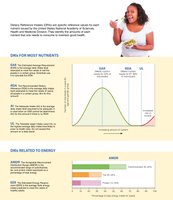
DRIs are a set of reference values used to assess and plan nutrient intakes for healthy people. They identify the amount needed to prevent deficiency, reduce chronic disease risk, and the upper safe level of intake.
Estimated Average Requirement (EAR): Average daily intake to prevent deficiency in half of healthy individuals.
Recommended Dietary Allowance (RDA): Intake level meeting needs of 97–98% of healthy individuals.
Adequate Intake (AI): Assumed adequate intake based on observations; used when RDA cannot be determined.
Tolerable Upper Intake Level (UL): Highest intake level likely to pose no risk; intake above UL is unsafe.
DRIs for Energy
Estimated Energy Requirement (EER): Average daily energy intake predicted to meet needs based on age, sex, weight, height, and activity.
Acceptable Macronutrient Distribution Range (AMDR): Recommended range of carbohydrate, fat, and protein intake as a percentage of total energy, associated with reduced chronic disease risk.
Energy Calculations
Energy from macronutrients is calculated using their caloric values:
Carbohydrates: 4 kcal/g
Fats: 9 kcal/g
Proteins: 4 kcal/g
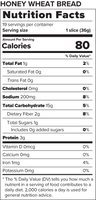
Example calculation for one slice of honey wheat bread:
Carbohydrate: 15 g × 4 kcal/g = 60 kcal
Fat: 1 g × 9 kcal/g = 9 kcal
Protein: 3 g × 4 kcal/g = 12 kcal
Total: 81 kcal
Nutrition Research Methods
The Scientific Method
Nutrition research applies the scientific method to test hypotheses. The process includes observation, hypothesis formation, experiment design, data collection and analysis, conclusion, and theory development.
Observation: Description of a phenomenon.
Hypothesis: Possible explanation for an observation.
Experiment: Repeatable test of the hypothesis.
Conclusion: Data analysis to support or reject the hypothesis.
Theory: Developed from repeated experiments.

Types of Research Studies
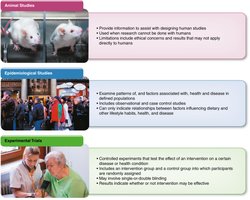
Nutrition research utilizes various study designs, each with strengths and limitations:
Animal Studies: Provide information for human studies; ethical concerns and limited applicability.
Epidemiological Studies: Observational studies assessing patterns and factors associated with health and disease; include case control studies.
Experimental Trials: Controlled experiments to test interventions; include randomized, single-blind, and double-blind trials; placebo-controlled studies are common.
Systematic Reviews and Evidence Quality
Systematic reviews synthesize findings from quality studies, and meta-analyses combine data from these studies. The hierarchy of evidence places systematic reviews and guidelines at the top, with expert opinions and anecdotal evidence at the bottom.
Evaluating Nutrition Information
Trustworthy Sources
Reliable nutrition information comes from educated and credentialed professionals, government agencies, and professional organizations.
Registered Dietitian Nutritionist (RDN): Credentialed expert.
Government agencies: NIH, CDC, NHANES, BRFSS.
Professional organizations: Academy of Nutrition and Dietetics, American Society for Nutrition, American College of Sports Medicine, The Obesity Society.
Conflict of Interest and Bias
Scientific validity requires scrutiny of credentials, funding sources, and potential conflicts of interest. Bias can arise from researcher, selection, recall, reporting, and publication processes.
Conflict of interest: Personal benefit or unfair advantage.
Bias: Inclination toward or against a particular outcome.
Evaluating Nutrition-Related Claims
Recognize misinformation (inaccurate or incomplete information) and disinformation (intentional falsehoods). Investigate sources, research quality, and consistency with credible evidence.
Check credentials, website sponsors, and recency.
“.gov”, “.edu”, “.org” sites are generally reliable.
Be wary of dramatic claims and product promotion.
Summary Table: Essential Nutrients
Nutrient | Function | Food Sources | Energy (kcal/g) |
|---|---|---|---|
Carbohydrates | Primary energy source | Grains, fruits, vegetables, legumes | 4 |
Fats | Energy during rest, absorption of vitamins | Butter, oils, margarine | 9 |
Proteins | Tissue growth, repair, maintenance | Meats, dairy, seeds, nuts, legumes | 4 |
Vitamins | Regulate body functions | Varied (fruits, vegetables, dairy, etc.) | 0 |
Minerals | Fluid regulation, bone health | Varied (dairy, meats, vegetables, etc.) | 0 |
Water | Fluid balance, transport, temperature regulation | Water, beverages, fruits, vegetables | 0 |
Additional info: Academic context was added to clarify definitions, expand explanations, and synthesize fragmented content for completeness.
