 Indietro
Introduction to Nutrition: Essential Concepts and Nutrients
Guida di studio - Note intelligenti
 Appunti personalizzati basati sui tuoi materiali, ampliati con definizioni chiave, esempi e contesto.
Nutrition Overview
Definition and Scope of Nutrition
Nutrition is the science of food, the nutrients and substances they contain, and their actions, interactions, and balance in relation to health and disease. It encompasses the processes by which organisms ingest, digest, absorb, transport, utilize, and excrete food substances.
Nutrients: Substances essential for health that the body cannot make or makes in quantities too small to support life.
Characteristics of an essential nutrient:
Has a specific biological function
Absence from the diet leads to a decline in biological function
Restoration before permanent damage returns normal function
Functional Categories of Nutrients
Provide energy for the body
Promote growth, development, and maintenance of body structures
Regulate body processes and help maintain homeostasis
A nutrient may fall into multiple categories
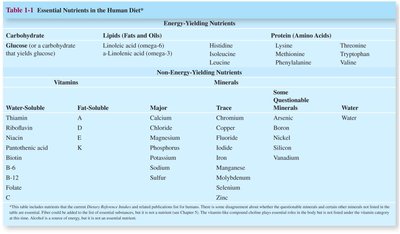
Classes of Nutrients
Macronutrients and Micronutrients
Nutrients are classified based on the quantity required by the body:
Macronutrients: Needed in large amounts (Carbohydrates, Lipids, Proteins, Water)
Micronutrients: Needed in smaller amounts (Vitamins, Minerals)
Carbohydrates
Structure and Types
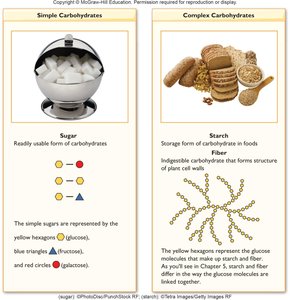
Carbohydrates are organic compounds composed of carbon, hydrogen, and oxygen. They are primarily obtained from fruits, vegetables, grains, and beans, and provide 4 kcal/g.
Simple carbohydrates (sugars): Table sugar (sucrose), glucose
Complex carbohydrates: Starch, glycogen, fiber
Lipids
Structure and Types
Lipids are composed of carbon, hydrogen, and oxygen, and are insoluble in water. They provide 9 kcal/g. Fats are solid at room temperature, while oils are liquid.
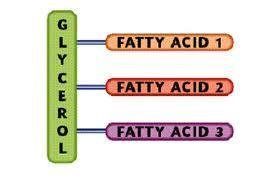
Triglycerides: Major form of fat in food and body, composed of three fatty acids attached to a glycerol backbone.
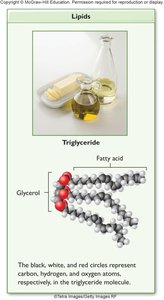
Saturated, Unsaturated, and Trans Fats
Saturated fats: Solid at room temperature, mainly from animal sources, raise blood cholesterol, increase cardiovascular disease risk.
Unsaturated fats: Liquid at room temperature, mainly from plant sources, generally healthier.
Trans fatty acids: Unsaturated fats processed to trans form, found in processed foods, increase health risks.
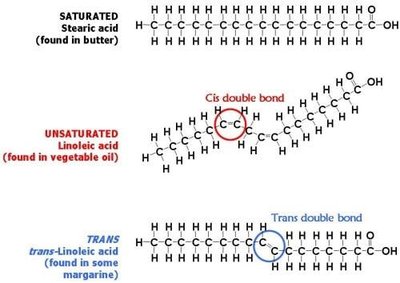
Essential Fatty Acids
Must be supplied by the diet (e.g., linoleic acid, alpha-linolenic acid)
Roles: Structural components of cell walls, regulation of blood pressure, nerve transmission
Sources: Vegetable oils, fish
Proteins
Structure and Function
Proteins are composed of carbon, hydrogen, oxygen, and nitrogen. They are the main structural components in the body (bone, muscle, blood, cell membranes, enzymes, immune factors) and provide 4 kcal/g. Proteins are formed from amino acids.
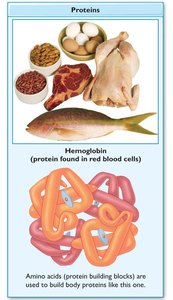
Vitamins
Classification and Function
Vitamins enable chemical reactions in the body, often serving as enzyme cofactors. They do not provide energy directly but are essential for energy metabolism.
Fat-soluble vitamins: A, D, E, K (can accumulate and cause toxicity)
Water-soluble vitamins: C and B-vitamins (more easily destroyed by cooking, excreted more readily)
Minerals
Classification and Function
Minerals are inorganic substances that are not destroyed by cooking and yield no energy. They are classified as:
Major minerals: Needed in amounts >100 mg/day (e.g., calcium, phosphorus)
Trace minerals: Needed in amounts <100 mg/day (e.g., iron, zinc)
Water
Importance and Functions
Water is needed in the largest quantity and serves as a solvent, lubricant, transporter of nutrients, and regulator of body temperature. It is obtained from food, drink, and as a byproduct of metabolism.
Phytochemicals and Zoochemicals
Definition and Health Effects
Phytochemicals (from plants) and zoochemicals (from animals) have health effects but are not considered essential nutrients.
Energy Sources and Uses
Energy-Yielding Nutrients
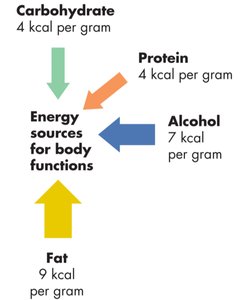
Energy is required for body functions and is derived from carbohydrates, proteins, and fats. Alcohol also provides energy but is not a nutrient. Energy is measured in kilocalories (kcal).
Carbohydrates: 4 kcal/g
Proteins: 4 kcal/g
Fats: 9 kcal/g
Alcohol: 7 kcal/g
Measuring Energy
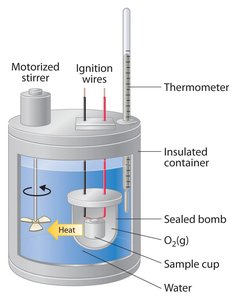
A calorie is the amount of heat energy needed to raise the temperature of 1 gram of water by 1°C. A kilocalorie (kcal) is the amount needed to raise 1000 grams of water by 1°C. In nutrition, "calorie" typically refers to kcal.
Calculating Energy Content
To calculate total calories in food, multiply the grams of each macronutrient by its physiological fuel value and sum the results:
Carbohydrate:
Fat:
Protein:
Alcohol:
The North American Diet
Current Patterns and Issues
Surveys show that North Americans consume approximately 16% of energy from protein, 50% from carbohydrates, and 33% from fats. While these are within healthy ranges, there are concerns:
Excess calories consumed
Too much protein and fat from animal sources
Too many simple sugars, too few complex carbohydrates
Improving the Diet
Increase intake of foods rich in vitamins and minerals (except sodium)
Decrease sodium intake
Moderate intake of sugary drinks and fatty foods
Eat more fruits, vegetables, whole grains, and reduced-fat dairy
Factors Influencing Food Choices
Hunger vs. Appetite
Hunger: Physical need for food
Appetite: Psychological desire to eat certain foods
Determinants of Food Choices
Social, psychological, cultural, economic, and environmental factors
Food availability, marketing, habits, and beliefs

Nutritional Health Status
Definitions
Optimal nutrition: All nutrient and energy needs are met
Malnutrition: Includes undernutrition (deficiency) and overnutrition (excess)
Subclinical deficiency: Early stage of nutrient deficiency without obvious symptoms
Health Objectives for the U.S.: Healthy People 2030
National Goals
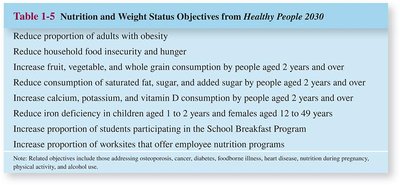
The Healthy People initiative sets 10-year national objectives for improving health, including nutrition-related goals such as reducing obesity, food insecurity, and increasing fruit and vegetable intake.
Assessment of Nutritional Health Status
Methods of Assessment
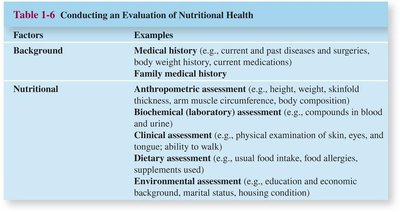
Anthropometric: Measurements of body size and composition
Biochemical: Laboratory analysis of blood and urine
Clinical: Physical examination for signs of deficiency or excess
Dietary: Evaluation of food and nutrient intake
Environmental: Assessment of socioeconomic and lifestyle factors
Limitations of Nutritional Assessment
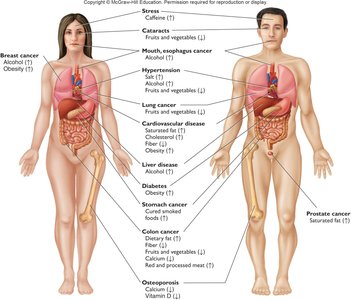
Many signs and symptoms are non-specific (e.g., fatigue, skin conditions)
Deficiencies may take years to manifest clinically (e.g., osteoporosis from long-term calcium deficiency)
Genetics and Nutrition
Genetic Influence on Nutrition
Genes direct how the body uses nutrients
Family history is a major risk factor for nutrition-related diseases (e.g., diabetes, cancer, cardiovascular disease, osteoporosis, obesity)
Heredity is not destiny; lifestyle modifications can reduce risk
Evaluating Nutrition Claims and Products
Critical Evaluation of Claims
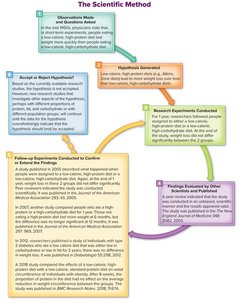
Be cautious of claims that sound too good to be true, discuss only advantages, or promise cures
Check scientific credentials (e.g., Registered Dietitian)
Evaluate the quality and type of research supporting claims

Dietary Supplements and Regulation
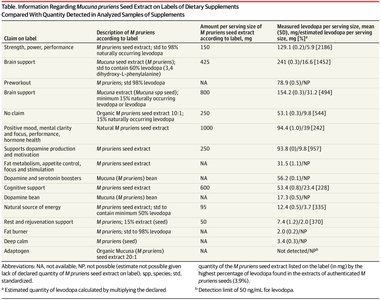
Supplements are regulated as foods, not drugs, under the Dietary Supplement Health and Education Act (DSHEA) of 1994
Some supplements can have drug-like effects and interact with medications
Supplements must include a disclaimer if making structure/function claims

Sample Questions
How many calories per gram are supplied by alcohol? Answer: 7 kcal/g
The physical need for food is: Answer: Hunger
