 Indietro
Tools for Healthful Eating: Diet Characteristics, Food Choices, and Food Labeling
Guida di studio - Note intelligenti
 Appunti personalizzati basati sui tuoi materiali, ampliati con definizioni chiave, esempi e contesto.
Tools for Healthful Eating
Characteristics of a Healthful Diet
A healthful diet is essential for maintaining optimal health and preventing chronic diseases. It is defined by five key characteristics: adequacy, moderation, nutrient density, balance, and variety.
Adequate: Provides sufficient energy, nutrients, and fiber to support health. Adequacy varies by individual and nutrient type.
Moderate: Contains appropriate amounts of foods to maintain healthy weight and nutrition. Avoids excesses that can lead to health issues.
Nutrient-Dense: Consists of foods and beverages that supply the highest level of nutrients for the lowest number of calories. Examples include fruits, vegetables, lean proteins, low-fat dairy, and whole grains.
Balanced: Includes combinations of foods that provide proper proportions of nutrients from each food group.
Varied: Involves eating many different foods from all food groups regularly to meet nutrient needs.
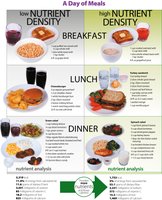
Additional info: Nutrient density is calculated as the ratio of nutrient content to energy content. Foods with high nutrient density provide more vitamins and minerals per calorie.
Influences on Food Choices
Food choices are shaped by both biological and psychological factors. Understanding these influences can help individuals make healthier decisions.
Hunger: A basic biological urge to eat.
Appetite: A psychological desire to eat, influenced by sensory data, sociocultural cues, emotions, and learning.
Sensory Data: Includes taste, smell (olfaction), and mouthfeel.
Sociocultural and Emotional Cues: Social settings, cultural traditions, and emotional states can affect eating behavior.
Learning: Food preferences are largely learned from family, community, and religion. Conditioned taste aversion is the avoidance of a food after a negative experience.
Additional info: Food preferences can change throughout life, and exposure to new foods can lead to acceptance.
Reading Food Labels
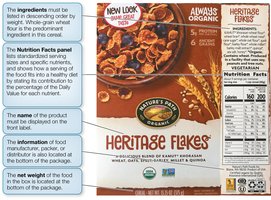
Food labels provide essential information to help consumers make informed choices. The Nutrition Facts panel is regulated by the FDA and includes standardized serving sizes, nutrient content, and ingredient lists.
Statement of Identity: Name of the product.
Net Contents: Quantity of food in the package.
Ingredient List: Listed in descending order by weight.
Name and Address: Manufacturer, packer, or distributor information.
Nutrition Facts Panel: Contains nutrition information required by the FDA.
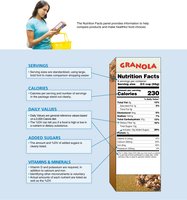
Required Nutrients: The Nutrition Facts panel must list certain vitamins and minerals, such as Vitamin D, Calcium, Iron, and Potassium.
Additional info: Label regulations began in 1973 and have evolved to include more detailed information for consumers.
Food Label Claims
The FDA regulates two main types of claims on food labels: nutrient claims and health claims. Structure-function claims can be made without FDA approval.
Nutrient Claims: Statements about the level of a nutrient in a food (e.g., "low fat", "high fiber").
Health Claims: Statements about the relationship between a food or ingredient and a health condition (e.g., "may reduce risk of heart disease").
Structure-Function Claims: Generic statements about a food’s impact on the body’s structure or function (e.g., "builds stronger bones").
Functional Foods: Foods with biologically active ingredients that may provide health benefits, also called nutraceuticals.
Fortified Foods: Nutrients not originally present are added.
Enriched Foods: Nutrients lost during processing are replaced.
Ultra-Processed Foods: Foods that have undergone extensive processing and contain additives, preservatives, and artificial ingredients.
Staple Foods: Foods that are regularly consumed and form the basis of a diet.
Additional info: Organic foods must contain at least a specified percentage of organically produced ingredients. "Natural" is not regulated and generally means nothing artificial or synthetic is included.
Dietary Guidelines for Americans (2025–2030)
The Dietary Guidelines for Americans are developed by the U.S. Department of Health and Human Services and the U.S. Department of Agriculture. Revised every five years, these guidelines aim to promote health and reduce the risk of chronic diseases.
Encourage nutrient-dense food choices.
Limit intake of saturated fats, added sugars, and sodium.
Promote physical activity and healthy eating patterns.
MyPlate guidelines are now integrated into the new DGA’s.
Additional info: The guidelines are available online and provide practical advice for meal planning and healthy living.
Empty Calories
Empty calories are calories from saturated fats or added sugars that provide little or no nutrients. Foods high in empty calories have low nutrient density.
Examples: Soft drinks, candy, baked goods with added sugars.
Reducing empty calories increases overall nutrient density of the diet.
Serving Sizes and Estimation
Understanding serving sizes is crucial for portion control and dietary planning. Using visual cues, such as the size of your hand, can help estimate amounts of common foods.
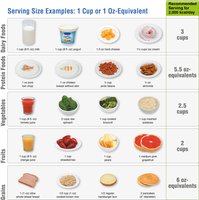
Additional info: Serving sizes are standardized to help consumers compare products and manage their intake according to dietary guidelines.
Eating Out as Part of a Healthful Diet
Eating in restaurants often involves high-fat foods and large portion sizes. One restaurant meal can provide the recommended fat or calorie intake for an entire day.
Choose nutrient-dense options when eating out.
Be mindful of portion sizes and added fats or sugars.
Additional info: Fast food nutrition calculators are available online to help consumers make informed choices.
