 Indietro
Understanding Food Labels: A Guide for Nutrition Students
Guida di studio - Note intelligenti
 Appunti personalizzati basati sui tuoi materiali, ampliati con definizioni chiave, esempi e contesto.
Understanding a Food Label
Food Label Basics
Food labels are a critical tool for making healthy and safe food choices. In Canada, Health Canada and the Canadian Food Inspection Agency (CFIA) regulate food labelling, ensuring that all prepackaged foods manufactured or imported comply with labelling requirements as of December 2021. Food labels help consumers compare products, identify ingredients, and make informed decisions about their diet.
Nutrition Facts Table (NFT): Provides information on serving size, calories, and core nutrients.
Ingredient List: Lists all ingredients in descending order by weight.
Allergen Declaration and Gluten Sources: Identifies potential allergens and gluten sources.
Date Marking: Indicates product freshness.
Country of Origin Claims: States where the product was made.
Composition Claims: Describes the makeup of the food.
Nutrition Claims: Highlights nutritional benefits.
Methods of Production Claims: Explains how the food was produced.
Common Name: The standard name of the food product.

Nutrition Facts Table (NFT)
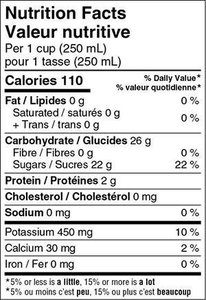
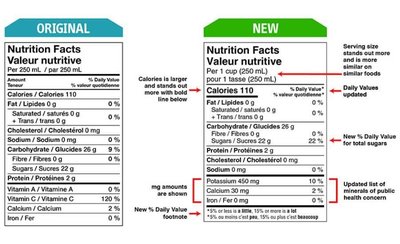
The Nutrition Facts Table is a standardized format regulated by the Canadian Federal Government. It lists 12 core nutrients and provides information on serving size and calories per serving. Manufacturers may add additional nutrients, such as vitamin D. The serving size is used for product comparison and is not a suggested quantity for consumption.
Core Nutrients: Typically includes fat, carbohydrates, protein, cholesterol, sodium, potassium, calcium, iron, and others.
Serving Size: Standardized to facilitate comparison between products.
Calories: Indicates energy content per serving.
Using the Food Label to Make Healthier Choices
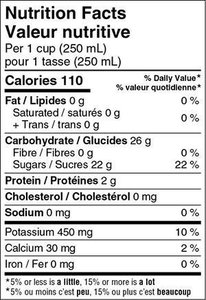
Food labels help consumers make healthier choices by providing information on nutrient content. The % Daily Value (%DV) indicates whether a food contains a lot or a little of a specific nutrient. Consumers are encouraged to choose products with lower contributions of nutrients such as sodium, sugars, and saturated fat, and higher contributions of beneficial nutrients like fibre and potassium.
%DV: Helps quickly assess nutrient levels in a serving.
Fibre: Choose items with higher fibre content.
Sodium, Sugars, Saturated Fat: Opt for products with lower amounts.
Exceptions to Nutrition Facts Table Requirement
Most pre-packaged foods must have a Nutrition Facts Table, but there are exceptions. These include fresh fruits and vegetables, raw meat, poultry, fish, seafood, foods prepared or processed at the store (e.g., bakery items, sausage, salads), foods with very few nutrients (e.g., coffee beans, tea leaves, spices), and alcoholic beverages.
Exemptions: Not all foods require a Nutrition Facts Table.
Ingredient List
The ingredient list must include all ingredients in descending order by weight. It is essential for identifying allergens and specific ingredients, such as whole grains. Recent updates require sugars to be listed together, food colours to be listed by common names, and improved readability (text colour, size, bullets, or commas).
Allergen Identification: Read ingredient lists to check for allergens.
Whole Grain Example: Look for whole grain in the ingredient list to confirm its presence.
Nutrition Claims
Types of Nutrition Claims
Nutrition claims on food labels are strictly regulated and optional. There are two main types: nutrient content claims and health claims. Companies cannot make misleading claims and must include a Nutrition Facts Table if making nutrition or health claims.
Nutrient Content Claims: Refer to the amount of a nutrient in a food (e.g., "good source of iron").
Health Claims: Include disease risk reduction claims and nutrient function claims.

Nutrient Content Claims
Nutrient content claims are based on % Daily Value. For nutrients to increase, look for terms like "source," "high/good source," or "very high/excellent source." For nutrients to minimize, look for "free," "low," "reduced," or "light."
Source: Contains a useful amount (≥5% DV).
High/Good Source: Contains a high amount (≥15% DV; Vitamin C ≥30%).
Very High/Excellent Source: Contains a very high amount (≥25% DV; Vitamin C ≥50%).
Free: None or hardly any of the nutrient (e.g., "sodium free").
Low: Small amount (e.g., "low fat").
Reduced: At least 25% less than a similar product.
Light: Reduced in fat or calories, or light in flavour/texture.
Health Claims
Health claims represent a relationship between food consumption and health. They are divided into disease risk reduction claims and function claims.
Disease Risk Reduction Claims: Link a food to reduced risk of a disease or condition related to diet.
Function Claims: Describe specific beneficial effects of food on normal functions or biological activities.
Disease Risk Reduction Claims
Examples of Health Canada-approved claims:
Health Concern | Nutrient | Approved Claim Statement |
|---|---|---|
Osteoporosis | Calcium | A healthy diet with adequate calcium and vitamin D, and regular physical activity, help to achieve strong bones and may reduce the risk of osteoporosis. Brand X is an excellent source of calcium. |
Hypertension | Sodium | A healthy diet containing foods high in potassium and low in sodium may reduce the risk of high blood pressure, a risk factor for stroke and heart disease. Brand X is a good source of potassium and is low in sodium. |
Function Claims
Function claims describe the beneficial effects of a food on normal bodily functions. Example: "Consuming 7 grams of fibre from coarse wheat bran promotes regularity."
Daily Values for Food Labels
% Daily Value (%DV)
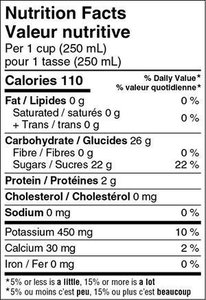
% Daily Value is a column on nutrition labels developed specifically for food labelling. It is based on the Recommended Dietary Intake for Canadians and assumes a 2000 kcal diet. %DV figures represent nutrient amounts in one serving, making it easier to assess whether a food contains a lot or a little of a nutrient.
5% DV or less: Indicates a little of a nutrient.
15% DV or more: Indicates a lot of a nutrient.
Application of %DV
Looking at the %DV is more helpful than absolute numbers. For example, 2 mg of iron may be 15% DV, while 110 mg of sodium may be 5% DV. This allows consumers to quickly assess nutrient content.
Front-of-Package Nutrition Labelling
Front-of-Package Nutrition Symbol
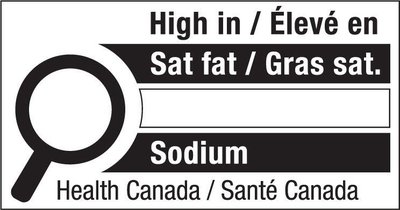
Health Canada is introducing a front-of-package nutrition symbol for foods high in sodium, sugars, or saturated fat. The food industry must comply by January 1, 2026, but symbols may appear earlier. The symbol is black and white, features a magnifying glass, and highlights which nutrient(s) the food is high in. Health Canada appears at the bottom of the symbol.
Purpose and Impact
Frequently eating foods high in sodium, sugars, or saturated fat increases health risks such as stroke, heart disease, high blood pressure, obesity, type 2 diabetes, and some cancers. The front-of-package symbol helps consumers make quick, informed choices and supports health professionals in educating the public.
Mandatory for: Prepackaged foods that meet or exceed set levels for sodium, sugars, or saturated fat.
Exemptions: Packaged individual portions for restaurants, certain dairy products (plain milk, yogurt, cheese), raw single ingredient ground meats and poultry, butter, sugar, salt, and similar products.
Summary
Food labels are regulated and provide essential information for making healthy choices.
Nutrition Facts Table lists core nutrients and serving size for comparison.
Ingredient lists help identify allergens and specific ingredients.
Nutrition and health claims are strictly regulated and optional.
% Daily Value helps consumers quickly assess nutrient content.
Front-of-package nutrition symbols highlight foods high in sodium, sugars, or saturated fat.
